Disclosure: Some links in this guide are affiliate links. If you book or buy through them, we may earn a small commission at no extra cost to you — it helps keep our guides free.
Ultimate Arenal Volcano Travel Guide 2026: Hot Springs, Hiking + Costs
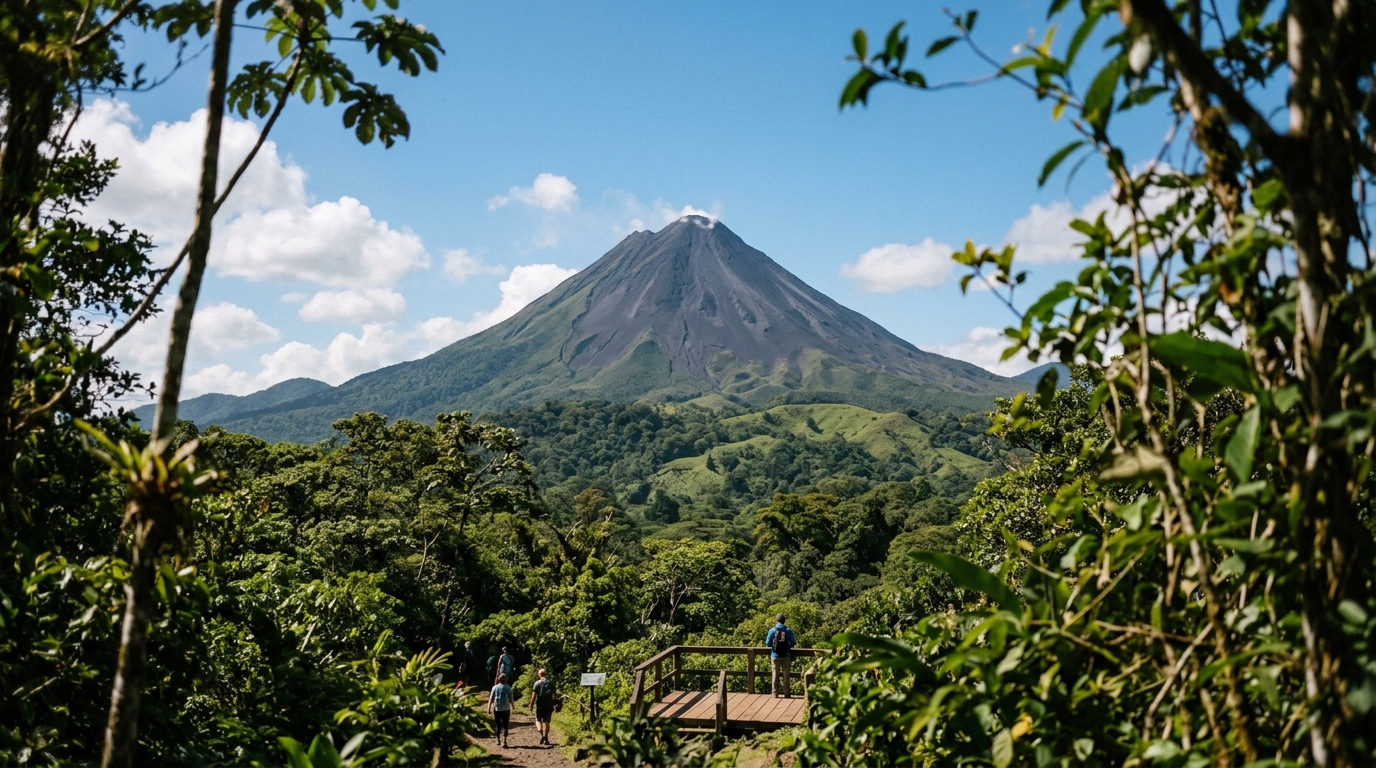
This Arenal Volcano travel guide covers every practical detail for visiting one of Central America’s most iconic active volcanoes. Arenal stands 1,670 meters above Costa Rica’s northern lowlands and last produced a major eruption in 1968, killing 87 people and destroying three villages (OVSICORI-UNA, Costa Rica Volcanic Observatory, 2024). It remains volcanically active today, venting steam and releasing gases regularly. The combination of that raw geological energy, accessible rainforest hiking, volcanic hot springs, and exceptional wildlife makes Arenal one of the best-value adventure destinations in the Americas. Read this before you book.
Key Takeaways
Arenal Volcano is 1,670m tall and still volcanically active; last major eruption was 1968; steam and gas venting is ongoing (OVSICORI-UNA, 2024)
National Park entry costs $18/person; two main trails cover lava fields and lake views; arrive before 10am for clearest summit views
Hot springs range from $15 (Los Lagos, budget) to $70+ (Tabacon, flagship); all are fed by volcanic geothermal heat
Budget $80-150/day mid-range: accommodation, park entry, and one activity; hot springs are the biggest discretionary cost
Base town is La Fortuna, 5km from the volcano; USD is accepted everywhere; no local airport. Fly to San Jose (SJO) or Liberia (LIR)
We only recommend services we have researched thoroughly.
Arenal Volcano Travel Guide 2026: What Makes This Place Worth Visiting
Arenal Volcano sits inside a 12,016-hectare national park in the Alajuela province of northern Costa Rica, and it draws over 200,000 visitors per year (Sistema Nacional de Areas de Conservacion, SINAC, 2024). What separates Arenal from other volcano destinations is the complete experience stacked around it: you can hike active lava fields in the morning, spot three-toed sloths and toucans on hanging bridges by noon, soak in geothermally heated pools by evening, and do white-water rafting the next day. Almost no other single destination in Central America packs that range into a 2-3 day visit.
The 1968 eruption is key context for understanding the park layout. The blast destroyed the towns of Tabacon, Pueblo Nuevo, and San Luis entirely, killing 87 people and burying farmland under 1.8 billion cubic meters of volcanic material (OVSICORI-UNA, 2024). The lava fields you walk through on the El Ceibo trail are a direct legacy of that event. The volcano then entered a highly active phase from 1968 to 2010, producing near-continuous lava flows. Since 2010, activity has shifted to fumarolic venting rather than lava, but Arenal remains one of Central America’s most closely monitored volcanoes. That history gives the hiking trails a weight that more dormant volcano parks simply don’t have.
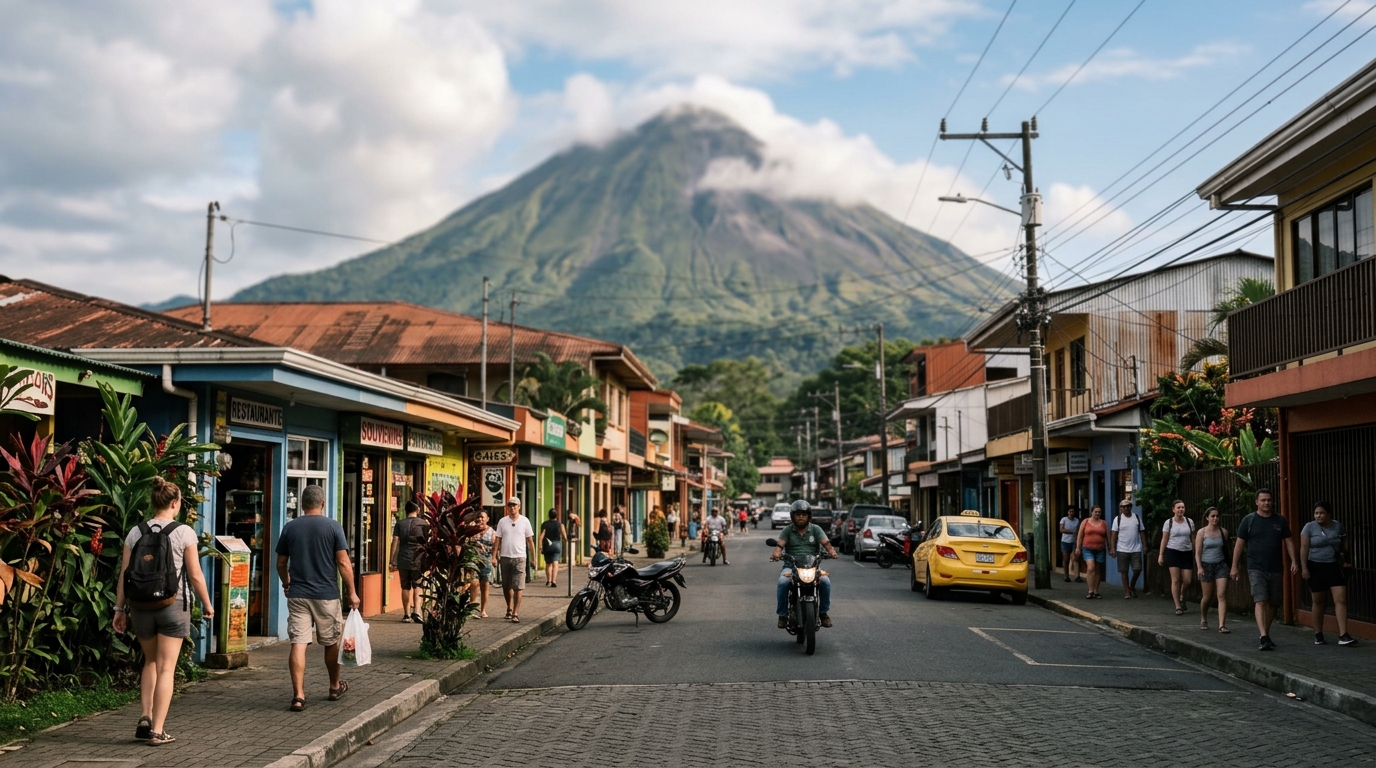
The main base is La Fortuna, a small town 5km east of the volcano. It has grown around tourism over the past 30 years and now offers a strong mid-range restaurant scene, every major tour operator, and accommodation from $30 dorms to $300+ volcano-view resorts. It’s not a polished tourist bubble. It’s a functional Costa Rican town that happens to have one of the world’s most photogenic volcanoes as a backdrop.
best things to do at Arenal Volcano
How to Get to Arenal Volcano (Flights, Buses, Shuttles)
There is no airport at Arenal or La Fortuna; all visitors arrive overland. The two practical entry airports are San Jose International (SJO), which is the main international hub, and Liberia (LIR) in Guanacaste. From San Jose, the transfer to La Fortuna takes 3 to 3.5 hours by road. From Liberia, it is roughly 2 hours by car or a slightly longer shared shuttle.
From San Jose (SJO) – Main Route
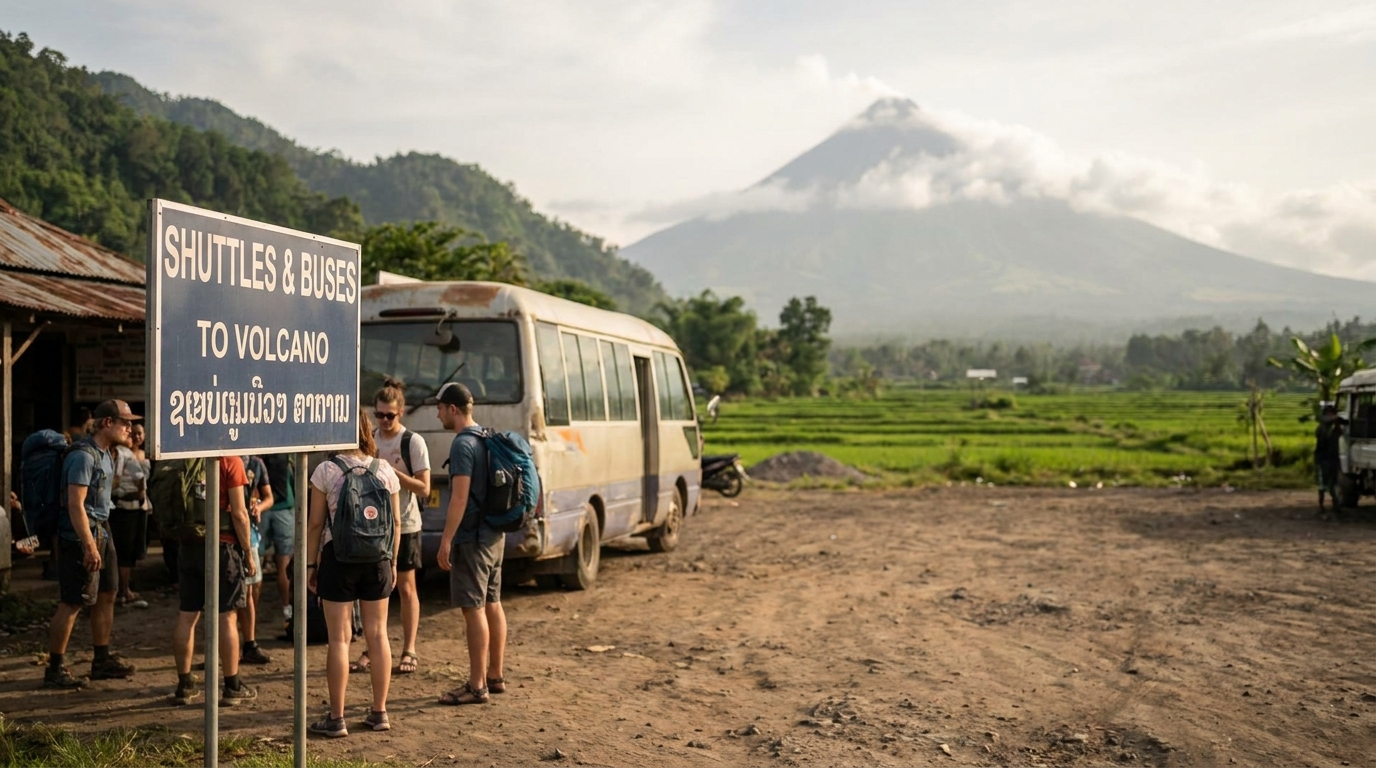
The public bus from San Jose’s Terminal 7-10 (Atlantico Norte terminal) departs for Ciudad Quesada (San Carlos), then connects to La Fortuna. Total journey is approximately 3 hours and costs around $10 USD. Buses run several times daily; the first departure is around 6:30am. A shared tourist shuttle from San Jose runs door-to-door and costs $35-45 per person; it takes about the same time but drops you at your hotel. Private transfers start at $90-120 for the full vehicle.
From Liberia (LIR) – Alternative for Guanacaste Combinations
Liberia airport feeds the Pacific beaches of Guanacaste and is a solid entry point if you are combining Arenal with Tamarindo or Playa Hermosa. The drive to La Fortuna is 2 hours via Highway 1 north and then Route 702 inland through the Tilaran mountains. Car rental from Liberia is the most practical option for this route; the road includes some steep mountain sections that rule out low-clearance vehicles.
Getting Around the Area
La Fortuna to the national park entrance is 5km and easily covered by taxi ($5-8), bicycle rental ($10-15/day from town), or the free hotel shuttles that many lodges run for park entry. The hot spring resorts and hanging bridge park sit along the main road between La Fortuna and the lake, and a taxi or rented motorbike ($30-40/day) makes moving between attractions straightforward.
Arenal Volcano National Park: Trails, Entry Costs + Timing
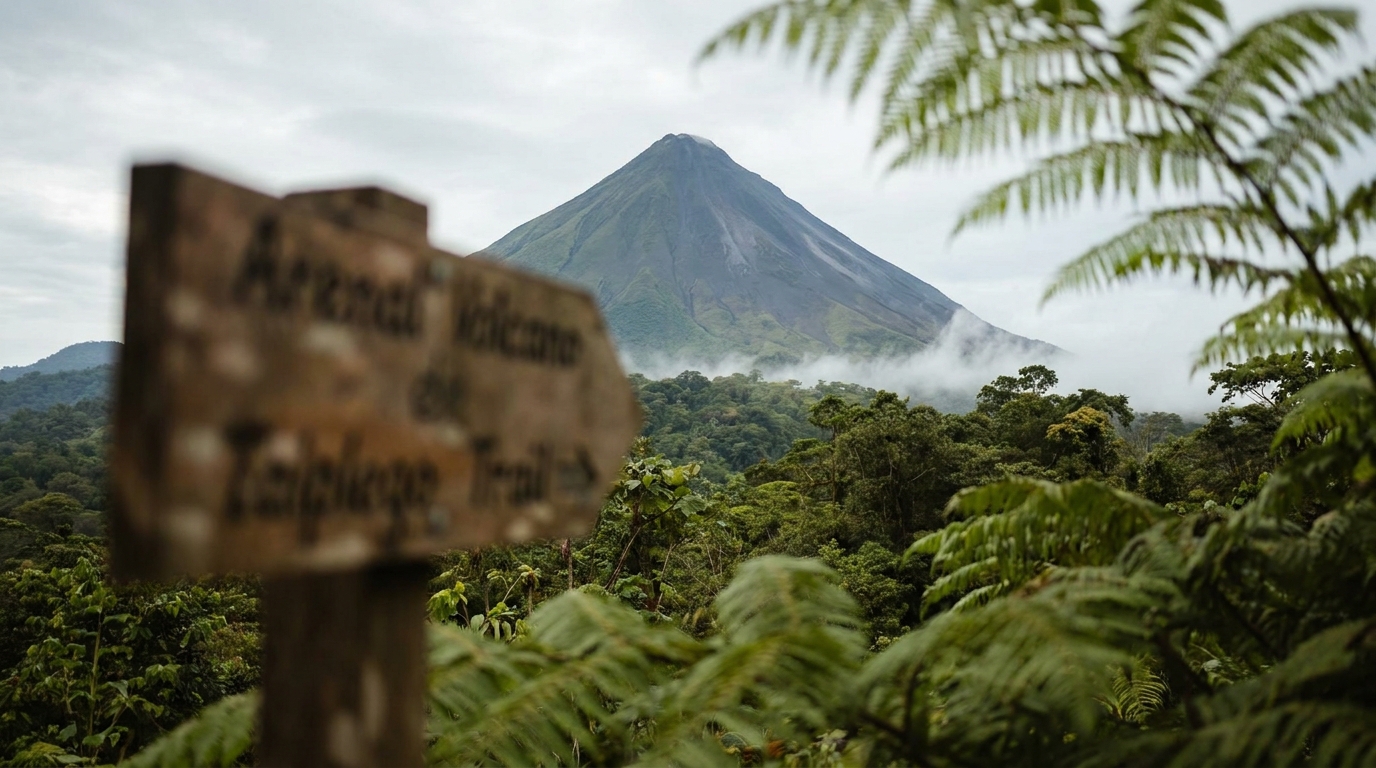
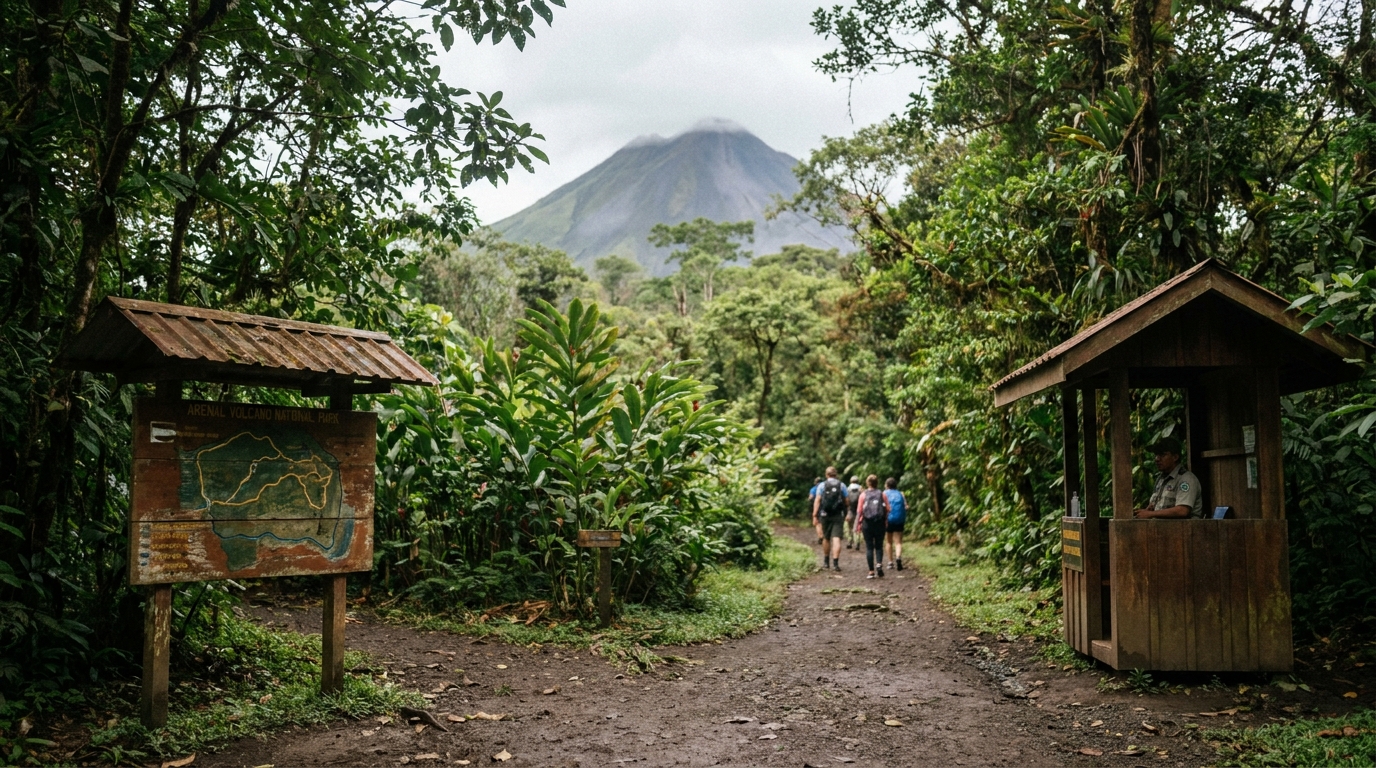
Arenal Volcano National Park charges $18 per person for entry, payable at the main ranger station at the park entrance (SINAC official fee schedule, 2025). The fee is cash or card and is non-refundable regardless of cloud cover on the day. Two main hiking trails operate inside the park: La Peninsula Trail and El Ceibo Trail.
La Peninsula Trail (2km, Lake Views)
This shorter loop runs along the shore of Lake Arenal and through secondary forest on the lava peninsula. It is flat and paved in sections, suitable for all fitness levels. The trail offers framed volcano views across the water, and it is one of the more reliable spots for howler monkey sightings early in the morning. Allow 45 to 60 minutes at a relaxed pace.
El Ceibo Trail (3km, Lava Fields)
Trail
Distance
Difficulty
Highlights
Best Time
La Peninsula Trail
2km loop
Easy
Lake views, howler monkeys
6am-9am
El Ceibo Trail
3km loop
Easy-Moderate
1968 lava fields, close volcano base
6am-9am
Source: SINAC / Arenal Volcano National Park ranger station, 2025
The El Ceibo trail passes directly through the 1968 lava flow. Walking across hardened basalt that buried three towns within living memory is a striking experience. The trail ends at a clearing with a direct line-of-sight to the volcano cone above treeline. This is the best photo position inside the park. Clouds typically build over the summit from around 10am onward, so an early start is critical for clear views. Exit the park by 9:30am at the latest for the best chance of a cloud-free summit shot.
Park opening hours are 8am to 4pm daily. Buy tickets in advance via the SINAC website during peak season (December-April) to avoid morning queues at the gate. A guided volcano hiking tour booked through GetYourGuide typically includes park entry, a naturalist guide, and transport from La Fortuna, running $45-65 per person.
GetYourGuide: Arenal Volcano Guided Hiking Tour from La Fortuna
Hot Springs at Arenal: Which One Should You Choose?
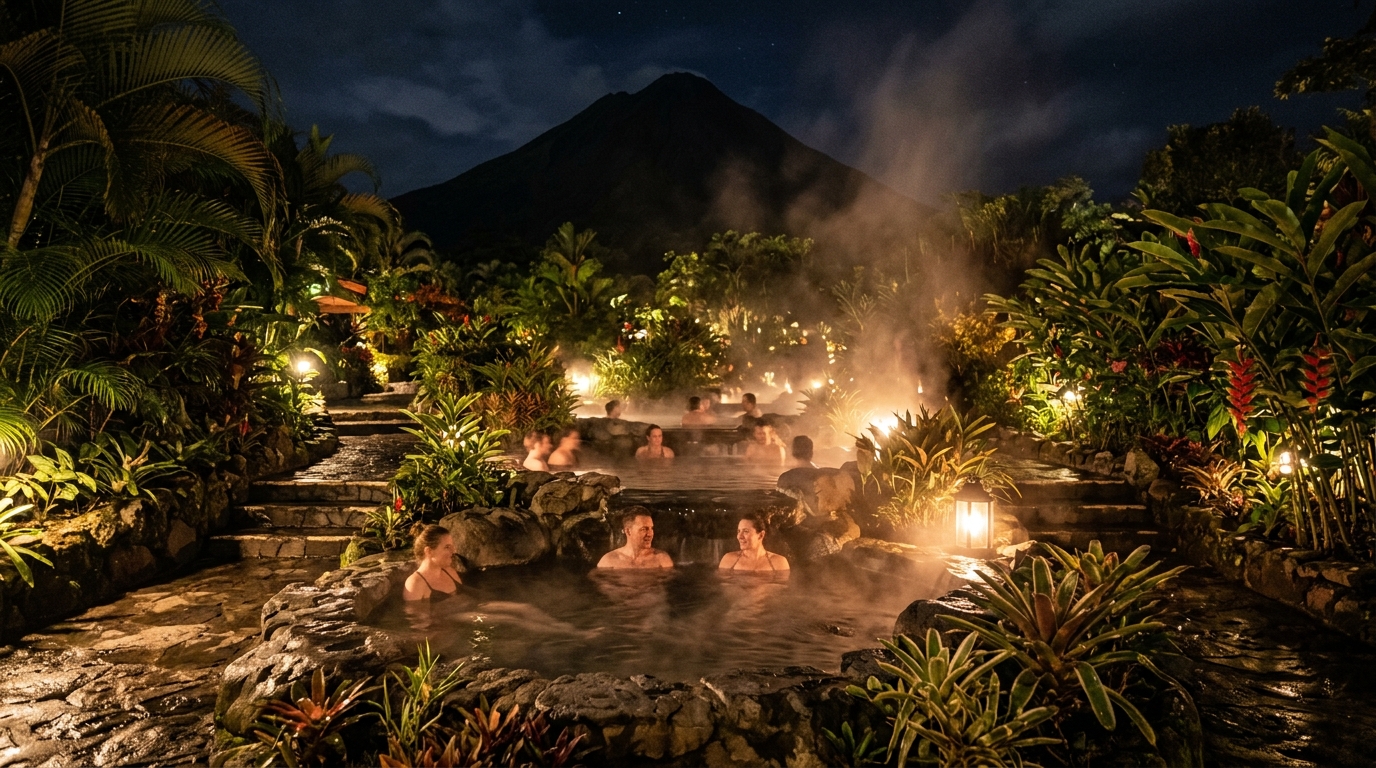
Arenal’s hot springs are the single most popular reason people visit the region, and four main options cover every budget tier. All are fed by geothermally heated groundwater from the volcano. Water temperatures range from 35C to 45C depending on the pool and facility (Instituto Costarricense de Turismo, ICT, 2024). Choosing the right one mostly comes down to budget and what kind of atmosphere you want.
Hot Springs
Entry Price
Pools
Best For
Booking
Tabacon Grand Spa
$70+ (day pass)
9 pools + river
Luxury; couples; volcano view
Book ahead
Eco Termales
$40 (timed entry)
4 pools
Adults; quiet atmosphere; no kids
Reserve required
Baldi Hot Springs
$35-50
25 pools
Families; slides; lively scene
Walk-in OK
Los Lagos Hotel + Spa
$25 (day pass)
6 pools + waterslides
Budget travelers; families
Walk-in OK
Source: ICT / direct venue pricing, May 2026
Tabacon is the landmark resort and genuinely delivers on its reputation. The natural hot river running through tropical gardens with a direct volcano sightline is a specific experience you don’t replicate elsewhere. But at $70+ for a day pass (not including food), it’s a significant line item. Eco Termales is the most peaceful option at $40 and limits entry to create an uncrowded atmosphere; children under 5 are not admitted. Baldi is enormous and lively, better for families or groups than for couples seeking quiet. Los Lagos at $25 is the value pick and still offers excellent water temperature. All four accept USD.
GetYourGuide packages a hot springs day pass combined with transport and sometimes dinner, which can work out cheaper than booking direct for the Tabacon or Baldi higher tiers.
GetYourGuide: Arenal Hot Springs Day Pass + Transport from La Fortuna
Top Activities Beyond the Park: Hanging Bridges, Rafting + Waterfall
The national park and hot springs are the core, but three additional activities push an Arenal trip from good to excellent. All three operate within 30 minutes of La Fortuna and are bookable through town operators or online.
Mistico Arenal Hanging Bridges Park ($26)
Mistico Arenal Hanging Bridges Park charges $26 per person for self-guided access to 16 suspension bridges through old-growth rainforest canopy (Mistico Park official website, 2025). The bridges range from short walkways to 100-meter-long suspended spans 40 meters above the forest floor. Dawn entry (around 6am when the park opens) is the best window for birds and mammals. We’ve found this is where sloth sightings are most reliable; guides and park staff usually know current locations. A guided tour adds approximately $15 to the entry fee and dramatically increases the number of species you identify. Costa Rica hosts over 900 bird species nationally (Costa Rica Tourism Board, ICT, 2024), and the Arenal zone is one of the top birding corridors.
White-Water Rafting: Rio Toro and Rio Sarapiqui
Two rivers run near La Fortuna with very different characters. The Rio Toro offers Class IV-V rapids: technical, fast, and genuinely demanding. The Rio Sarapiqui runs Class III and is appropriate for families and first-time rafters. Full-day tours including transport, equipment, guide, and lunch run $75-95 per person from La Fortuna operators. The Toro experience includes an 8-meter waterfall drop at one point in the run, which is the kind of detail worth knowing in advance.
La Fortuna Waterfall
La Fortuna Waterfall is a 70-meter cascade 5km from town, accessible via a 500-step descent from the trailhead. Entry is $20 per person (La Fortuna Waterfall official site, 2025). Swimming is allowed in the pool at the base, which runs cold and clear despite its volcanic setting. The return climb is steep; allow 20 minutes going up at a moderate pace. Start before 8am to avoid the midday queues and to photograph the waterfall with morning light.
The waterfall and the national park trails make an efficient combined morning: park entry at 6am, El Ceibo trail done by 9am before clouds arrive, then drive 5km to the waterfall trailhead and descend by 10am. You’re back in La Fortuna for lunch by noon, leaving the afternoon free for hot springs. That sequencing avoids the single biggest mistake at Arenal: arriving at the volcano summit viewpoint mid-afternoon and seeing nothing but grey cloud.
La Fortuna Waterfall guide
Best Time to Visit Arenal Volcano 2026
December through April is the dry season and gives the clearest summit views, with cloud cover typically building only in the afternoon. May through November brings afternoon rains across the region, though mornings are often clear. The dry season is also peak tourist season, meaning higher accommodation prices and fuller tour buses.
Month
Season
Volcano Views
Crowds
Notes
Dec-Apr
Dry
Best (morning clear)
High
Peak season; book 2-3 months ahead
May-Jun
Early Wet
Good (mornings)
Medium
Greener landscape; some afternoon rain
Jul-Aug
Wet
Variable
Medium-High
North American/European summer; busy weeks
Sep-Oct
Wet
Most cloudy
Low
Cheapest rates; heaviest rain; still worth it
Nov
Transition
Improving
Low-Medium
Good value; drying out before peak
Source: Instituto Meteorologico Nacional de Costa Rica, IMN, 2024
The cloud cover reality is important to set expectations. Even in the dry season, Arenal is often shrouded by noon. Staying two nights significantly improves your odds of at least one clear morning. Some visitors spend three full days and never see the full cone. That is part of the experience, not a failure of planning.
Arenal Volcano Travel Costs: Daily Budget by Tier
Arenal runs mid-range for Central America but is more expensive than Southeast Asia. The hot springs entry is the biggest variable in your daily spend. Skipping Tabacon ($70+) and choosing Los Lagos ($25) saves $45 per person, which is meaningful on a tight trip budget.
Budget Tier
Daily Spend
Accommodation
Activity Example
Budget
$50-80/day
Hostel dorm $25-40
Los Lagos hot springs ($25) + park entry ($18)
Mid-Range
$80-150/day
Guesthouse/B&B $60-100
Baldi/Eco Termales + hanging bridges
Comfort
$150-250/day
Volcano-view lodge $100-200
Tabacon day pass + guided volcano hike
Luxury
$300+/day
Tabacon Grand Spa Resort $300-500
Resort hot springs included + private tours
Source: Booking.com rate averages + ICT venue pricing, May 2026
Key Activity Costs Summary
Arenal Volcano National Park entry: $18 per person
La Fortuna Waterfall: $20 per person
Mistico Hanging Bridges: $26 per person (self-guided)
Los Lagos Hot Springs (budget): $25 day pass
Baldi Hot Springs (mid-range): $35-50 day pass
Eco Termales (quiet/adults): $40 with timed entry booking
Tabacon Grand Spa (flagship): $70+ day pass
White-water rafting (Sarapiqui, Class III): $75-95 full day
Night wildlife tour: $35-50 per person
Shared shuttle San Jose to La Fortuna: $35-45 per person
Costa Rica uses the colon (CRC) as its official currency, but USD is accepted at virtually every business in the Arenal area at the standard exchange rate. ATMs in La Fortuna dispense both currencies. Credit cards work at most hotels and tour operators; carry some cash for national park entry and smaller sodas (local restaurants).
Arenal Volcano hotels guide
Find your Arenal Volcano hotel on the map
Live prices from Booking, Airbnb and more — move the map or change dates to compare stays around Arenal Volcano.
Where to Stay at Arenal Volcano
Accommodation in the Arenal area breaks into three zones: La Fortuna town (budget and mid-range, 5km from volcano), the volcanic road corridor (mid-range to comfort lodges with direct volcano views), and the Lake Arenal shoreline (quieter, requires a car). Most first-time visitors base in or near La Fortuna for access to restaurants and tour operators.
Zone
Price Range/Night
Best For
Notes
La Fortuna town (hostels/guesthouses)
$25-70
Budget travelers; solo travelers
Walking distance to restaurants and operators
Volcano road corridor (lodges)
$100-200
Couples; volcano-view seekers
Many include hot spring pool on property
Tabacon Grand Spa Thermal Resort
$300-500
Luxury; honeymoon
Resort hot springs included; 8km from La Fortuna
Lake Arenal shoreline
$80-150
Quiet stays; windsurfers
Less convenient for activities; car needed
Source: Booking.com rate averages, May 2026
The volcano-view corridor lodges between La Fortuna and the park entrance represent the best overall value for most visitors. A mid-range lodge at $120-160/night here typically includes a private hot spring pool, breakfast, and direct volcano views from the bed or terrace. That eliminates the hot springs line item from your daily activity budget, effectively making the upgrade cheaper than it appears. Book 2-3 months ahead for December through April travel.
For connectivity during travel across Costa Rica and Central America, an Airalo Americas eSIM covers Costa Rica on Kolbi’s network without the need for a physical SIM swap. Plans start at approximately $5 for 1GB and scale to $15+ for 5GB. Coverage at La Fortuna and inside the national park is reliable on 4G; deep jungle areas may drop to 3G or edge.
Airalo Americas eSIM for Costa Rica Travel
Practical Tips for First-Timers at Arenal
These points cover the most common errors first-time visitors make at Arenal. Arenal itinerary
1. Arrive at the park by 6am. Clouds build over the summit by 10am most days. The first 2-3 hours after park opening are the only reliable window for clear cone views.
2. Book Eco Termales in advance. It caps daily entries to keep the atmosphere quiet. Walk-in is rarely available; reserve at least 2-3 days ahead online.
3. Pack rain gear year-round. Even in the dry season, afternoon showers are common. A lightweight waterproof jacket weighing under 200g takes almost no space.
4. Bring insect repellent with DEET. The hanging bridges and waterfall trail are active mosquito zones. Night tours especially require solid coverage.
5. Hire a guide for hanging bridges or wildlife tours. Self-guided entry at Mistico costs $26, but the average visitor identifies 3-4 species unassisted. A guide typically finds 20-30 species in the same time. Wildlife guides in La Fortuna charge $35-50 for a 2-3 hour tour; that is strong value per sighting.
6. Check OVSICORI volcano alerts. Costa Rica’s national volcanic observatory publishes daily activity reports. Elevated gas output or seismic activity occasionally triggers trail closures within the park. Check before you drive out.
7. Do not skip the Airalo eSIM. Costa Rica’s main operators charge high roaming rates for most foreign SIM cards. A pre-loaded data eSIM from Airalo costs $5-15 and activates before you land.
8. Sequence your day smartly. Park + waterfall in the morning, hot springs in the afternoon or evening. Trying to do hot springs first means arriving at the volcano at peak cloud time.
9. USD is everywhere, but carry small bills. Taxi drivers, national park entry, and roadside sodas all prefer exact change. Bills of $20+ can be refused at small vendors.
Arenal Volcano Travel Guide: Final Verdict
Arenal Volcano delivers one of the best all-round adventure packages in Central America, and it does so at a price point that works across most budget tiers. The combination of active volcanology, thermal bathing, canopy hiking, river rafting, and wildlife viewing is genuinely unusual. Most destinations offer two or three of these things, not all five within a 30-minute radius.
Plan for at least two nights to maximize your odds of a clear volcano morning. Sequence the park early, the waterfall mid-morning, and the hot springs at dusk. Book Eco Termales or Tabacon well in advance if those are on your list. And budget honestly: $100-150 per person per day covers a full mid-range experience including one hot springs visit, park entry, and a guided activity.
For current hotel availability and live pricing, see the Arenal Volcano hotels guide. For a day-by-day itinerary that covers the volcano, hanging bridges, waterfall, and rafting in the right order, see the Arenal Volcano itinerary.
Frequently Asked Questions
Is Arenal Volcano still active and is it safe to visit?
Yes on both counts. Arenal is one of Central America’s most volcanically active stratovolcanoes and continues to vent steam and gases regularly (OVSICORI-UNA, 2024). The national park is safe for hiking on maintained trails; access is managed by rangers and trail closures are issued quickly when activity increases. The last major eruption was in 1968. There have been no lava flows since 2010.
How many days do you need at Arenal Volcano?
Two nights and three days covers the core experience: volcano hiking, hanging bridges, the waterfall, and one hot springs visit. A third night allows white-water rafting or a Monteverde day trip without feeling rushed. Budget travelers doing a tight Costa Rica circuit can cover the essentials in two nights, but the odds of catching a clear volcano view improve significantly with an extra day.
What is the best hot spring at Arenal?
It depends on your budget and priorities. Tabacon ($70+) is the most scenic and delivers the best natural hot river experience. Eco Termales ($40) is the quietest and most adults-oriented. Baldi ($35-50) is the best for families with children. Los Lagos ($25) is the best value for budget travelers who still want a proper volcanic hot spring experience.
When is the best time to visit Arenal for clear volcano views?
December through April, the dry season, offers the most consistent clear morning skies. Within any given day, arrive at the park before 8am, as clouds typically build over the 1,670m summit from around 10am onward. Even during dry season, some days are fully overcast; staying two nights is the most reliable strategy for catching at least one clear morning.
How do you get from San Jose to La Fortuna?
The public bus from San Jose Terminal 7-10 (Atlantico Norte) connects to Ciudad Quesada then La Fortuna; total journey is about 3 hours and costs $10 USD. A shared tourist shuttle runs door-to-door for $35-45 and is more convenient for travelers with luggage. Private transfers cost $90-120 for the full vehicle and suit groups of 3-4 splitting the cost. There is no direct train or flight to La Fortuna.
This Arenal Volcano travel guide was researched and written in May 2026. Prices and schedules are subject to change; verify with official sources before booking.