Disclosure: Some links in this guide are affiliate links. If you book or buy through them, we may earn a small commission at no extra cost to you — it helps keep our guides free.
The 30-second version Sveti Stefan
Sveti Stefan island is entirely private (Aman resort, from $1,500/night) — non-guests cannot enter the island itself
Sveti Stefan Beach is free to access; sunbed hire costs EUR 10-15/day and is optional
Budva (5km north) is the best budget base, with hotels from EUR 40-80/night and a free medieval old town
Best months are May-June and September; July-August is crowded and significantly more expensive
Kotor (30km, 40 minutes) is the essential day trip — a UNESCO fortified city with free old town walls (UNESCO World Heritage List, 1979)
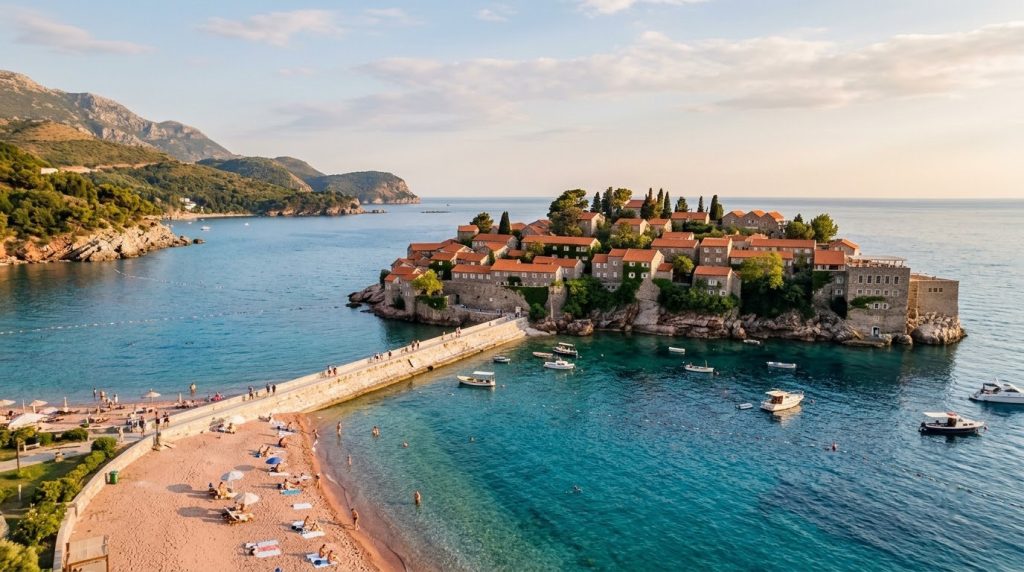
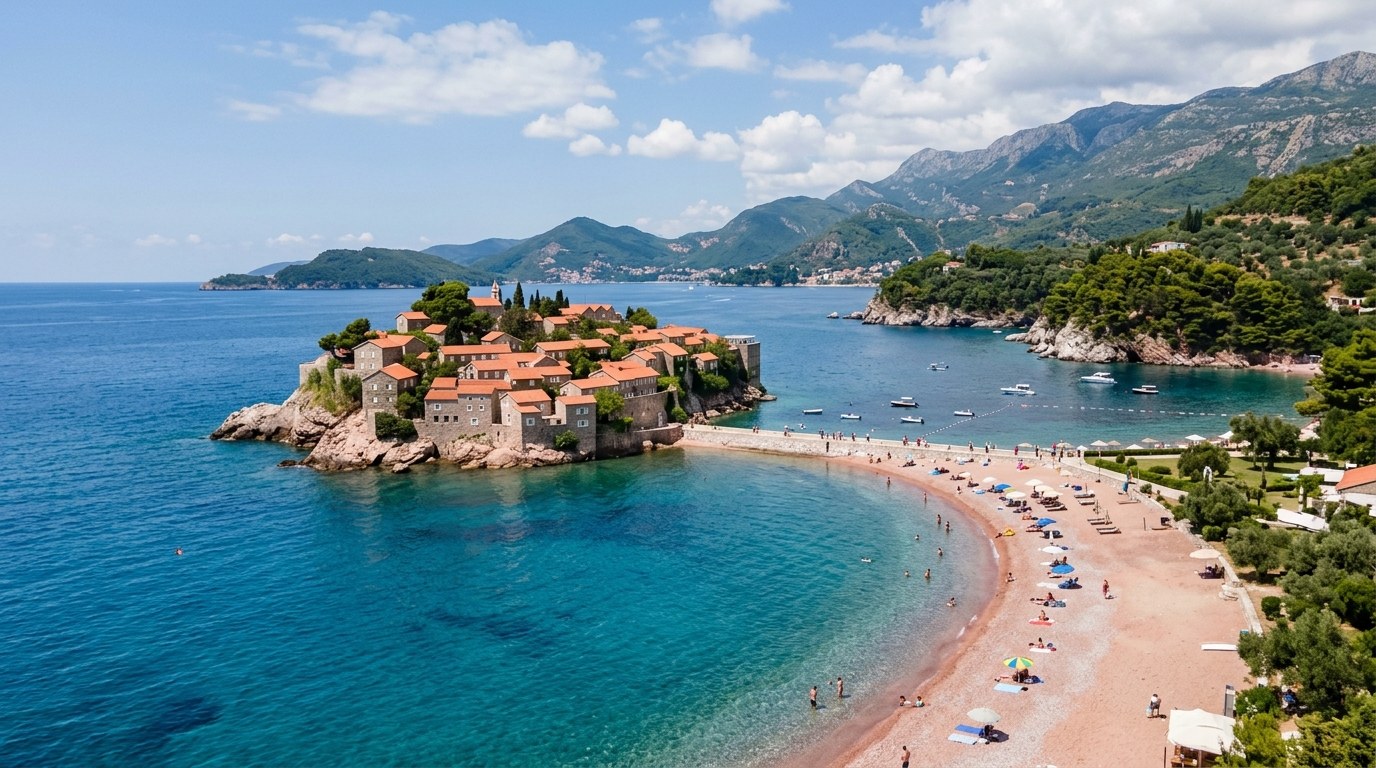
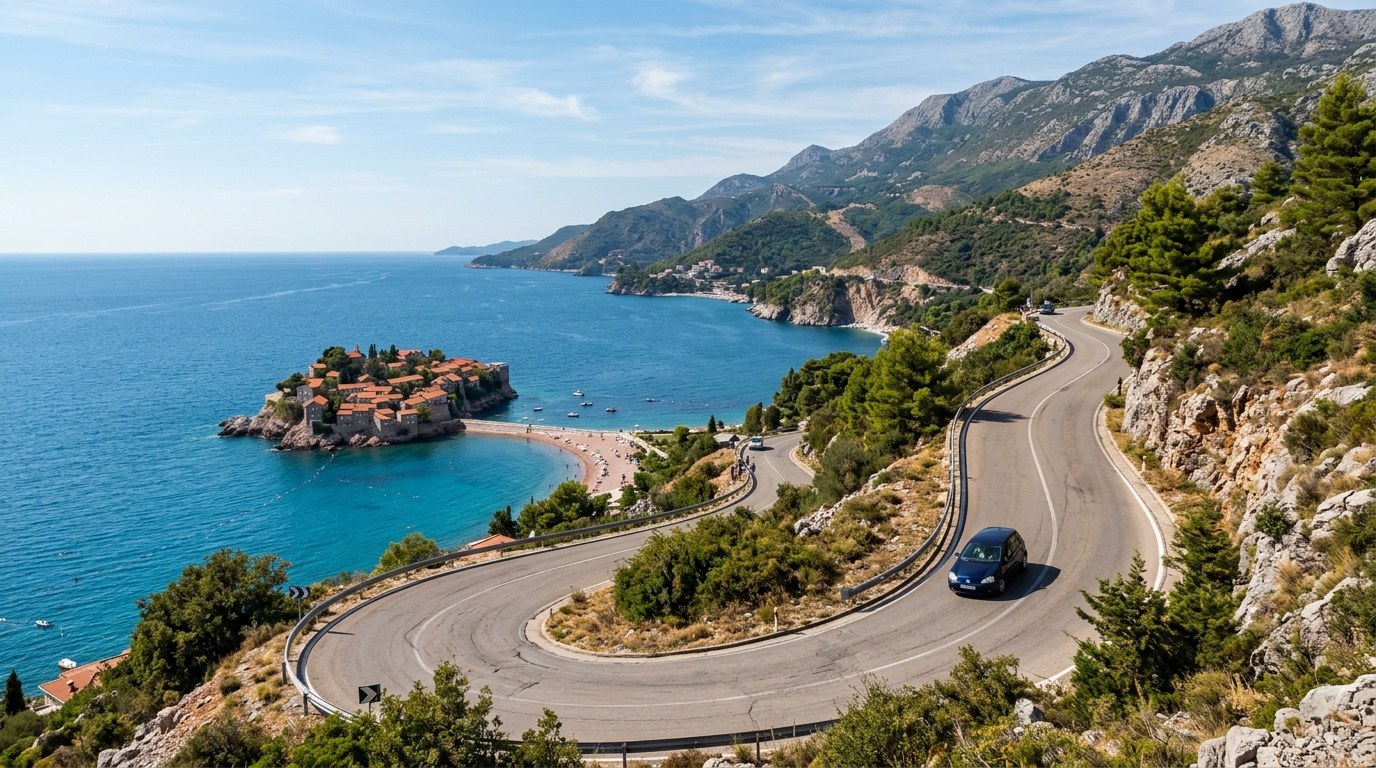
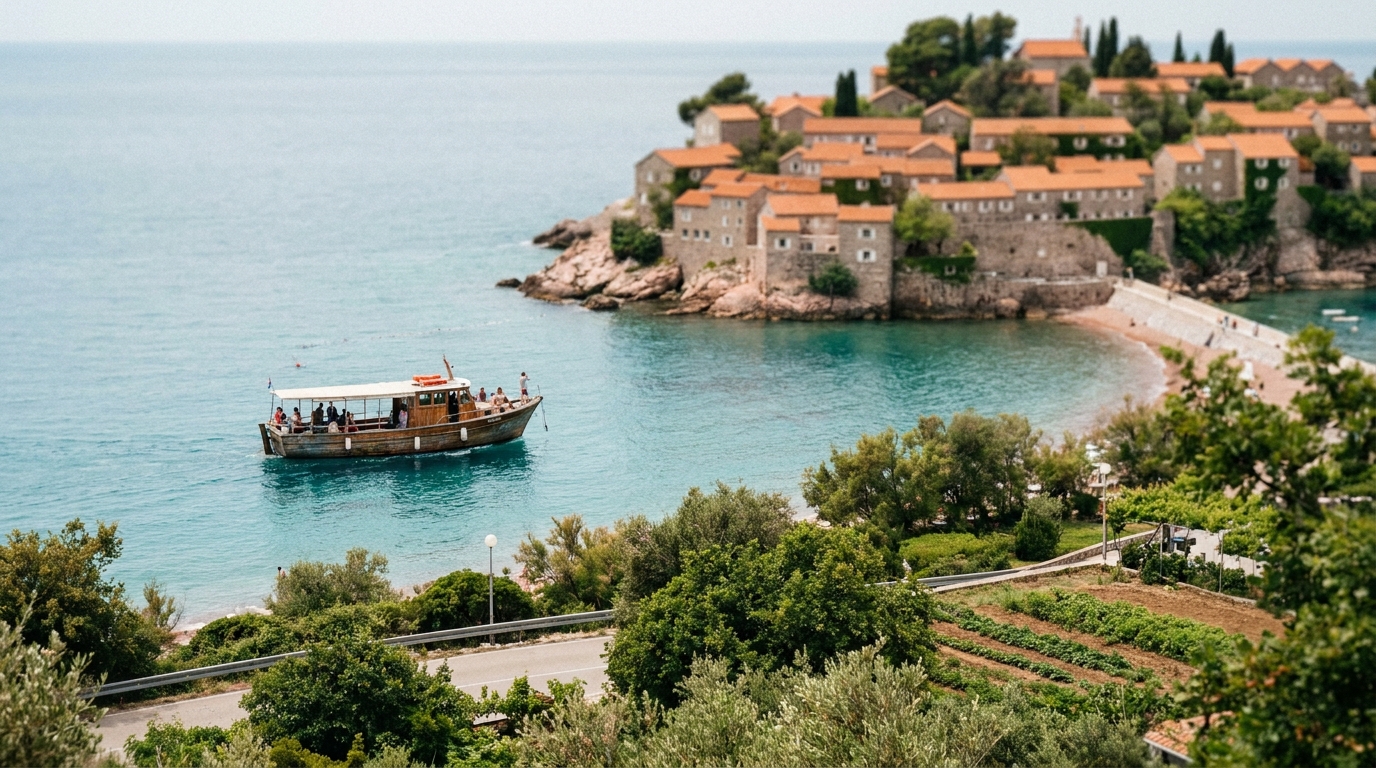
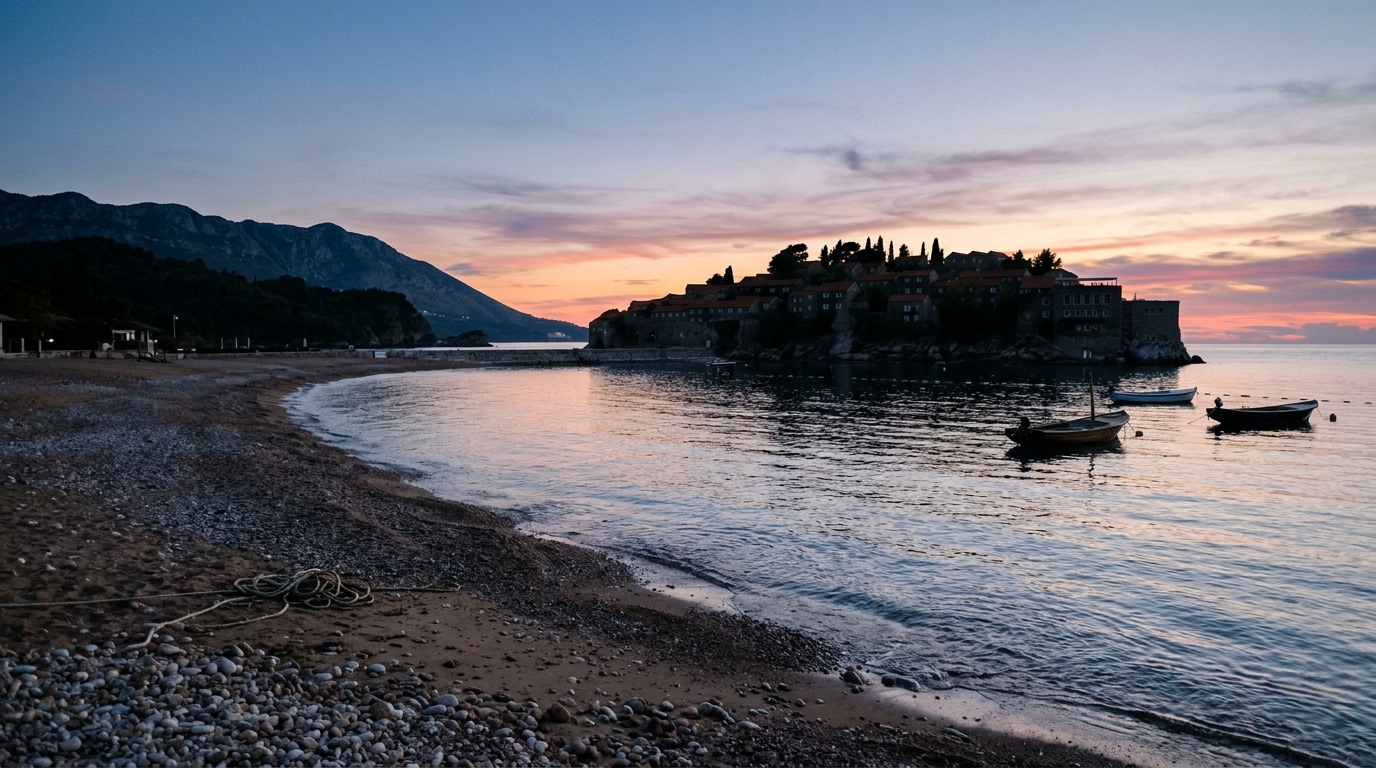
This Sveti Stefan travel guide covers every practical detail for visiting Montenegro’s most iconic landmark. The 15th-century fortified islet sits 5km south of Budva, connected to the mainland by a narrow causeway, and the entire island is now the private Aman Sveti Stefan resort with rooms from $1,500 per night. Non-guests cannot set foot on the island itself.
But the pink-sand public beach in front of it is free, the views are extraordinary, and Budva’s medieval old town is 10 minutes away. Plan carefully and it delivers one of Europe’s most memorable coastal experiences.
We only recommend services we have researched thoroughly.
Sveti Stefan Travel Guide 2026: What Is This Place and Why Does It Matter?
Sveti Stefan is a 15th-century fortified village built on a tiny islet off Montenegro’s Adriatic coast, now operated exclusively as the Aman Sveti Stefan luxury resort. Montenegro’s tourism authority reports the site as the country’s single most photographed landmark, attracting over 500,000 visitors to the Budva Riviera corridor annually (Montenegro Tourism Organisation, 2025).
The islet measures roughly 2 hectares and contains around 50 stone buildings — originally a fishing village, later a state hotel in the Yugoslav era, now a private ultra-luxury resort.
The site’s cultural history is layered in ways most visitors miss. During the Yugoslav period from the 1960s through the 1980s, Sveti Stefan operated as a state-owned hotel open to foreign currency visitors. Queen Elizabeth II, Sophia Loren, Marilyn Monroe, and Kirk Douglas all stayed here — the guest list reads like a Cold War celebrity index.
Yugoslavia used the resort to project a cosmopolitan, westward-facing image. When Aman took over in 2012, it restored the stone buildings to their original appearance while converting them to private hotel suites. The ghost of that glamorous past sits beneath every EUR 1,500 room rate.
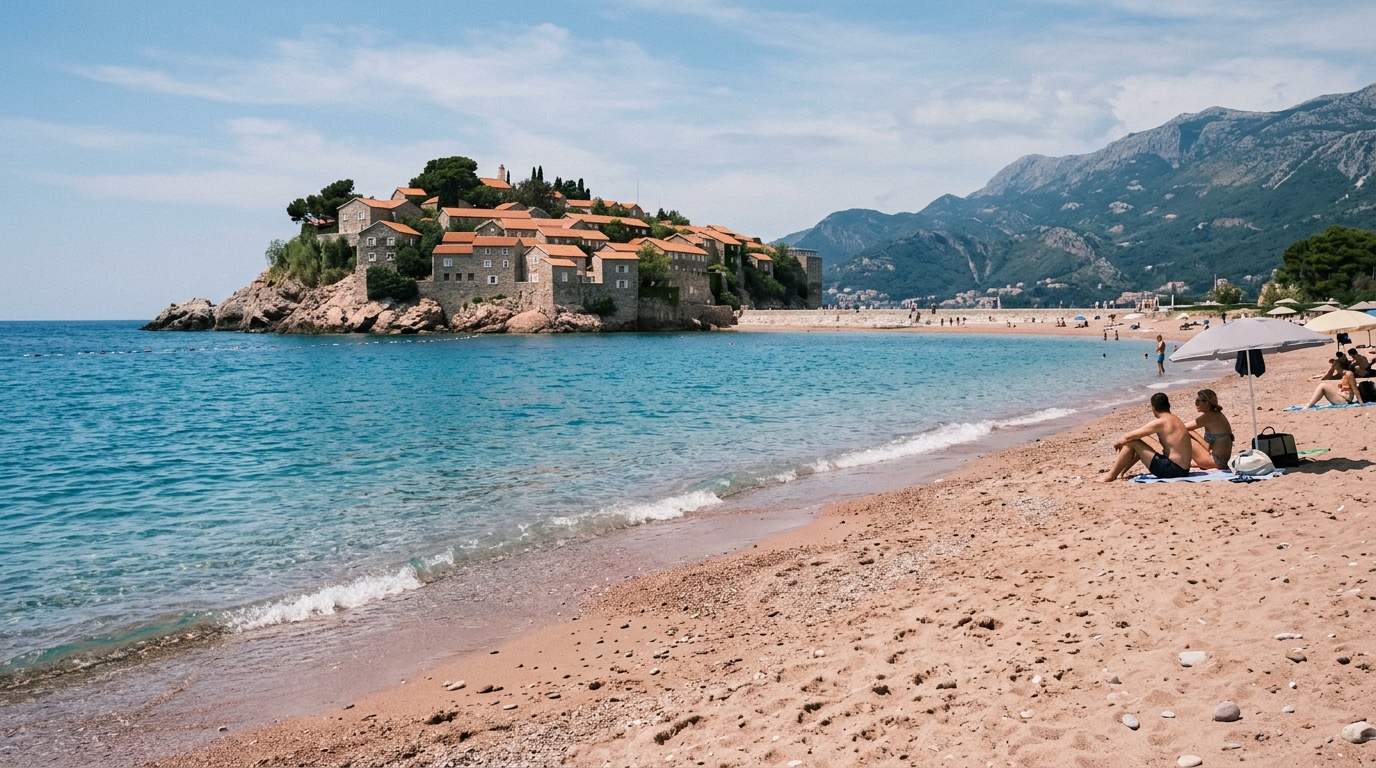
The public beach directly in front of the island is free and remains one of Montenegro’s most beautiful stretches of sand. The sand has a faint pink tint from crushed shells, visible in good morning light. This is where most visitors experience Sveti Stefan.
The island itself is background scenery for the beach, and that arrangement — luxury resort as visual backdrop to a free public beach — is genuinely unusual anywhere in the Mediterranean.
best things to do in Montenegro
How to Get to Sveti Stefan (Flights, Bus, Car)
Sveti Stefan has no direct air connection. The closest airport is Tivat (TIV), 25km away and roughly 40 minutes by car or taxi. Podgorica Airport (TGD) is approximately 90km, about 1.5 hours by road.
No direct buses run to Sveti Stefan village itself. The standard approach is to fly into Tivat, base yourself in Budva (5km north), and reach Sveti Stefan by local bus or taxi from there. You can compare flights on Aviasales to find the cheapest dates and routes.
From Tivat Airport (Recommended Route)
Tivat airport handles flights from across Europe, with strong seasonal connections from the UK, Germany, Russia, and Scandinavia. A taxi from Tivat to Budva costs approximately EUR 20-25 and takes 35-40 minutes. From Budva, the local bus No. 6 toward Petrovac stops at Sveti Stefan and costs around EUR 1.50. Alternatively, a taxi from Budva to Sveti Stefan beach runs EUR 8-10.
From Podgorica Airport
Podgorica is Montenegro’s capital airport, with more year-round connections. A taxi to Budva from Podgorica costs approximately EUR 40-50 and takes 1 hour 15 minutes. Buses also run from Podgorica bus station to Budva roughly every 1 to 2 hours; the trip takes about 1.5 hours and costs EUR 5-7 (Montenegro Bus, 2026).
Driving and Parking
Driving along Montenegro’s Adriatic coast is straightforward on the Jadranska Magistrala (Adriatic Highway). Parking near Sveti Stefan beach is limited in peak season. A small paid lot sits near the beach approach road; arrive before 9am in July or August to secure a space. Coming from Budva by car takes under 10 minutes.
Find your Sveti Stefan hotel on the map
Live prices from Booking, Airbnb and more — move the map or change dates to compare stays around Sveti Stefan.
The core triangle of Sveti Stefan beach, Milocer Royal Beach, and Budva old town is compact. Most travel between these points works by local bus, taxi, or car. The bus No. 6 runs the Budva-Petrovac coastal route and stops at Sveti Stefan, Milocer, and Petrovac roughly every 30-60 minutes in summer.
Milocer Royal Beach
Milocer beach sits immediately north of Sveti Stefan island, separated from the public beach by a headland. It was originally the private beach of the Yugoslav royal family’s summer villa.
The beach is technically part of the Aman Sveti Stefan property but day passes are available for non-guests in high season, typically priced at EUR 60-100 per person including a sunbed and umbrella. The pine forest behind the beach provides rare shade on the Montenegrin coast.
It’s one of the most beautiful beaches in the Adriatic — and the day pass price, while steep, compares favorably to similar private beach access in Croatia or Greece.
Budva Old Town (Base Camp for Visitors)
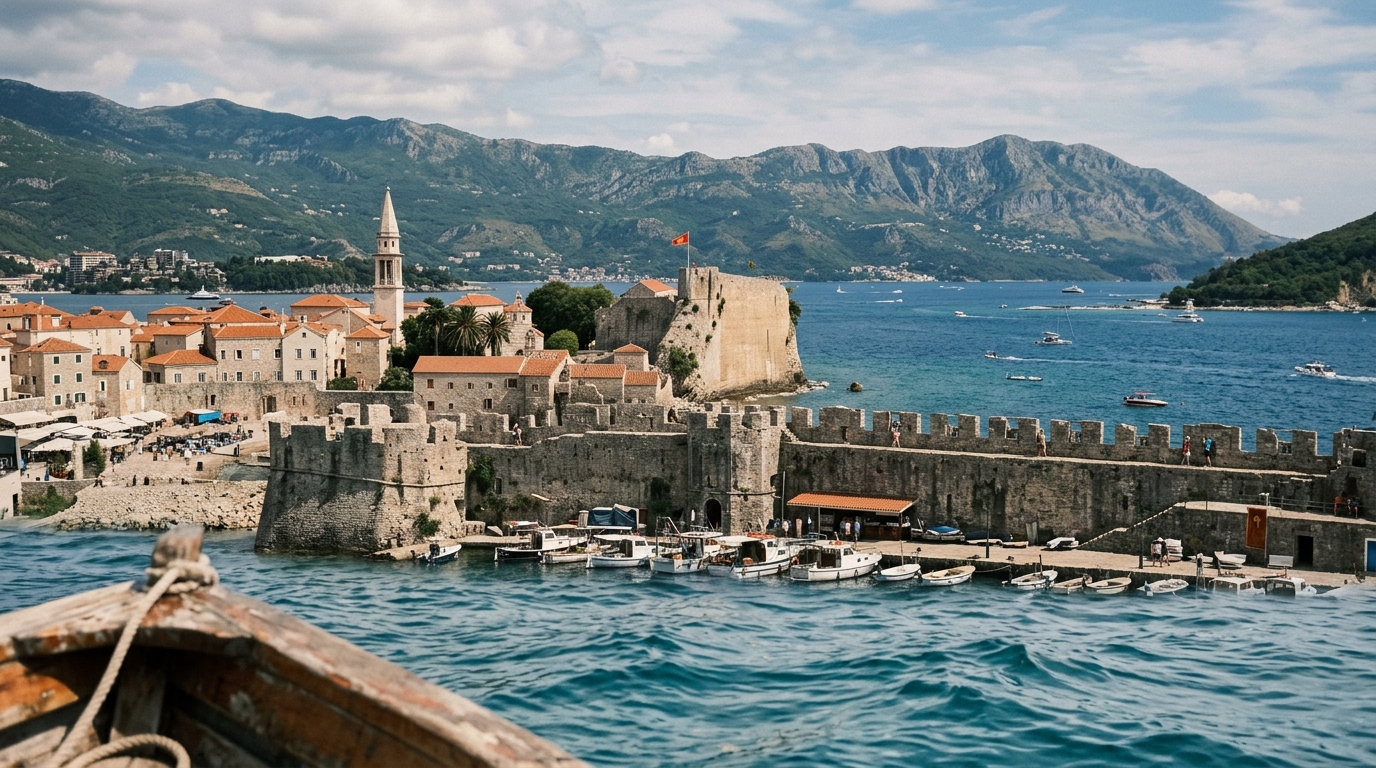
Budva’s medieval old town sits 5km north of Sveti Stefan and is free to walk through. The Venetian walls, small churches, and the citadel (EUR 2.50 entrance) are all within a 400-meter walled perimeter. Budva also has the most concentrated hotel supply, restaurant choice, and ATM access in the region. Most visitors use it as their overnight base.
Best Time to Visit Sveti Stefan 2026
May through June and September are the optimal months, combining warm sea temperatures, manageable beach crowds, and off-peak accommodation rates. July and August are both peak season and peak heat, with Sveti Stefan beach filling by 10am and Budva accommodation prices doubling or tripling compared to shoulder months (Montenegro Tourism Organisation, 2025).
Month
Crowd Level
Avg High (C)
Sea Temp (C)
Notes
Jan-Mar
Very Low
8-13
13-15
Off-season; many businesses closed; mild but cold for swimming
Apr-May
Low-Medium
16-22
17-21
Good value; sea warming; Kotor best in spring
Jun
Medium
26-28
23-24
Best balance; warm sea, moderate crowds
Jul-Aug
Very High
30-33
26-28
Peak; beaches packed by 10am; prices peak
Sep
Medium
26-28
25-26
Second-best window; warm sea; crowds easing
Oct-Dec
Low
14-19
19-22
Quieter; October still swimmable; November slow
Source: Montenegro Tourism Organisation and Windy.com historical data, 2026
The sea stays swimmable into late October, which makes Sveti Stefan one of Europe’s better late-season beach destinations. September visitors get the warmest water combined with noticeably lower hotel rates and uncrowded sands.
Sveti Stefan Travel Costs: Daily Budget by Tier
Montenegro is inexpensive by Western European standards, especially outside peak season. Staying in Budva rather than attempting the Aman Sveti Stefan resort shifts the entire cost structure dramatically. A mid-range visitor staying in Budva, eating at local restaurants, and visiting the public beach can manage the area very comfortably on EUR 70-120 per day.
Budget Tier
Daily Spend
Accommodation Base
Notes
Budget
EUR 50-70/day
Hostel dorm Budva EUR 15-25
Free beach, local food, bus transport
Mid-Range
EUR 70-130/day
Budva hotel EUR 40-80
Beach sunbed, restaurant meals, taxi to Kotor
Comfort
EUR 130-250/day
Villa/apartment near Sveti Stefan EUR 80-150
Milocer day pass, guided Kotor tour
Luxury
USD 1,500+/day
Aman Sveti Stefan from USD 1,500/night
Full island access, private beach, restaurants
Source: Booking.com rate averages and Aman Resorts published rates, May 2026
Key Cost Benchmarks
Sveti Stefan public beach: free entrance; sunbeds EUR 10-15/day
Milocer Royal Beach day pass (non-Aman guests): EUR 60-100 in peak season
Restaurant meal (Budva, mid-range): EUR 12-20 per person
Stay connected across Montenegro and the wider Balkans with an Airalo Europe eSIM — cheaper than roaming and activates before you land.
Top Attractions: What to Do at Sveti Stefan and Nearby
Sveti Stefan itself is best experienced as a morning photo and beach day. The island is a visual backdrop for the public beach — you cannot enter. Allow half a day here, then plan the surrounding area. The genuinely unmissable attraction in the region is Kotor, 30km north, which most visitors skip or underestimate.
Kotor Bay and Old Town
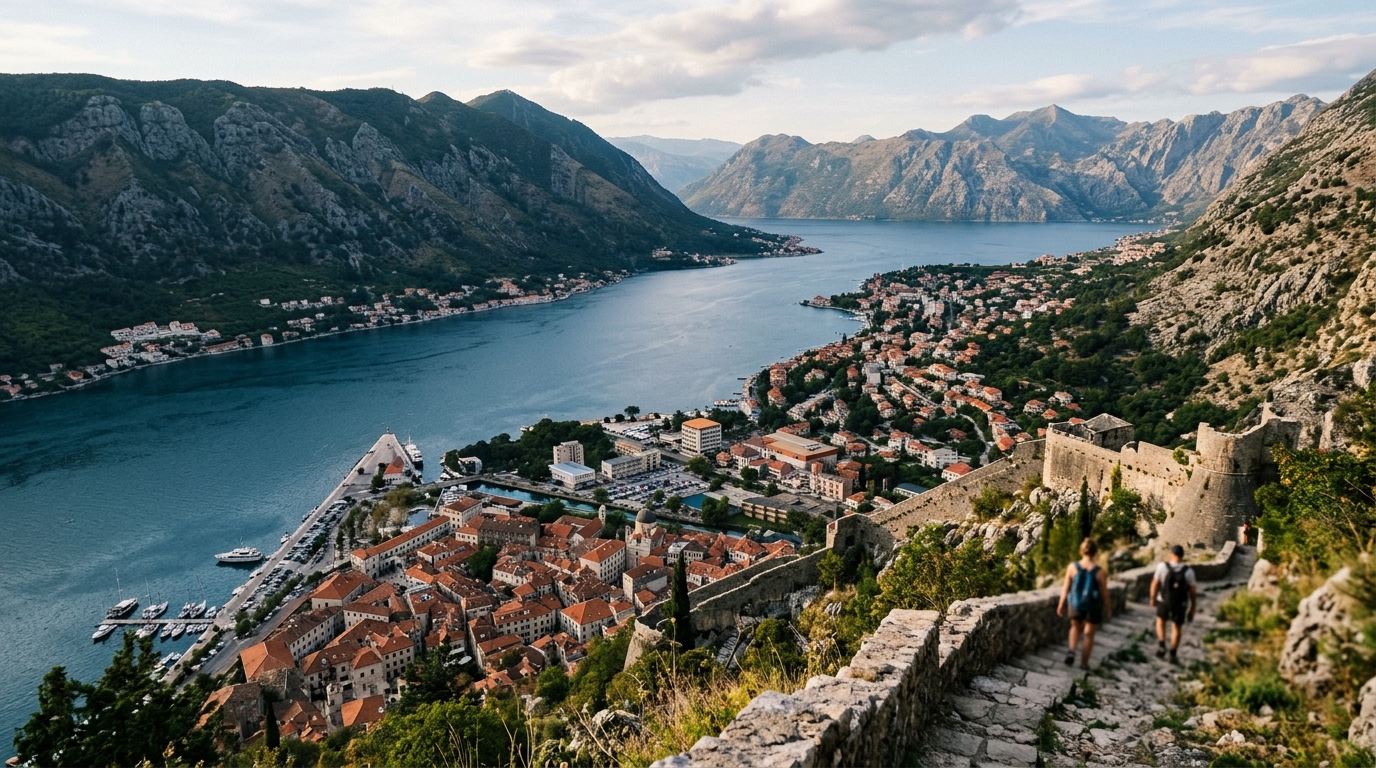
Kotor is a UNESCO World Heritage Site inscribed in 1979 as part of the Natural and Culturo-Historical Region of Kotor (UNESCO World Heritage List, 1979). The fortified medieval city sits inside a bay so enclosed it resembles a fjord.
The old town walls are free to enter; the climb to the San Giovanni Fortress above the city takes about 45 minutes and costs EUR 8 at the gate. The bay drive from Budva to Kotor is itself one of Montenegro’s most scenic roads. Allow a full day if you include the bay circuit and old town properly.
Tours typically run 3-4 hours from EUR 35 per person.
The Kotor walls are free to walk from the South Gate, which most visitors don’t know. The EUR 8 fee is charged at the main Seagate entrance used by tour groups. Walk slightly south, enter from the South Gate, and the fortifications are free — they connect to the same wall circuit. This local knowledge cuts the entry cost to zero and the approach is usually much quieter.
Sveti Stefan Beach (Public)
The public beach wraps around both sides of the causeway connecting the island to the mainland. The northern side tends to be slightly less crowded. The pink-sand coloring from crushed shells is most visible in morning light before 10am.
Sunbeds are optional; the beach itself charges no entry fee. Bring your own water and food — beach snack bars charge premium prices. Arrive by 8:30am in July or August for a decent spot.
Cetinje and the Montenegro Interior
Cetinje, Montenegro’s former royal capital, sits 50km inland at 670m elevation in the mountains behind the coast. The Cetinje Monastery houses a revered Orthodox relic, and the National Museum of Montenegro occupies several royal villas. The drive from Sveti Stefan winds up through the Lovecen mountains with panoramic bay views. Allow a full day. GetYourGuide Montenegro day trips include Cetinje on many itineraries combined with the Kotor bay circuit.
Where to Stay Near Sveti Stefan
Staying on the Sveti Stefan island itself means booking the Aman resort at rates starting around USD 1,500 per night. For the vast majority of visitors, Budva is the practical base, with Petrovac as a quieter alternative. Both offer easy day-trip access to the public beach. best hotels near Sveti Stefan
Base
Distance to Sveti Stefan
Price Range/Night
Best For
Budva (budget hotels)
5km, 10 min
EUR 40-80
Most visitors; best nightlife + dining
Budva (mid-range)
5km, 10 min
EUR 80-150
Couples, comfort travelers
Petrovac
10km, 15 min
EUR 50-120
Families; quieter atmosphere
Apartment (Sveti Stefan village area)
1-2km
EUR 60-120
Walking distance to beach; Booking.com listings
Aman Sveti Stefan
On island
USD 1,500+
Ultra-luxury; full island access
Source: Booking.com rate averages, May 2026
Search current availability and reviews on Check live hotel prices for the full range of Budva and Petrovac properties. The apartment supply near Sveti Stefan beach itself (listed under “Sveti Stefan” on Booking.com) has grown significantly since 2023 and now offers some of the best value in the area at EUR 60-100 per night.
Petrovac: The Quieter Alternative
Petrovac sits 10km south of Sveti Stefan and is noticeably calmer than Budva. The small curved beach backed by old olive trees has a local, non-commercial feel. Hotels here, including Hotel Posejdon, typically run EUR 80-150 in peak season. It suits families and travelers who find Budva’s nightlife and crowd levels excessive. The local bus connection to Sveti Stefan and Budva runs regularly in summer.
Practical Tips for Visiting Sveti Stefan
These are the most important logistics that first-time visitors typically get wrong.
1. You cannot enter the island. The Aman resort controls access to the islet entirely. Do not attempt to walk across the causeway — security will turn you back. The public experience is the beach in front of it.
2. Arrive at the beach early. Before 9am in July-August. The beach fills fast and the best photography light is early morning anyway.
3. The local bus is sufficient. Bus No. 6 from Budva to Petrovac stops at Sveti Stefan for EUR 1.50. Taxis cost EUR 8-10 and are faster but not necessary.
4. Book Kotor separately and early. Kotor bay boat tours sell out in peak season 2-3 days ahead. Book online the day you arrive in Budva.
5. Montenegro uses the Euro. Despite not being an EU member, Montenegro adopted the Euro unilaterally. No currency exchange needed for EU travelers.
6. EU and US citizens do not need a visa. Montenegro is an EU accession candidate and offers visa-free entry for EU, US, and UK passport holders for stays up to 90 days (Montenegro Ministry of Foreign Affairs, 2026).
7. Sunscreen and water are essential. The Adriatic coast gets intense summer sun with minimal shade on the beach. There is no natural shade at Sveti Stefan public beach outside the early morning hours.
8. Milocer day pass is worth it once. If budget allows, a single Milocer Royal Beach day pass at EUR 60-100 is a worthwhile splurge — it’s a genuinely exceptional beach with pine shade and calm water, and it gives you the closest legitimate access to the Aman property.
Sveti Stefan Travel Guide: Final Verdict
Sveti Stefan is one of Europe’s most photogenic places, and it delivers fully on that reputation — even though the island itself is off-limits. The pink-sand public beach, the 15th-century island backdrop, the short drive to Kotor’s UNESCO old town, and Montenegro’s excellent value all combine into a strong destination.
July and August bring real crowds and elevated prices; May, June, and September are the same scenery at half the cost and a fraction of the hassle.
Base yourself in Budva for convenience and budget flexibility. Spend a morning at Sveti Stefan beach early, do a full Kotor day, consider the Milocer day pass if the budget allows, and you have a near-perfect Adriatic coastal trip that most travelers outside the region haven’t discovered yet.
For current accommodation pricing and apartment options near the beach, search check live hotel prices in Sveti Stefan and Budva. For guided Kotor Bay tours and Montenegro day trips, browse GetYourGuide’s Montenegro listings.
Frequently Asked Questions
Can you visit Sveti Stefan island without staying at the Aman resort?
No. The entire Sveti Stefan islet is private Aman resort property. Non-guests cannot cross the causeway. The public Sveti Stefan Beach, directly in front of the island, is free to access and gives you full views of the island — this is where most visitors experience the site. Milocer Royal Beach adjacent to the property offers a day-pass option for non-guests at EUR 60-100 in high season.
How do you get from Budva to Sveti Stefan?
Bus No. 6 on the Budva-Petrovac route stops at Sveti Stefan and costs approximately EUR 1.50 per person. A taxi from central Budva costs EUR 8-10 and takes about 10 minutes. By car, the drive follows the coastal road south and takes under 10 minutes. There is limited paid parking near the beach approach.
What is the best base for visiting Sveti Stefan?
Budva (5km north) is the best all-round base. It has the widest hotel choice from EUR 40-80 per night, a free medieval old town, restaurants, ATMs, and direct bus access to Sveti Stefan and Kotor. Petrovac (10km south) is quieter, suits families, and has its own pleasant beach.
Staying in an apartment listed as “Sveti Stefan” on Booking.com puts you within walking distance of the beach at EUR 60-120 per night.
How far is Kotor from Sveti Stefan and is it worth visiting?
Kotor is approximately 30km north of Sveti Stefan, about 40 minutes by car or 1 hour by bus. It is absolutely worth visiting — a UNESCO World Heritage inscribed fortified medieval city with a free old town and a bay views that rival anything in the Adriatic.
Most visitors underestimate it and rush through in an hour; plan a full day, including the wall climb and a boat tour of the bay (UNESCO World Heritage List, 1979).
When is the best time to visit Sveti Stefan for the beach?
May-June and September offer the best combination of warm sea temperatures (21-26C), manageable beach crowds, and lower accommodation prices. July and August are the warmest months but also the most crowded, with peak prices and beaches filling by mid-morning. The sea stays swimmable into October, making late September and early October good value for travelers who can travel outside school holiday periods.
This Sveti Stefan travel guide was researched and written in May 2026. Prices and schedules are subject to change; verify with official sources before booking.
Keep planning Sveti Stefan
Ready to book Sveti Stefan?Live prices from Booking, Airbnb and more for your dates.