Things to Do in Nicaragua in 2026: 8 Top Picks and Budget Tips
Disclosure: Some links in this guide are affiliate links. If you book or buy through them, we may earn a small commission at no extra cost to you — it helps keep our guides free.
- Volcanoes are the headline: Masaya’s night tour starts around $60 from Granada, and Cerro Negro boarding runs about $55 to $69 for roughly five hours.
- Dry season is easiest: December to April is the best window for boarding and volcano hikes, though Masaya’s lava can be seen year-round.
- Ometepe needs time: a guided day trip from Granada starts around $139 for nine hours, so staying overnight is usually better value.
- Base yourself smartly: Granada, León, and San Juan del Sur cover most highlights without long transfers.
- Go independent to save: shared shuttles, local ferries, and public buses cut costs sharply compared with private tours.
At a glance
| Attraction | Entry | Hours | Time needed |
|---|---|---|---|
| Masaya Volcano night tour | From $60 | About 4.5 hours | |
| Cerro Negro volcano boarding | About $55-69 | About 5 hours | |
| Ometepe Island day trip | From $139 | About 9 hours | |
| Maderas volcano trek | From about $120 | Full day | |
| Mombacho ATV and wildlife tour | About $90 | About 3 hours |
The best things to do in Nicaragua are volcano-focused: watch the lava glow at Masaya, slide down Cerro Negro on a board, and hike on twin-coned Ometepe Island. Between them, you’ll fit in Granada’s colonial streets, León’s rooftop cathedral, Pacific surf in San Juan del Sur, and a Caribbean escape to the Corn Islands.
What makes Nicaragua work for budget travelers is the geography. Most Pacific highlights sit within a few hours of each other, and one itinerary source suggests 7 to 8 days covers the main Pacific stops, while 10 to 11 days lets you add Ometepe and León comfortably. Below you’ll find realistic prices, timing, and ways to spend less. If you’re still choosing dates, start with our guide to the best time to visit Nicaragua.
A sensible route is to base yourself in Granada for four nights, then take a shuttle to León and finish at the coast. The biggest lesson was that the cheap days beat the expensive tours. A morning walking Granada’s streets and an afternoon swim at Laguna de Apoyo cost us less than one organized excursion, and we enjoyed both more.
What are the best things to do in Nicaragua?
The best things to do in Nicaragua combine colonial cities and active volcanoes. Operator pricing in 2026 puts a Masaya night tour from about $60, Cerro Negro boarding at roughly $55 to $69, and an Ometepe day trip from $139. Those three experiences anchor most first-time itineraries.
Here’s the quick view before we get into detail. Prices are approximate, change by season and group size, and are worth confirming before you book.
| Activity | Typical length | Approximate cost | Best season |
|---|---|---|---|
| Masaya Volcano night tour | About 4.5 hours from Granada | From $60 | Year-round |
| Cerro Negro volcano boarding | About 5 hours from León | About $55-69 | Dec-Apr |
| Ometepe Island day trip | About 9 hours from Granada | From $139 | Dec-Mar for hikes |
| Maderas volcano trek | Full day | From about $120 | Dec-Mar |
| Mombacho ATV and wildlife tour | About 3 hours | About $90 | Dry season |
| Granada guided tours | Half day | Varies by operator | Dec-Apr |
Source: operator pricing, 2026
Which Nicaragua highlights are worth your time?
Nicaragua’s top highlights are worth your time if you match them to your travel style. Operator listings in 2026 show volcano activities clustering between $50 and $140, so choosing two or three beats trying everything. Here are eight activities, in a loose route from Granada north and then south to the coast.
1. Wander colonial Granada
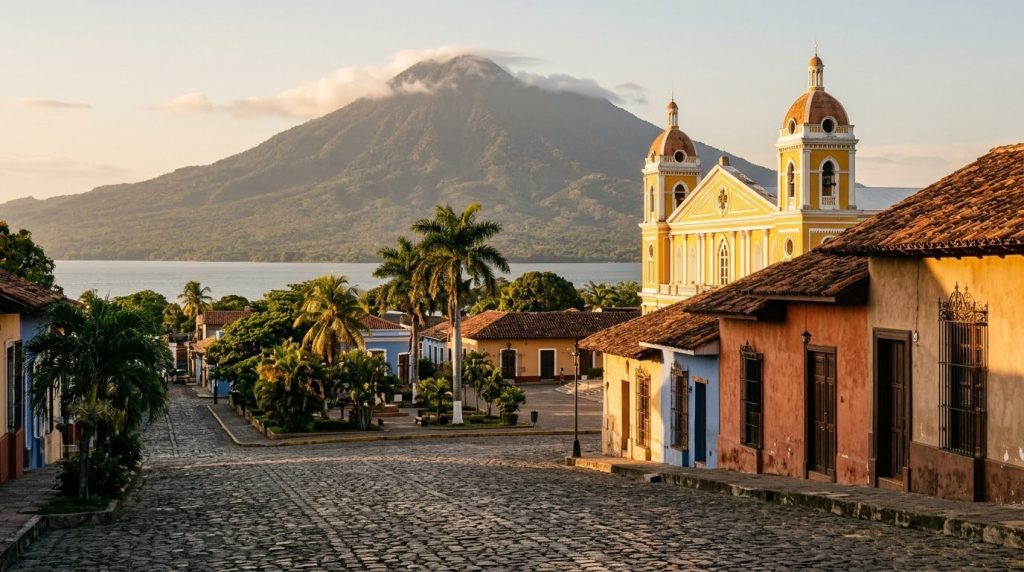
Granada is the easiest first stop, a colonial city on the shore of Lake Nicaragua with bright facades, churches, and a lively central plaza. You can see most of it on foot in half a day, and walking costs nothing. Climb a church bell tower for the view if you want a small splurge.
The dry season, roughly December to April, is the most comfortable time for strolling. Granada also makes a good base for day trips to Laguna de Apoyo, the Isletas, and Masaya. Guided walking tours exist, but a self-guided loop around the plaza, the lakefront, and the side streets works fine for most visitors.
Laguna de Apoyo is a crater lake just outside town, good for swimming and kayaking. The Isletas are small islands in the lake that you can tour by boat for a modest fee, usually negotiated with the boatman. We’ve found that agreeing on the price and the length of the trip before you board saves arguments later.
2. See the lava at Masaya Volcano
Masaya is the classic night experience: a glowing lava lake inside the crater, plus the El Comalito cone and a small museum at the visitor center. One source notes lava viewing works year-round, which makes it a safe bet whatever month you travel. Guided night tours from Granada start around $60 and take about 4.5 hours.
The cheaper route is going independently. Granada and Masaya are close, and a shared taxi or a local bus plus a short ride gets you to the park. You’ll pay the national park entry fee, which is modest but worth checking on arrival. Viewing time at the rim can be limited for safety reasons, and access can change if gas levels rise, so ask locally on the day.
Bring a jacket and a flashlight. The crater rim gets windy after dark, and sulfur fumes can irritate anyone with breathing problems.
3. Hike and relax on Ometepe Island
Ometepe is two volcanoes, Concepción and Maderas, joined by a narrow strip of land in the middle of Lake Nicaragua. You need a ferry to reach it, and that alone makes it feel like a proper adventure. A guided day trip from Granada starts around $139 for about nine hours, and a Maderas trek is from about $120.
We’d skip the rushed day trip if you can. Ferries run from the mainland, and staying one or two nights lets you hike, swim at a waterfall or beach, and ride a scooter around the island at your own pace. The best hiking window is December to March, when trails are drier. Concepción is a demanding climb, while Maderas has a crater lagoon and is muddier.
A cheaper plan is taking the public ferry, booking a simple guesthouse, and hiring a local guide only for the volcano itself. Guides are often required for the big climbs, so confirm this before you set off.
4. Explore León’s cathedral and old center
León is Nicaragua’s creative, student-filled city and a strong contrast to Granada. Its large whitewashed cathedral is the star, and you can walk across the roof for views of the city and surrounding volcanoes. Entry to the roof carries a small fee, and a rooftop visit near sunset is a favorite.
Allow a full day to wander its museums, murals, and plazas. Food here is cheap, and local eateries serve filling plates for a few dollars. León is also the launching point for volcano activities, so many travelers spend two or three nights.
5. Board down Cerro Negro
Cerro Negro is a young cinder cone near León where you hike up with a board on your back and slide down the black gravel slope. Operator listings show tours at roughly $55 to $69 for about five hours, with a sunset option from about $50. The cone is best visited December to April, when the weather is dry and clear.
Is it worth it? Honestly, yes if you like a short adrenaline hit. The hike is steady rather than hard, and the ride down is quick. Most operators provide gear such as a jumpsuit and goggles. Compare a few León hostels and operators, because price and group size vary, and ask exactly what is included in the fee.
Safety standards differ between operators, so read recent traveler feedback, and check any current travel advisory from your own government before you commit.
6. Surf and sunset in San Juan del Sur
San Juan del Sur is the Pacific beach town people head to after the volcanoes. It has a crescent bay, a casual restaurant strip, and surf beaches within reach, including Playa Maderas and Playa Hermosa. A hilltop statue of Christ above the bay gives the best sunset view for little cost.
Surfing lessons suit beginners, and board rental is cheaper than a full lesson if you already know the basics. Most visitors reach the coast by shuttle from Granada or by bus via Rivas. Surf beaches are best in the dry season, but the sea is warm year-round. Expect pricier food here than inland, so eat at local comedores for the best value.
7. Walk the Mombacho cloud forest
Mombacho is a volcano near Granada covered in cloud forest, so you walk through fog, ferns, and the occasional wildlife. Hiking trails are best in the dry season. An ATV and wildlife tour runs roughly $90 for about three hours, though the pricing varies by operator.
If you’re counting dollars, pick the hiking option over the ATV. Pack a light rain layer, since the mist is constant at the top. We’d combine it with a Granada morning so you only need one transfer.
8. Escape to the Corn Islands
The Corn Islands are the Caribbean option, a small pair of islands off the east coast with a very different culture and pace from the Pacific side. Getting there is the real cost, since you typically fly from Managua or travel by a longer land and boat route. Flight prices and schedules are not something we could confirm for 2026, so check current options before building a plan around them.
Once there, you’ll find snorkeling, quiet beaches, and fresh seafood. Budget at least three nights, since the journey eats a day each way. This is a splurge relative to the rest of Nicaragua, so we’d treat it as an add-on for travelers with 10 days or more.
How much does a trip to Nicaragua cost?
A trip to Nicaragua costs far less than most of Central America if you stay in hostels, eat locally, and use shared transport. National tourism board messaging and operator pricing in 2026 both point to volcano tours as the main cost driver, not accommodation or food. These ranges are approximate daily estimates per person, excluding flights.
| Travel style | Approximate daily budget (USD) | What it usually covers |
|---|---|---|
| Backpacker | $30-50 | Hostel dorm, local meals, public buses, one cheap activity |
| Mid-range | $70-120 | Private room, restaurant meals, shuttles, one tour a day |
| Comfortable | $150-250+ | Boutique hotel, private transfers, guided tours |
Source: operator and lodging pricing, 2026
The US dollar is widely accepted in tourist areas, but you’ll usually get a better rate paying small purchases in cordobas. Carry small bills, since change for large notes can be hard to find. Prices are estimates and shift with the season, so treat them as a starting point.
How can you save money in Nicaragua?
You save the most in Nicaragua by skipping private transfers and choosing tours selectively. Operator pricing in 2026 shows a gap of roughly $50 or more between a basic Cerro Negro session and a full Ometepe day trip, so the activities you pick matter more than where you sleep.
Here are the tips we’d actually follow:
- Use shared shuttles between Granada, León, and San Juan del Sur instead of private cars.
- Go to Masaya independently when you can, and book a guided night tour only if you want the convenience.
- Stay overnight on Ometepe rather than paying for an expensive day trip.
- Eat at comedores where a set meal costs a few dollars.
- Travel in the shoulder months like November or May, when lodging is often cheaper.
- Compare two or three operators for boarding and trekking, and ask what’s included.
Dry season is the busy period, roughly December to April, so booking popular hostels earlier helps. Wet season runs about May to October, with afternoon storms, greener scenery, and fewer visitors. Our best time to visit Nicaragua guide breaks down the months in detail.
How many days do you need in Nicaragua?
You need about a week to cover the Pacific highlights, and longer if you want Ometepe, León, and the islands. One itinerary source suggests 7 to 8 days for the Pacific highlights and 10 to 11 days if you add Ometepe and León, which matches how we’d pace it ourselves.
A simple route looks like this:
- Days 1 to 3: Granada, Masaya Volcano, Laguna de Apoyo.
- Days 4 to 5: Ometepe, with one night on the island.
- Days 6 to 7: San Juan del Sur for beaches and sunsets.
- Days 8 to 10: León and Cerro Negro, then onward if you add the Corn Islands.
Distances are short, but roads and traffic can slow you down, so build in buffer time on travel days.
Is Nicaragua safe for travelers?
Nicaragua is visited by many travelers each year, and most trips pass without problems, but conditions can change, so check your government’s current advisory before you go. Use the same common sense you would elsewhere: avoid displaying valuables, use registered taxis, and travel by day where you can.
Volcano activities add their own risks. Follow guides’ instructions at Masaya, Cerro Negro, and on Ometepe, and don’t climb in poor weather. Travel insurance that covers adventure activities is worth the extra few dollars.
Find your Nicaragua hotel on the map
Live prices from Booking, Airbnb and more — move the map or change dates to compare stays across Nicaragua.
Frequently Asked Questions
What is the best thing to do in Nicaragua?
For most first-time visitors, the Masaya Volcano night tour and Cerro Negro boarding stand out. Masaya’s lava can be seen year-round, while boarding is best from December to April. Add Granada and Ometepe for a balanced trip.
How much does volcano boarding cost?
Operator pricing in 2026 shows Cerro Negro boarding at roughly $55 to $69 for about five hours, with a sunset option from around $50. Prices vary by operator and group size, so confirm what the fee includes before you book.
How many days should I spend in Nicaragua?
Plan 7 to 8 days for the Pacific highlights, or 10 to 11 days if you add Ometepe and León. Add more time for the Corn Islands, since getting there takes a good part of a day.
Can you visit Ometepe in a day?
Yes, a guided day trip from Granada takes about nine hours and starts around $139. Staying a night usually gives better value and more time to hike or swim. The best hiking months are December to March.
Should I bring US dollars or cordobas?
Both work in tourist areas. Carry small US bills for convenience and some cordobas for local buses, markets, and comedores, where you’ll often get better prices.
Nicaragua rewards travelers who pick a few strong experiences and take the slower, cheaper routes between them. Choose your dates with the best time to visit Nicaragua in mind, lock in two or three headline activities, and keep the rest of your days flexible.