Is Lake Como Safe? Honest Risks for US Travelers (2026)
Disclosure: Some links in this guide are affiliate links. If you book or buy through them, we may earn a small commission at no extra cost to you — it helps keep our guides free.
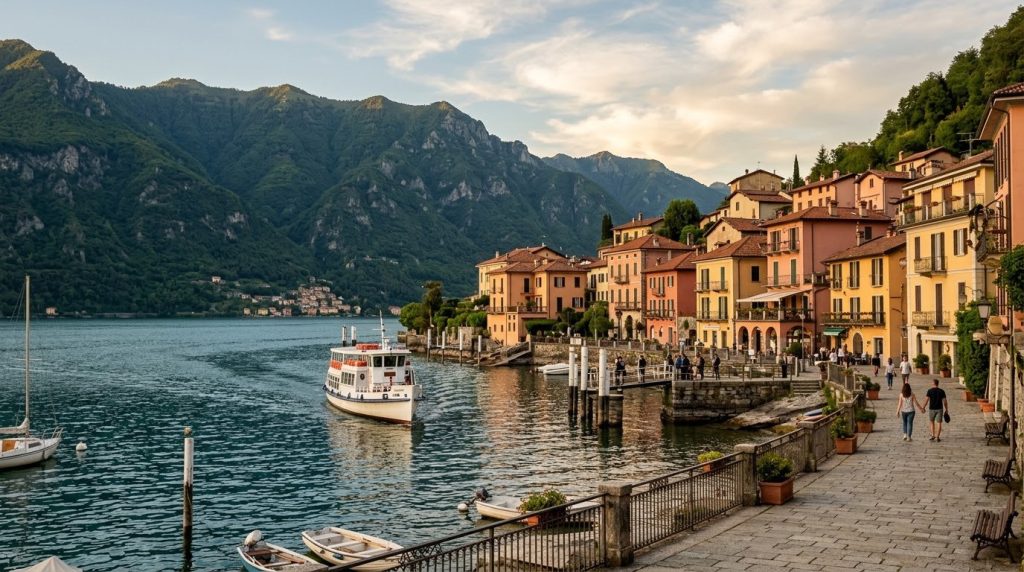
Yes, Lake Como is safe for most visitors: the US State Department rates Italy at Level 2 “Exercise Increased Caution” (last updated 23 May 2025), a nationwide rating rather than a lake-specific warning, and violent crime against tourists here is rare.
The risks that actually hurt people are physical: narrow lakeside roads, cold and deep water with no lifeguards, slippery trails and fast-building summer storms. Pickpocketing exists, but mostly in crowded ferry queues and Como town.
| Risk | Reality | What to do |
|---|---|---|
| Crime | Low; petty theft in crowds | Zip bags in ferry lines, use the hotel safe |
| Driving | SS340 and the Lariana road are tight, with buses | Take ferries and trains, drive slowly if you must |
| Swimming | No lifeguards on most beaches, depth drops fast | Swim near shore in designated spots |
| Hiking | Easy trails, but wet stone and heat | Real shoes, water, start early |
| Weather | Short, violent afternoon storms | Check forecasts, get off the water early |
| Ferries | Crowded queues April to October | Buy tickets early, avoid midday peaks |
The honest answer on crime
Lake Como is a string of small, wealthy villages. The UK FCDO’s Italy safety page calls crime generally low, flagging bag-snatching, pickpocketing and drink spiking in city centers and on transport. That matches the lake: thefts cluster where people are packed together, not on quiet village lanes.
The State Department’s Level 2 covers all of Italy, Rome and Milan included. If you fly nonstop from New York to Milan Malpensa (about 8 hours), Milan’s metro is a bigger pickpocket risk than anywhere on the lake.
Scams and traps that actually happen
Classic tourist scams are uncommon. What catches Americans out is closer to a trap:
– ZTL camera fines. Restricted traffic zones in towns like Como and Bellagio are camera-enforced. Fines run USD 90–135 (EUR 80–120) per crossing, plus a rental-company fee of USD 45–67 (EUR 40–60), arriving weeks after you fly home.
Converted at USD 1 = EUR 0.89. – Distraction theft in ferry lines. Queues at Como, Bellagio and Varenna build daily from April to October, with peak waits of about two hours. Crowds plus phones out equals easy pickings. – Spiked drinks. The FCDO reports robberies after drink spiking in Italy. Keep yours in hand.
Transport safety: why you should skip driving the lake roads
This is the biggest real-world risk. The SS340 “Regina” road on the western shore squeezes between stone walls with blind corners and full-size C10 and C30 buses that will not back up for you. The Lariana road from Como to Bellagio is tighter still and prone to rockfalls; one local driving guide clocks about 90 minutes for 40 km.
On the eastern side, the SS36 is a fast tunnel highway that jams on summer weekends. On 28 June 2026, roadworks near Colico cut it to one lane and southbound queues reached four hours.
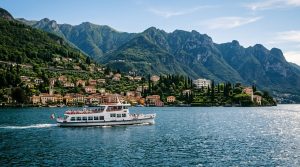
The fix: use ferries and the Milan to Varenna train. A regular Como to Bellagio ferry runs about USD 11–14 (EUR 10–12), or USD 17–19 (EUR 15–17) on the fast boat, per a 2026 local ferry guide. Our best things to do in Lake Como roundup favors boat-accessible stops for this reason.
Swimming mistakes to avoid
Lake Como is about 410 meters deep, the deepest lake in Italy. A Lecco guide to lake swimming lists the hazards plainly: most beaches have no lifeguards, the bottom drops off within a few meters of shore, and ferries, speedboats and water taxis run all day. Wind can turn calm water rough within minutes.
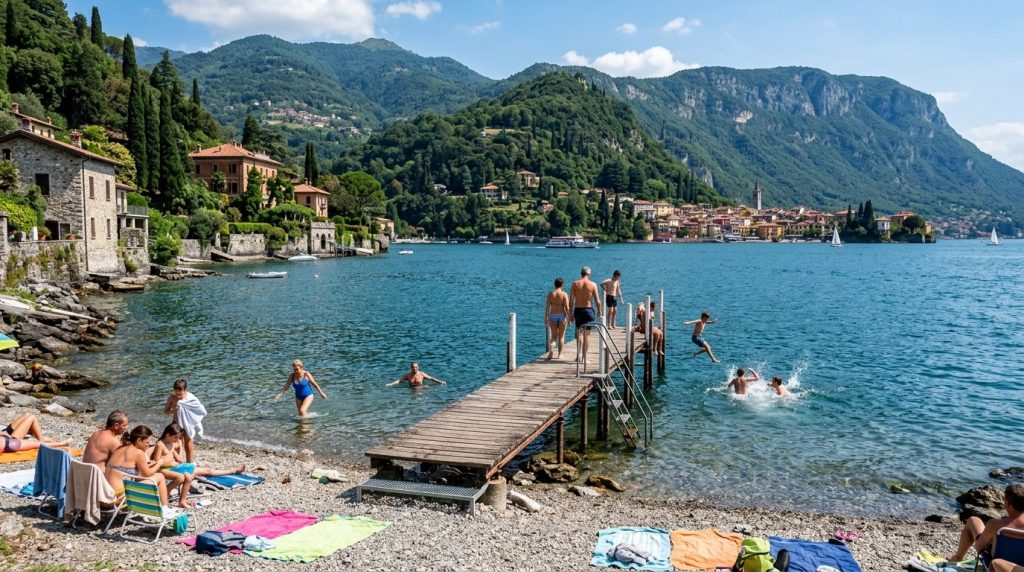
Water averages about 15°C (59°F) in May, 19°C (66°F) in June and 23–24°C (73–75°F) in July and August, so cold-water shock is a real early-season risk. Swim near shore at a designated lido, never dive where you cannot see the bottom, and skip the beer first. Our guide to the best time to visit Lake Como covers which months are genuinely swimmable.
Hiking and storms: easy trails, real consequences
– Greenway del Lago di Como (western shore): 11.2 km from Colonno to Cadenabbia, about 3.5 hours, roughly 221 m of climbing. No technical difficulty, but not stroller-friendly. – Sentiero del Viandante (eastern shore): an old mule track of about 70 km from Lecco to Sorico, in 8 stages with about 2,470 m of ascent, rated “E” (easy hiking). The railway and seven ferry landings let you bail out of any stage.
The risks are wet stone after rain, heat on exposed sections and ankles twisted in sandals. Wear proper shoes, carry water, start early and check your travel insurance covers mountain rescue. Our 4-day Lake Como itinerary spaces hikes, ferries and rest days sensibly.
Weather is the risk most people underestimate. North Lake Como’s tourism board describes short, frequent summer storms, mostly afternoon or evening, and northern gusts up to 40 knots. That matters if you are kayaking, paddleboarding or on a rented boat.
The extreme version came in July 2021, when torrential rain triggered landslides in Blevio, Torno and Brienno and closed the Regina and Lariana roads. That is rare, but get off the water by mid-afternoon when thunderstorms are forecast.
Solo and female travel
Solo women generally report feeling safe here, and evenings in Varenna, Bellagio and Menaggio are mostly couples and families at dinner. The issues are isolation, not threat: villages go quiet late, many roads lack sidewalks, and the last ferry can leave earlier than you expect. Stay walkable to dinner, save a taxi number and check the last boat before crossing.
If you head out from the lake, our best day trips from Lake Como list helps you plan returns before dark.
Who should think twice about Lake Como
– Nervous drivers who need a car: the lake roads are genuinely stressful. – Travelers with limited mobility: villages are steep, with stairs everywhere. – Weak swimmers expecting a supervised beach: there are few lifeguards. – Anyone hoping for quiet in July and August: crowds and ferry queues are the norm.
Still deciding? See whether Lake Como is worth visiting.
What to do in an emergency
Dial 112, Italy’s free single emergency number, for police, ambulance or fire. The official Italia.it guide also lists 118 for medical and mountain rescue, 1530 for water rescue and 803.116 for ACI roadside help. Enroll in the State Department’s STEP program and carry a passport copy.
Where to stay
– Varenna: on the Milan train line, compact and walkable; best for first-timers without a car. – Bellagio: central ferry hub with the most dinner options; best for couples, though busiest in summer. – Menaggio: lively western-shore base with a lido and easy Greenway access; good for families.
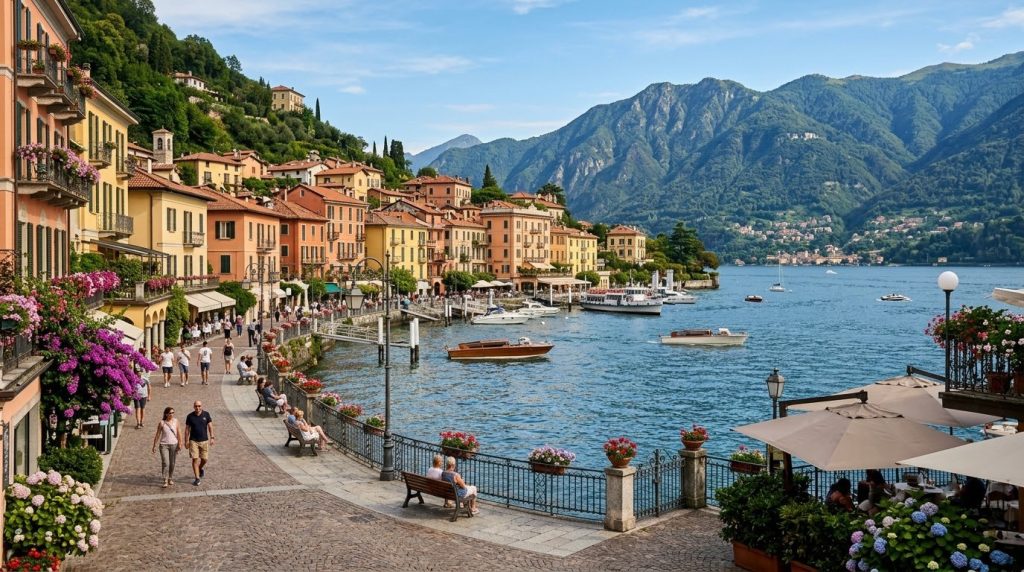
Find your Lake Como hotel on the map
Live prices from Booking, Airbnb and more — move the map or change dates to compare stays across Lake Como.
Frequently Asked Questions
Is Italy safe for US citizens right now?
Yes. The US State Department rates Italy at Level 2, “Exercise Increased Caution,” last updated 23 May 2025. Petty theft in big-city centers and on public transport is the most common problem, so the usual precautions apply: guard your phone and wallet, and never leave bags unattended.
Is it safe to swim in Lake Como?
Yes, at designated swimming spots and in summer. Water reaches about 23–24°C (73–75°F) in July and August. Most beaches have no lifeguards, the bottom drops steeply close to shore, and ferries and speedboats pass constantly. Stay near the shore, never dive into unknown water, and avoid swimming after drinking.
Is Lake Como safe at night?
Generally yes. The villages are quiet after dinner, and the main risks are practical: unlit roads without sidewalks, steep stairs and missing the last ferry. Stay within walking distance of where you eat, check the final boat times, and keep a taxi number saved in your phone before you head out.
Is it safe to drive around Lake Como?
It is safe if you are confident and patient, but stressful. The SS340 and the Como to Bellagio road are narrow, with blind corners and large buses. Town centers have camera-enforced ZTL zones that trigger fines. Most visitors are better off using ferries and trains, and only renting a car for trips beyond the lake.