How Many Days in Hawaii? Trip Length by Island (2026)
Disclosure: Some links in this guide are affiliate links. If you book or buy through them, we may earn a small commission at no extra cost to you — it helps keep our guides free.
- 7 days for one Hawaiian island and 10 to 14 days for two, adding 3 to 4 days for each extra island.
- Fewer than 5 days only works from the West Coast.
- Every inter-island hop costs you about half a day.
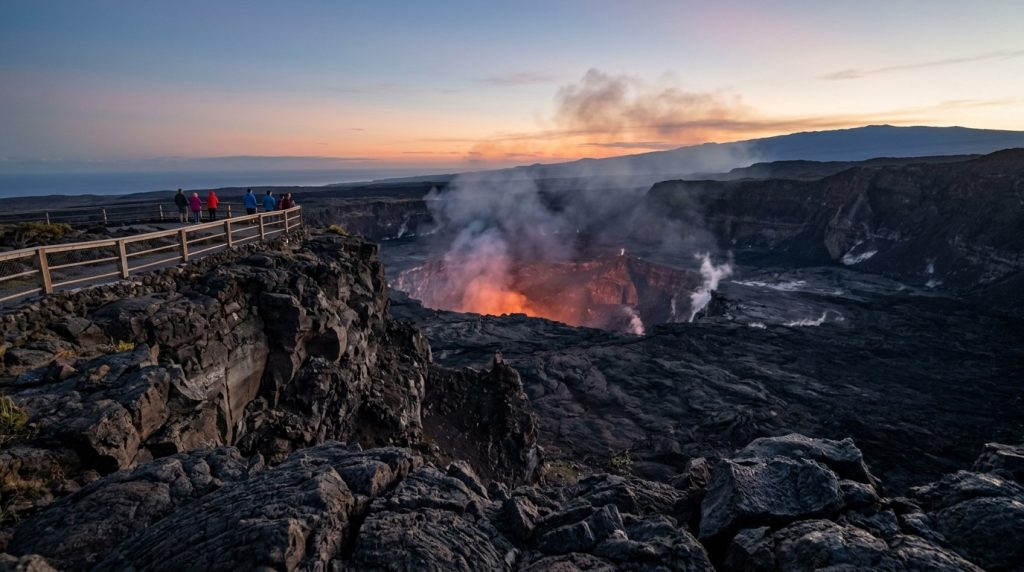
Plan 7 days for one Hawaiian island and 10 to 14 days for two, adding 3 to 4 days for each extra island; the average visitor stayed 8.68 days in 2025, according to the state tourism department.
Fewer than 5 days only works from the West Coast, because the flight and the time change eat most of a day at each end. Every inter-island hop costs you about half a day, so the more islands you add, the more days you need.
| Trip length | What it covers | Who it suits |
|---|---|---|
| 4–5 days | One island, highlights only (Oahu works best) | West Coasters, add-on to a work trip |
| 7 days | One island in depth, with rest days | First-timers, families with young kids |
| 10 days | Two islands, one inter-island flight | Couples, East Coast travelers |
| 14 days | Two islands slowly, or three at a push | Honeymooners, hikers, repeat visitors |
| 3–4 days per island | The rule of thumb for any multi-island plan | Anyone island-hopping |
How many days each island really needs
– Oahu: 4 to 6 days. Waikiki, Pearl Harbor, Diamond Head, the North Shore and the windward beaches around Kailua all fit in about 5 days without a long drive.- Maui: 5 to 7 days. Two days are spoken for before you start.
The Road to Hana takes 2.5 to 3 hours each way without stops, and most people spend 8 to 10 hours on the round trip.
Haleakala sunrise needs a vehicle reservation for the 3:00 to 7:00 a.m. window, booked up to 60 days ahead on recreation.gov for a USD 1 fee, per the National Park Service sunrise page. – Hawaii Island (the Big Island): 6 to 8 days. It is bigger than all the other islands combined, and the drives show it.
The NPS directions page puts Hawaii Volcanoes National Park 45 minutes from Hilo but 2 to 2.5 hours from Kailua-Kona.
Many visitors split their nights between the Kona side and Hilo or Volcano village. – Kauai: 4 to 6 days. The island is smaller, but the north shore, Waimea Canyon and a Na Pali boat or helicopter trip each want their own day, and rain can wash one out.
To decide what goes into those days, start with our ranked list of the best things to do in Hawaii, then cut anything that needs more than 2 hours of driving each way.
The inter-island hop costs you half a day
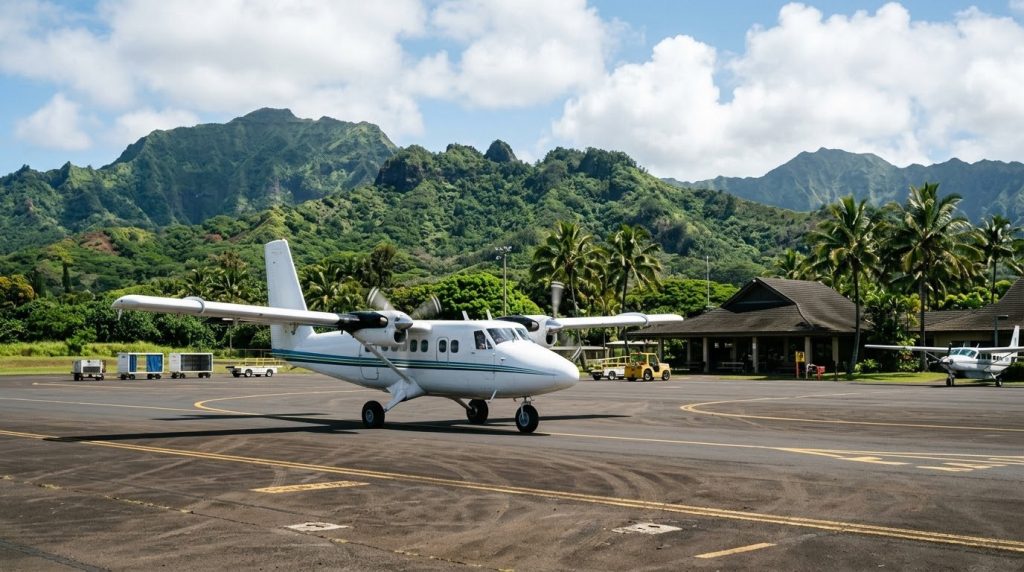
The flights themselves are short. Honolulu to Kahului (Maui) is scheduled at 40 to 60 minutes, and Honolulu to Kona takes 45 to 60 minutes. Southwest and Alaska Airlines, which absorbed Hawaiian Airlines’ network in late 2025, run most of these routes.
The problem is everything around the flight: checking out, returning the rental car, airport time, a new car and checking in again. You lose a morning or an afternoon every time you change islands, which is why the table adds 3 to 4 days per island, not 2.
Your departure city changes the math
From Los Angeles, the fastest nonstop to Honolulu takes about 5 hours 42 minutes. From New York, nonstops run about 11 hours. Hawaii does not use daylight saving time, so it sits 5 or 6 hours behind the East Coast, depending on the season.
In practice:
– West Coast: 5 days on one island is reasonable, and a long weekend on Oahu is doable. – Midwest: treat 6 days as a minimum. – East Coast: plan 8 days or more; the overnight flight home is rough.
State data backs this up. East Coast visitors stayed 9.45 days on average in 2025, against 8.42 days for West Coast visitors, according to the DBEDT 2025 visitor summary.
Sample splits for 7, 10 and 14 days
– 7 days: one island only. Oahu for first-timers, Maui for couples, the Big Island for volcano lovers. Our day-by-day 7-day Hawaii itinerary lays out a full week so you do not have to build it from scratch. – 10 days: two islands, one flight.
Oahu (4 nights) plus Maui (6 nights) is the classic pairing; Maui plus the Big Island suits travelers who care more about nature than cities. – 14 days: two islands with slack, or three islands with about 4 nights each. Kauai fits well as a quieter last stop.
From November to March, rain on north and east shores can wipe out a boat day, so build in a spare. Our guide to the best time to visit Hawaii breaks down weather and prices by month.
When fewer islands is the smarter call
Cut back when:
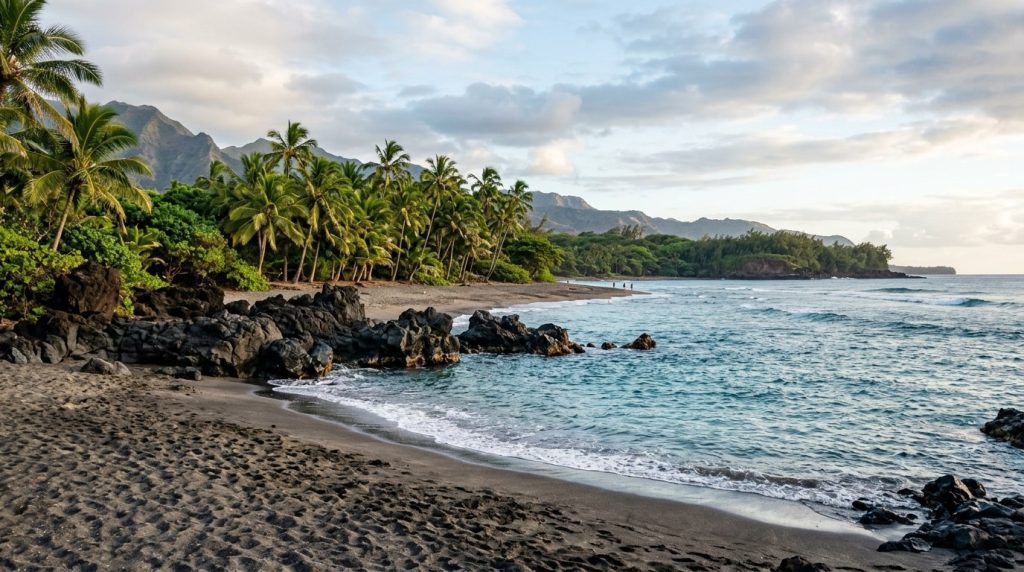
– Under 7 days: stick to one island, no exceptions. – Traveling with kids under 6: every hotel change costs a nap and a meltdown.
One base, short outings. – On a tight budget: each island means another rental car, and often another resort fee and parking charge. – You hate packing and repacking: base yourself in one place and use day trips from Hawaii hotel bases instead, such as the North Shore from Waikiki or Hana from Paia.
Still deciding whether the trip is worth it at all? Our honest take on whether Hawaii is worth visiting covers who gets the most out of it.
What your trip length means for your budget
Length drives cost more than anything else. Mid-range travelers typically spend USD 250–450 per person per day, so a 7-day trip runs roughly USD 1,750–3,150 per person before flights; 10 days runs USD 2,500–4,500. Hawaii uses US dollars, so no currency conversion applies.
Watch the taxes. Since January 1, 2026, the state lodging tax is 11% under Act 96, and each county adds its own 3% on top. Longer stays multiply that bill. Our full Hawaii travel budget breaks down lodging, cars and food line by line.
Build in rest days and weather buffers
Trip length is not only about sights. Keep the first day light, because a long flight and a multi-hour time change leave most arrivals tired. A beach walk, an early dinner and an early night beat a packed schedule.
Leave at least one open day on each island for weather. Boat tours, helicopter flights and summit drives get canceled when conditions turn, and a spare day lets you reschedule instead of losing the activity.
- Day one: no reservations and no long drives.
- Mid-trip: one slow day with only a beach, a pool or a short walk.
- Last day: nothing that depends on a tight timeline, since you still have a rental car return and an airport check-in to manage.
Match rental car days to the days you truly need wheels. A Waikiki base can go without a car for the first days, while Maui and the Big Island are hard to see without one.
Also keep one evening free for the unplanned. Sunsets, a night market or a late swim are often what visitors remember, and they only happen when the schedule leaves room.
As a rule, a plan that fills every hour fails by day three. Trim the list to one main activity per day and treat everything else as a bonus.
What to pack for Hawaii
One packing rule is not optional: Hawaii bans the sale of sunscreen containing oxybenzone or octinoxate, chemicals linked to coral reef damage, so bring a reef-safe, mineral-based sunscreen (zinc oxide or titanium dioxide) from home rather than assuming you can grab any bottle once you land. Stores still carry it, but selection is narrower and prices run higher than on the mainland.
Beyond sunscreen, pack for both a beach day and a hike on the same trip, since most islands offer both within a short drive.
Reef-safe sunscreen, a rash guard for snorkeling and long sun exposure, sturdy closed-toe shoes for a volcano or waterfall trail, and a light rain layer cover the basics; windward coasts and higher elevations on the Big Island and Kauai see rain even when the resort area stays dry.
A reusable water bottle is worth the space, since several of the best hikes have no services once you start.
If your plan includes the Road to Hana on Maui or the Big Island’s Volcanoes National Park, add a light jacket: temperatures drop noticeably at elevation, and both drives involve enough time in the car that a seasickness remedy is worth packing for anyone prone to it on winding roads.
Leave room in the suitcase for the inter-island leg if your trip covers more than one island.
A soft-sided bag is easier to squeeze into an overhead bin on the short Southwest or Alaska Airlines hop between islands than a hard-shell case, and keeping a change of clothes and your sunscreen in a carry-on means you are not stuck if checked luggage takes longer to reach the next island than you do.
Where to stay
– Waikiki (Oahu): Best base for short trips and first-timers. Walkable, no car needed for the first days, and the most hotel choice in the state. – Kaanapali or Kihei (Maui): Kaanapali suits couples who want a resort beach; Kihei is cheaper and more central for Haleakala and Hana days. – Kailua-Kona (Big Island): Sunny, good for snorkelers.
Add 1 or 2 nights near Hilo or Volcano if the national park is a priority.
Find your Hawaii hotel on the map
Live prices from Booking, Airbnb and more — move the map or change dates to compare stays across Hawaii.
Frequently Asked Questions
Is 5 days enough for Hawaii?
Five days is enough for one island, and Oahu is the best choice because sights are close together. From the West Coast it works well. From the East Coast, 5 days leaves roughly 3 full days on the ground after an 11-hour flight and a 5 to 6 hour time change, so it feels rushed.
Is 7 days in Hawaii enough?
Yes, 7 days is enough for one island in depth: beaches, a big hike, a scenic drive and a couple of slow mornings. It is not enough for two islands without rushing. If you want Oahu and Maui together, stretch the trip to 10 days.
How many days do you need for two Hawaiian islands?
Plan at least 10 days for two islands, with 4 to 6 nights on each. The inter-island flight takes under an hour, but checking out, airport time and a new rental car eat about half a day, so shorter splits feel like constant packing.
Can you see all the Hawaiian islands in one trip?
Not well. Oahu, Maui, the Big Island and Kauai at 3 to 4 days each takes 14 to 16 days, with several half-days lost in transit. Two islands done slowly beat four done quickly.
How many days do you need on the Big Island?
Plan 6 to 8 days. Hawaii Volcanoes National Park sits 2 to 2.5 hours from Kailua-Kona, so the island rewards splitting nights between the Kona side and Hilo or Volcano village. With fewer days, pick one side and accept the long drive once.
Planning the whole trip? Start with our Hawaii travel guide for the overview, then use this page for the details.