Best Time to Visit Vancouver in 2026: Month-by-Month Guide
Disclosure: Some links in this guide are affiliate links. If you book or buy through them, we may earn a small commission at no extra cost to you — it helps keep our guides free.
- Best overall window: mid-May to end of September is warmer and drier, and September to early October is often the sweet spot for weather plus fewer crowds.
- Cheapest month: November, with 3-star hotels averaging about 189 per night versus about 309 in June and July (hotel price aggregator data).
- Rain is real: the wet season runs roughly November through March, so pack a waterproof shell and plan indoor backups.
- Seasonal extras: cherry blossoms in spring, whale watching from spring to autumn, cruise ships April to October, and skiing in the nearby mountains in winter.
- Money tip: book summer hotels early, or shift your trip by two to three weeks into the shoulder season to cut costs noticeably.
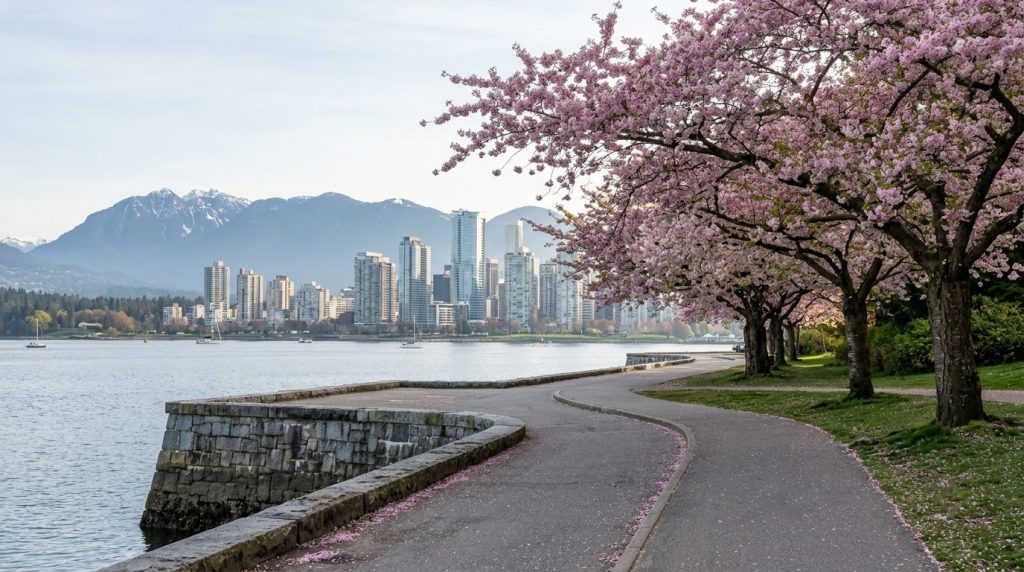
The best time to visit Vancouver is mid-May through September, when the weather is warmest and driest and every outdoor attraction is open. If you want the same sunshine with fewer people and lower hotel bills, aim for September and early October. Those weeks often bring warm days, calmer crowds, and very little rain.
The catch is that Vancouver is a city of two moods. Summer is bright and busy, and prices follow. From November through March the rain settles in, but hotels get cheaper and the mountains turn white. This guide breaks the year down by season and month so you can match your dates to what you actually want to do.
The first time I planned Vancouver I fixated on July, assuming “summer” meant guaranteed sun. It was gorgeous, but the hotels were pricey and the seawall felt like a commuter highway. My second trip, in late September, gave me clear mornings, a quiet Stanley Park, and a room rate I could actually justify. If your calendar is flexible, that second version is the one I would repeat.
When is the best time to visit Vancouver for good weather?
For reliably good weather, visit Vancouver between mid-May and the end of September. Travel guides consistently describe April through October as the warmer, drier half of the year, with the most dependable stretch running from mid-May to late September (Frommer’s, 2026). Summer afternoons are comfortable, not hot, so walking all day is easy.
Typical July and August highs sit around 72 to 75 F (22 to 24 C), and nights stay cool. That makes Vancouver one of the more pleasant big cities in North America for sightseeing in midsummer. Still, one guide advises packing for rain even in July and August, and that matches my experience: a light jacket earns its space in your bag.
Sunny summer days do have a trade-off. This is the busiest period for the city, so the Capilano bridge, Grouse Mountain, and Granville Island all draw their biggest crowds. Go early in the morning, and book timed tickets where they are offered.
What about September and early October?
September and October are often the best months overall, because you get warm days, smaller crowds, and little rain (Frommer’s, 2026). The light turns golden, the fall colors start showing in Stanley Park, and many hotels ease their rates after Labor Day.
I would call this the best value window for first-timers. You still get most summer tours and ferries, but you stop competing with peak-season families. By mid-October the rain returns more often, so build in one flexible day.
Is Vancouver rainy, and when is the wet season?
Yes, Vancouver gets a lot of rain, and the wet season starts in November and runs through March (Frommer’s, 2026). Rain here is more often a steady drizzle than a downpour. It rarely stops locals, and it shouldn’t stop you if you pack properly.
Winters are mild by Canadian standards. January highs hover around 43 to 45 F (6 to 7 C), and snow in the city itself is occasional and short-lived. The mountains a short drive away get the real snow, which is why the winter season has its own appeal.
Is a rainy trip a bad trip? Not at all. You trade clear skyline views for cozy cafes, museums, and spa time, and you pay far less for hotels. Cloud can hide the mountains for days, though, so if views are your priority, avoid December through February.
What does each month look like in Vancouver?
Month by month, Vancouver moves from damp and quiet in winter to bright and busy in July and August. The table below summarizes what to expect in each season, based on the climate pattern described by travel guides and national weather service norms. Use it to match your dates to your priorities.
| Month | Weather feel | Best for | Crowds |
|---|---|---|---|
| January | Cool, wet, mountains snowy | Skiing, hotel deals | Low |
| February | Cool, wet, early signs of spring | Skiing, museums | Low |
| March | Cool, damp, some bright days | Late ski days, early blossoms | Low to moderate |
| April | Mild, showers mixed with sun | Cherry blossoms, spring walks | Moderate |
| May | Warmer, drier by mid-month | Gardens, cycling, whale season starts | Moderate |
| June | Warm, longer days, sometimes gray | Hiking, patios, cruise terminals | Busy |
| July | Warm and mostly dry | Beaches, boating, day trips | Peak |
| August | Warm and dry | Beaches, Whistler, whale watching | Peak |
| September | Warm days, cooler nights | Best all-round value | Moderate |
| October | Cooler, rain returns | Fall color, fewer crowds | Low to moderate |
| November | Cool and rainy | Cheapest hotels, indoor culture | Low |
| December | Cool, wet, festive lights | Holiday events, ski trips | Moderate |
Source: national weather service climate norms and tourism board seasonal guidance, 2026
A quick read of the table shows two sweet spots. May and September to early October both mix decent weather with manageable crowds. If you need guaranteed warmth for a beach or boat day, July and August are the safest bets.
When is the cheapest time to visit Vancouver?
The cheapest time to visit Vancouver is November, when hotels average roughly 189 per night for a 3-star room, compared with about 309 in June and July (hotel price aggregator data, currency unstated in the source). January is also low, with averages around 190. Rain keeps the crowds, and the prices, down.
The pattern is simple: demand peaks with the sun. If you can travel in the shoulder months of May, September, and October, you often land between those two extremes. In my experience the biggest savings come from avoiding the first three weeks of July and the long weekends around Canada Day and the August holiday.
Here is how I would think about costs and crowds across the year.
| Season | Months | Hotel price level | Crowd level | Money-saving angle |
|---|---|---|---|---|
| Peak summer | Jun-Aug | Highest (about 309 for 3-star in Jun/Jul) | Heavy | Book early, stay outside downtown |
| Shoulder (spring) | Apr-May | Moderate | Moderate | Blossoms and fewer crowds |
| Shoulder (fall) | Sep-Oct | Moderate to lower | Light to moderate | Best weather per dollar |
| Low season | Nov-Mar | Lowest (about 189 in Nov) | Light | Deals, but pack for rain |
Source: hotel price aggregator data and operator pricing, 2026 (approximate, prices change)
Where you sleep matters too. Compare neighborhoods before you book, because some areas run noticeably cheaper than others at the same time of year. Our where to stay in Vancouver guide walks through the main areas and who each one suits.
Do any seasons cost more for tours?
Tours also swing by season, but less than hotels. Whale and wildlife tours of roughly five hours run about 180 to 183 USD, and a Sea to Sky Gondola and Whistler day trip of around 11 hours costs roughly 141 to 160 USD (operator pricing, 2026, approximate). Summer departures sell out first, so book those ahead.
What seasonal highlights should you plan around?
Vancouver has five seasonal draws that can shape your dates: cherry blossoms, whale watching, cruise season, summer outdoor activity, and winter skiing. Each has its own window, and a few overlap. Decide which one matters most, then choose your month around it.
Spring: cherry blossoms
Cherry blossoms usually peak from late March into April, with the exact timing shifting each year with the weather. Streets and parks across the city fill with pink petals. April is a good compromise month: the flowers are out, the crowds are moderate, and hotels haven’t hit summer rates yet. Expect showers and bring a compact umbrella.
Summer: sun, water, and day trips
July and August are for beaches, kayaking, patios, and the Sea to Sky corridor. Stanley Park’s seawall, the Capilano Suspension Bridge (a bridge of roughly 450 feet, about 230 feet above the river), and Grouse Mountain all shine in dry weather. Start early to beat both heat and crowds.
Whale watching season
Whale and wildlife tours run seasonally, generally from spring into early fall, and midsummer offers the longest days at sea. Tours are about five hours, so plan a free half-day. Sightings are never guaranteed, which is why I suggest picking a tour that offers a rebooking policy.
Cruise season
Cruise ships sail from Vancouver on Alaska routes from roughly April through October. This season matters for two reasons. Port days bring thousands of extra visitors downtown, and hotel rooms near the waterfront can jump in price on sailing weekends. Check the cruise calendar before you lock in dates.
Winter: skiing and snow
Skiers have two options. Local hills on the North Shore, including Grouse Mountain, operate in winter, and Whistler is the bigger draw as a long day trip or an overnight stay. Winter is the one time the rain in the city becomes snow up high. Ski conditions vary year to year, so check snow reports before booking.
When should you visit if you want fewer crowds?
If crowds bother you, visit in September, early October, or the quieter winter months from November to March. Summer is the busiest period, and the main sights are noticeably more crowded then. Fall gives you a smaller crowd without giving up the weather.
A few habits help in any season:
- Go early: the Capilano bridge, Granville Island Public Market, and Stanley Park all feel different before 10 a.m.
- Visit midweek: Tuesday through Thursday is calmer at the big attractions.
- Skip sailing days: cruise departures fill the waterfront on weekends.
- Use shoulder days: a Friday in May is usually quieter than a Saturday in July.
I found that starting at the seawall at 8 a.m. and finishing at Granville Island for a late lunch avoided nearly every line. It’s a small change that saves real time, and time is money when you’re paying for a hotel night.
How many days do you need, and what should you pack?
Plan on three to four days for the city itself, plus one extra day if you want a Whistler or Victoria trip. A Victoria and Butchart Gardens day trip works by ferry, and the Sea to Sky day is long, so don’t stack both on consecutive days if you want a rest.
Packing depends on the month, but layers work year-round. In summer, bring a light jacket, sunscreen, and comfortable walking shoes. From October to April, a waterproof jacket with a hood beats an umbrella, because the wind often turns umbrellas inside out. Good shoes matter more than anything else.
A few budget-minded tips:
- Travel mid-week: hotel rates are often lower Sunday through Thursday.
- Book early for summer: July and August rooms tighten first.
- Use free attractions: Stanley Park and Granville Island entry are free.
- Mix paid and free days: pair one big tour with two low-cost city days.
Frequently Asked Questions
What is the best month to visit Vancouver?
September is often the best month, with warm days, smaller crowds, and little rain (Frommer’s, 2026). If you prefer long days and the warmest water-friendly weather, July and August are better, though hotels cost the most then. May is a solid backup.
What is the cheapest month to visit Vancouver?
November is typically the cheapest month, with 3-star hotels averaging about 189 per night compared with about 309 in June and July (hotel price aggregator data, currency unstated). Expect rain and shorter days. January is also low-priced, so winter trips can save a meaningful amount on lodging.
When do the cherry blossoms bloom in Vancouver?
Cherry blossoms generally bloom from late March through April, depending on how cold or warm the winter and early spring have been. Plan for April if you want blossoms with milder weather, and check local bloom updates close to your travel dates since timing shifts yearly.
Is Vancouver worth visiting in winter?
Yes, if you value lower prices and mountain access over sunshine. The rainy season runs from November to March, but hotels are cheaper and skiing is close by. Pack waterproof layers and plan indoor backups such as museums, markets, and cafes.
How far in advance should I book a summer trip to Vancouver?
For July and August, booking hotels a few months ahead is a smart move because summer is the peak period for both visitors and prices. Tours like whale watching and Sea to Sky day trips also fill up, so reserve those once your dates are set.
Find your Vancouver hotel on the map
Live prices from Booking, Airbnb and more — move the map or change dates to compare stays across Vancouver.
Choosing Your Dates
For most travelers, the answer is simple: pick mid-May to September for dependable weather, and slide toward September or early October if you want better value and lighter crowds. Choose April for blossoms, summer for whales and day trips, and winter for skiing and the lowest hotel rates.
Once your dates are set, the next decision is where to base yourself. Read our where to stay in Vancouver guide to pick the neighborhood that fits your budget and itinerary.