Best Time to Visit Kenya in 2026: Safari Seasons and Costs
Disclosure: Some links in this guide are affiliate links. If you book or buy through them, we may earn a small commission at no extra cost to you — it helps keep our guides free.
- Best overall window: June to October is the long dry season, and July to September is the busiest stretch for the Great Migration.
- Strong second choice: January and February are dry, warm, and good for combining safari with the coast.
- Avoid if you can: April and May bring the heaviest rain, muddy tracks, and a very wet coast.
- Fees jump in high season: one budget operator listing showed Mara fees of about $200 per day from January to June and about $400 from July to December.
- Plan early for peak: operators suggest booking 12 to 18 months ahead for August and September.
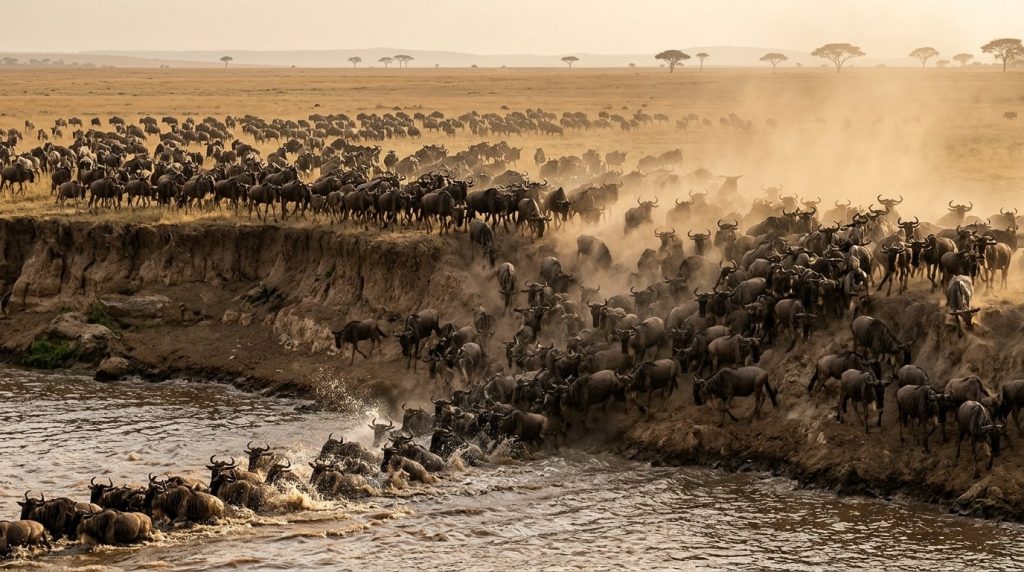
The best time to visit Kenya is the long dry season from June to October, with January and February as a strong second window. Wildlife gathers around shrinking water, the grass is shorter, and the Great Migration reaches the Maasai Mara from roughly July to October. The trade-off is simple: the best weather is also the most expensive and crowded.
Here’s the part most guides skip. Kenya sits on the equator, so there’s no summer or winter. What changes is rainfall, and rainfall controls roads, wildlife viewing, and price. Park fees, camp rates, and tour prices all move with it. This guide shows you when to go, what each season costs, and where you can save money without ruining the trip.
The first time I planned a Kenya trip, I assumed “dry season” meant guaranteed sunshine and easy driving. I was wrong about the second part. In the shoulder months the roads were fine, the lodges were half empty, and the rates were noticeably lower. I’d now choose a dry-ish shoulder week over a packed peak week for most budgets, and I’ll explain why below.
When is the best time to visit Kenya?
The best time to visit Kenya is June through October, when the long dry season brings the clearest wildlife viewing. Major travel publishers and safari operators agree on this window, and January and February rank next. Rain falls mainly from March to May and again in November and December (operator and travel publisher guidance, 2026).
Kenya straddles the equator, which gives it two rainy seasons and two dry seasons rather than four. Think of the year in four blocks:
- Long dry season (June to October): cool mornings, dry days, and the best game viewing.
- Short dry season (January to February): hotter, drier, and good for beach add-ons.
- Long rains (March to May): heavy downpours, with April and May usually the wettest.
- Short rains (November to December): mostly afternoon or evening showers, not all-day storms.
Because the country straddles the equator, the usual “northern summer, southern winter” logic doesn’t apply. Altitude matters more than hemisphere. Nairobi and the highlands sit well above the coast, so nights there can feel cool even in the dry months, while Diani and Mombasa stay hot and humid year-round.
| Season | Months | Rain | Wildlife viewing | Crowds and prices |
|---|---|---|---|---|
| Long dry | Jun-Oct | Low | Excellent; Mara migration Jul-Oct | Highest |
| Short dry | Jan-Feb | Low | Very good | High |
| Long rains | Mar-May | Heaviest in Apr-May | Fair; muddy tracks | Lowest |
| Short rains | Nov-Dec | Moderate, often afternoon | Good; green and quiet | Low to moderate, rising late Dec |
Source: operator and travel publisher seasonal guides, 2026
What month is the Great Migration in Kenya?
The Great Migration in the Maasai Mara runs roughly July to October, and river crossings peak around August and September. Timing shifts with rainfall and river levels, so no operator can promise a specific crossing on a specific day. Peak-season trips are commonly booked 12 to 18 months ahead (one major safari operator, 2026).
Millions of wildebeest and zebra move between Tanzania’s Serengeti and Kenya’s Mara in search of fresh grass. The dramatic part is the Mara River crossing, where herds hesitate on the bank, then plunge in together. Crocodiles wait below.
Here’s what we’ve found useful when planning around it:
- July: herds start arriving. Crossings are possible but less predictable.
- August and September: the classic peak, with the most crossings and the most vehicles at each crossing point.
- October: crowds thin and some herds begin heading back south, though stragglers remain.
Is it worth the premium? If crossings are the one thing you want, yes. If you’d settle for excellent lion, cheetah, and elephant sightings, the Mara is also strong outside migration months, and you’ll share it with far fewer vehicles. Plan on a few extra days in the area to improve your odds, rather than a single overnight.
Is the dry season really better for safari?
Yes, mostly. The dry season concentrates animals near rivers and waterholes, vegetation thins out, and roads stay passable. That’s why June to October is the most recommended window. January and February offer a second dry spell, with hotter days and slightly less dust-free air (operator guidance, 2026).
The long rains tell a different story. April and May bring muddy tracks, thicker bush, and sometimes closed or hard-to-reach camps. Wildlife is still there, but it’s harder to spot, and game drives can be cut short by weather. The coast is also very wet in those months.
That said, rain isn’t a disaster. The short rains in November are usually afternoon or evening showers, so mornings often stay clear for game drives. Landscapes turn green, newborn animals appear, and photographers like the dramatic skies. Crowds drop sharply.
A few practical points on dry-season safari:
- Dust: dry months mean dusty vehicles. Pack a buff or light scarf and protect camera gear.
- Cold mornings: early drives in June to August can be chilly at altitude. Bring a fleece.
- Weather isn’t a guarantee: rain can still fall in any month, so pack a light shell regardless.
When is the cheapest time to visit Kenya?
The cheapest time to visit Kenya is the long rains, roughly April and May, with early November also offering savings. One budget operator listing showed Maasai Mara fees around $200 per adult per day from January to June versus about $400 from July to December. Fees vary by operator and park, so check current rates (operator pricing, 2026).
Costs move in three layers: park or conservation fees, lodge and camp rates, and the tour itself. All three tend to climb together between July and October and again around Christmas and New Year.
Midrange safari costs are wide. Operator and publisher blogs put midrange travel somewhere between about $250 and $600 per person per day, depending on the camp, the vehicle setup, and the season. A seven-day midrange safari is often quoted at about $2,800 to $5,000, excluding international flights. Treat these as rough guides, not quotes.
| Planning factor | Approximate figure | What it means for your budget |
|---|---|---|
| Midrange safari per person per day | About $250-600 | Wide spread; depends on camp quality and season |
| 7-day midrange safari (no flights) | About $2,800-5,000 | Low season sits near the lower end |
| Mara fees, Jan-Jun (one listing) | About $200 per adult per day | Lower-season fee on that operator |
| Mara fees, Jul-Dec (one listing) | About $400 per adult per day | Roughly double in high season on that operator |
| Budget 3-day Mara group trip | About $199-223 per person | Camping-style; quality and inclusions vary |
| Amboseli day trip from Nairobi | About $87-100 per person | Long day, roughly 12 to 13 hours |
Source: operator pricing and safari cost guides, 2026
Because every operator prices differently, compare inclusions line by line. A cheap quote that leaves out park fees isn’t actually cheaper.
Where should you go in Kenya, and when?
Match the place to the season. The Maasai Mara is best from July to October, Amboseli works best in the dry seasons, Nairobi is a year-round wildlife stop, and the Indian Ocean coast is best in January and February. April and May are the wettest period on the coast (operator guidance, 2026).
Maasai Mara. This is the flagship. Go July to October for the migration, or January to March and November if you want fewer vehicles and lower fees. We’d choose late June or early October to catch some migration activity with thinner crowds.
Amboseli National Park. Known for large elephant herds with Mount Kilimanjaro behind them. Dry seasons give the best viewing and clearer mountain mornings. Many travelers do it as a long day from Nairobi, but the drive is heavy, so an overnight is more comfortable.
Nairobi National Park, Giraffe Centre, and the elephant orphanage. These work year-round and fit a layover or a rainy-week backup plan. Shared tours run roughly $35 to $40 per person, with some entry fees charged separately.
Diani and the coast. January and February are good beach months. April and May are very wet, so skip the coast then unless you want rock-bottom rates and don’t mind storms. For a beach add-on, plan it after the safari so you finish relaxed.
How should you plan a safari around the seasons?
Plan by priority: decide whether you want the migration, low prices, or low crowds, then pick the month. If you want river crossings, book far ahead for August or September. If you want value, aim for January to March or early November, when fees and rates tend to drop (operator guidance, 2026).
A simple decision path works well:
- Pick your top goal. Crossings, big cats, elephants with Kilimanjaro, or a beach finish.
- Pick a window. Match the goal to the table below.
- Set a realistic budget. Use the wide ranges above, then ask operators for itemized quotes.
- Book early for peak. For August and September, start 12 to 18 months out.
- Build in buffer days. Weather and wildlife don’t follow schedules.
| Your priority | Best months | Notes |
|---|---|---|
| River crossings | Aug-Sep (Jul-Oct possible) | Book 12-18 months ahead; highest prices |
| Best weather and roads | Jun-Oct, Jan-Feb | Dry roads, but more vehicles |
| Lowest prices | Apr-May, early Nov | Expect mud and rain; some camps close |
| Fewer crowds with decent weather | Late Jun, Oct, Jan-Feb | Good trade-off between price and sightings |
| Beach add-on | Jan-Feb | Avoid Apr-May on the coast |
| Photography | Nov, Jan-Feb | Green landscapes or clear light |
Source: operator and travel publisher seasonal guides, 2026
What should you pack and expect month by month?
Pack layers whatever the month. Mornings at altitude can be cold, midday sun is strong, and rain can appear in any season. The long rains are heaviest in April and May, so waterproofs matter then (national weather service seasonal patterns, 2026).
Month by month, here’s the shorthand:
- January and February: hot, dry, and good for beaches. Light layers, sun protection.
- March: rains build. Pack a waterproof and expect some muddy tracks.
- April and May: wettest. Sturdy shoes, a rain jacket, and flexible plans.
- June to August: dry and cooler at altitude. Bring a fleece for dawn drives.
- September and October: dry, still busy early on, thinner by late October.
- November: short rains start, mostly in the afternoon. Green, quiet, and cheaper.
- December: wetter spells, but festive demand pushes prices up late in the month.
Two money-saving habits help in every season. Ask whether park fees are included in your quote, and ask about the exact number of people per vehicle. Shared vehicles are cheaper, but a full vehicle can hurt photography, so choose based on your priorities. Also keep some flexibility in dates: moving a trip by a week can shift fees noticeably around the start of July.
Find your Kenya hotel on the map
Live prices from Booking, Airbnb and more — move the map or change dates to compare stays across Kenya.
Frequently Asked Questions
What is the cheapest month to go on safari in Kenya?
April and May are generally the cheapest because of the long rains. Early November can also be good value. One operator listing showed Mara fees of roughly $200 per day from January to June versus about $400 from July to December, though fees vary by operator.
Is Kenya safe to visit during the rainy season?
Most visitors travel safely in the rains, but conditions are harder. Roads can turn muddy, some camps are difficult to reach, and flights or drives may be delayed. November showers are usually shorter, while April and May are the toughest. Check your government’s current travel advice before booking.
Can you see the Great Migration outside July to October?
The Mara River crossings are mainly a July to October event, with the peak around August and September. Outside those months, the Mara still offers strong big-cat and elephant sightings. Migration timing shifts with rain and river levels, so no operator can guarantee a crossing.
How far ahead should you book a Kenya safari?
For August and September, operators suggest booking 12 to 18 months ahead, because good camps fill early. For January to March or November, a few months is usually enough, though earlier booking still gives you more choice and sometimes better rates.
When is the best time for a Kenya safari plus beach trip?
January and February are the best mix. Safari conditions are dry and the coast is sunny, making Diani a comfortable finish. Avoid April and May, when the coast is very wet. If you’re flexible on weather, late June can also work for a quieter coastal stay.
The best time to visit Kenya depends on what you want most. Go June to October for peak wildlife and the migration, January and February for a dry-season and beach combination, or April, May, and early November if saving money matters more than perfect conditions. Whatever month you choose, get itemized quotes, confirm what park fees cover, and book early for peak weeks. A bit of planning will stretch your safari budget much further.