Is Cancun Safe? An Honest Answer for US Travelers (2026)
Disclosure: Some links in this guide are affiliate links. If you book or buy through them, we may earn a small commission at no extra cost to you — it helps keep our guides free.
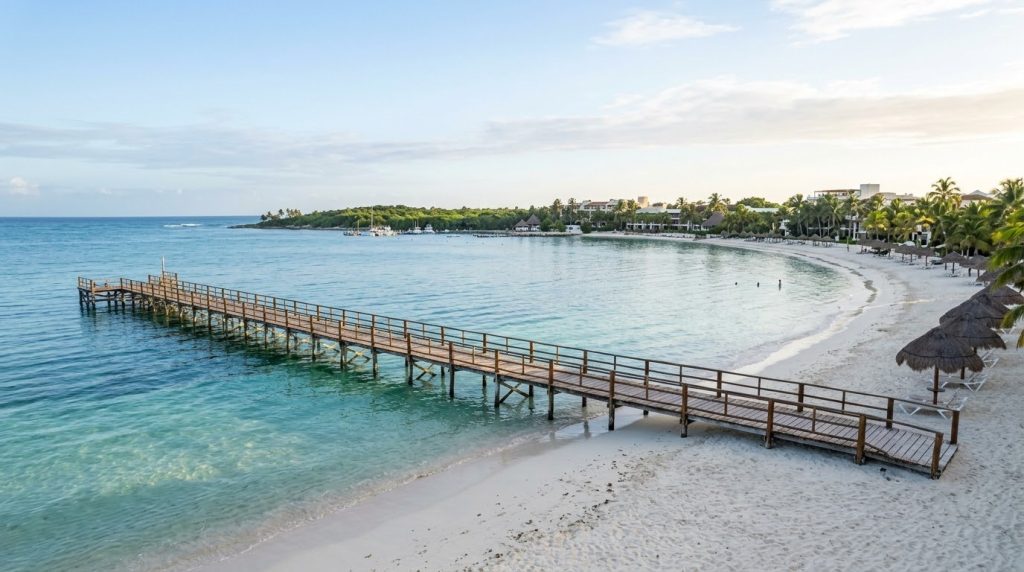
Yes, Cancun is safe for most visitors who base themselves in the Hotel Zone: the US State Department rates Quintana Roo at Level 2 of 4, “Exercise Increased Caution,” the same tier it gives France and the UK. The real risks are petty theft, drink spiking, taxi overcharging and airport timeshare pitches, not cartel violence aimed at tourists.
Gang clashes do happen, mostly in residential neighborhoods, so where you sleep and how you move at night matter most.
| Risk | Reality | What to do |
|---|---|---|
| Cartel violence | Mostly rival groups in residential areas; some shootings have hit tourist zones since 2021 | Stay in the Hotel Zone |
| Drink spiking | Flagged by the UK government, including methanol | Watch your glass |
| Taxi overcharging | Airport to Hotel Zone runs MXN 600–900 | Agree the fare first |
| Timeshare “Shark Tank” | Uniformed reps right after customs | Walk out to a pre-booked transfer |
| Hurricanes and sargassum | Storm season June 1 to November 30; 2026 seaweed near record | Insurance, north-facing beaches |
What Level 2 actually means for Cancun
Mexico is rated state by state, and Quintana Roo (Cancun, Playa del Carmen, Tulum, Cozumel) sits at Level 2. Other Mexican states carry higher levels, so the risk is concentrated, and the Mexican Caribbean is not where it is concentrated. Check the official Mexico advisory the week you fly and enroll in STEP.
The UK government is blunter. Its Mexico safety page says rival gangs “have clashed in popular Cancun tourist destinations” and that several shootings have affected tourists since 2021. Gangs rarely target visitors, but you can be in the wrong place late at night.
Nonstop flights take about 4 hours 20 minutes from New York and under 4 hours from Chicago, and most first-timers never leave the safe zones. Our 5-day Cancun itinerary is built around exactly those areas.
Hotel Zone vs downtown: where the risk sits
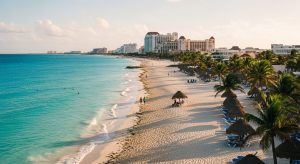
The Hotel Zone is the 7-shaped strip along Boulevard Kukulcan. It has the heaviest police presence, resort security and cameras, and it stays lit and busy until late. Walk the main strip after dark, but stay off empty beaches.
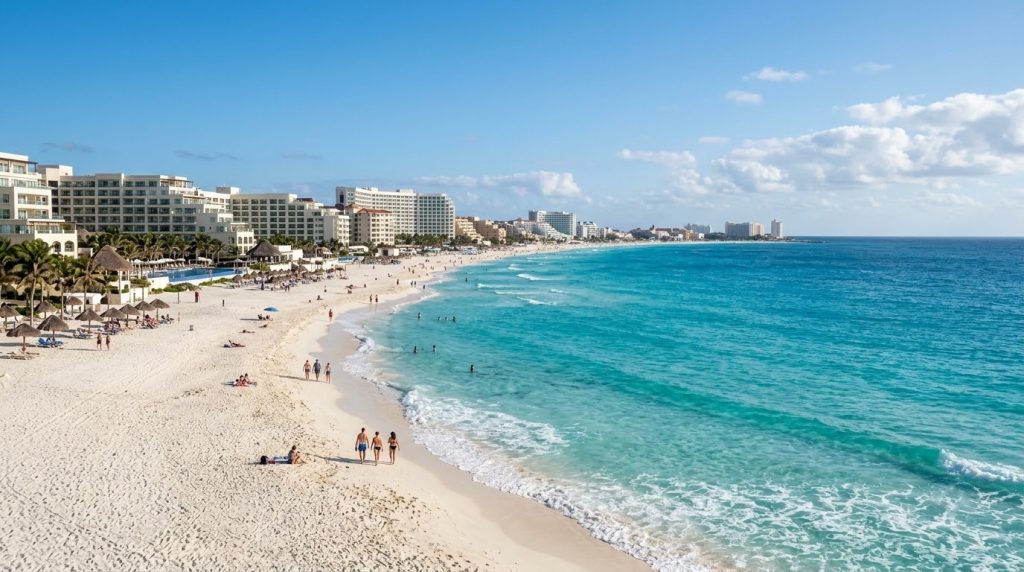
Downtown (El Centro) is where locals live. Parque Las Palapas is packed with families and food stalls in the evening, and Avenida Nader has well-patrolled bars. Mercado 28 empties once the stalls close around 6 or 7 pm, and its back alleys get dark. Eat at the restaurants on its edge, then take a car back.
Neighborhoods to avoid after dark
Local reporting consistently names Alfredo V. Bonfil (south of the Hotel Zone, near the airport road), Región 94, Valle Verde, Santa Cecilia and Tres Reyes as areas with much higher crime and no tourist infrastructure. You have no reason to be there. If a cheap Airbnb puts you in a numbered “Región” far from Avenida Tulum, rethink the booking.
The scams that actually happen
– The airport “Shark Tank.” Past customs, people in airline-style uniforms offer “free” transport or tours. They sell timeshares, and the “90-minute presentation” eats your first day. Keep walking. – Taxi fare games. Rides inside the Hotel Zone run about MXN 150–200 (USD 9–12), and Hotel Zone to downtown about MXN 180 (USD 10).
Confirm the price before the door closes. – Dynamic currency conversion. When a card machine offers to charge in dollars, pay in pesos instead. – ATM skimming. Use ATMs inside banks or malls and cover the keypad. – The roadside “fine.” Rental-car drivers get pulled over for made-up violations. Ask for a written ticket.
Prices are converted at USD 1 = MXN 17.2. For daily costs, see our Cancun travel budget breakdown.
Transport safety: taxis, Uber and the airport
From the airport to the Hotel Zone, taxis run MXN 600–900 (USD 35–52), and a pre-booked private transfer is calmer. Don’t count on Uber at the airport: a 2024 federal ruling allowed it, but there is still no authorized pickup area and drivers avoid it because of taxi-union pressure. The ADO bus only goes to the downtown terminal, not to hotels.
In the city, Uber and DiDi work and are often cheaper than taxis, with GPS tracking. The UK government reports that protesting taxi drivers have blocked roads near hotels and pulled tourists out of Uber cars, so take a licensed taxi if you see a protest.
Solo and female travelers
Solo women do Cancun all the time, and the Hotel Zone is a reasonable base. Drink spiking is the main issue. Order sealed drinks or watch them poured, never leave a glass unattended, and leave clubs with the people you came with. Share your Uber trip with someone at home and keep your passport in the hotel safe.
Beach flags and swim safety in Cancun
Cancun’s beaches use a color-coded flag system, checked and updated by lifeguards several times a day. Green means calm surf with no significant current, safe for most swimmers including children. Yellow means moderate caution: waves are present but manageable, so stay close to shore and keep a closer eye on kids.
Red means high danger, with strong currents and intense surf; only wading in knee-deep water is advised, since rip currents are the main threat under a red flag. Black means the water is closed outright, usually during a tropical storm or hurricane, and it means no swimming under any circumstances.
Check the flag before you get in, not just when you arrive for the day, since conditions and flags can change through the afternoon as wind and swell pick up. Hotel Zone beaches are generally better supervised than the quieter stretches north and south of it, so if a beach has no visible flag or lifeguard, treat that as a reason for caution rather than a sign it is calm.
Rip currents are the biggest hidden danger behind the flag system, since water can look calm on the surface while a current pulls swimmers sideways or out past the break. If caught in one, swim parallel to the shore rather than straight back against it, then angle in once clear of the pull.
Keep young or inexperienced swimmers within arm’s reach above a green flag, and treat an empty beach with no flag at all as unsupervised rather than assuming it is safe.
Hurricanes and sargassum: who should skip which months
The Atlantic hurricane season runs June 1 to November 30, and NOAA puts most activity between mid-August and mid-October. If you can’t be flexible, buy insurance that covers hurricane cancellation for September and October. Our guide to the best time to visit Cancun compares every month.
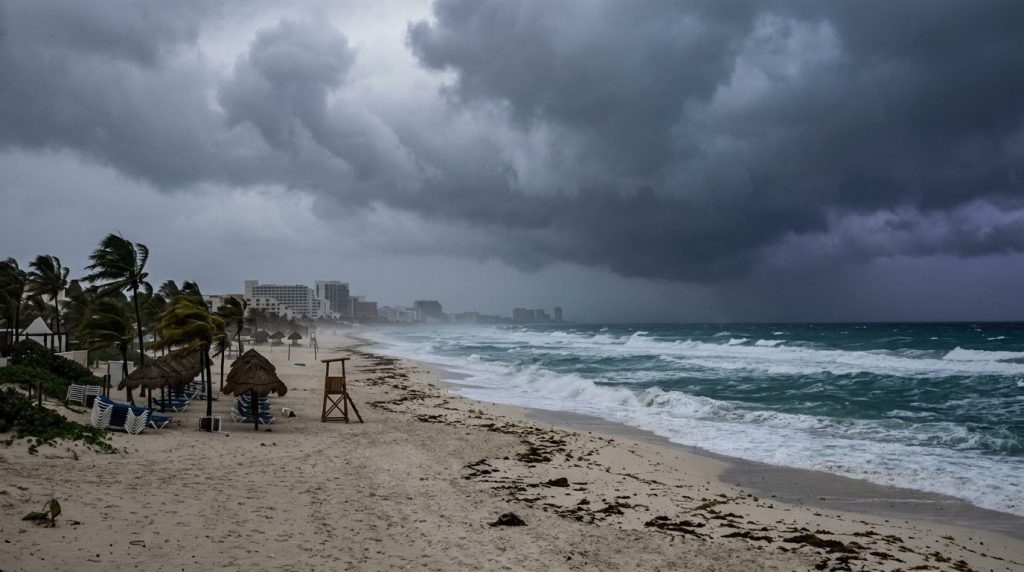
Sargassum seaweed is a beach problem, not a safety one, and 2026 is tracking near record levels offshore. In July the north Cancun bay beaches and Playa Norte on Isla Mujeres stayed clearest, while Playa del Carmen to Tulum saw heavy piles.
Who Cancun is not for: travelers who want to roam residential neighborhoods at 2 am, and anyone who can’t absorb a hurricane-season cancellation.
Travel insurance and health coverage for Cancun
Mexico does not require visitors to carry travel insurance to enter the country, but going without it is a real gap: a hospital visit for a water-sports injury, food poisoning or a scooter crash can run into thousands of dollars without cover, and Mexican public hospitals are not free for foreign visitors.
Standard travel insurance policies typically do not cover cancellations caused by civil unrest or a government travel advisory changing mid-trip, so read the policy wording rather than assuming the Level 2 advisory alone triggers a payout. For a beach-and-resort trip, look for a policy that explicitly covers water sports such as snorkeling and jet skiing if you plan to do them, since some standard policies exclude “adventure activities” by default.
Carry your policy number and the insurer’s emergency line in your phone and on paper, separate from your bag, so you still have it if your phone or bag goes missing.
Hotel Zone clinics and pharmacies are used to treating travelers and can handle most routine issues, from sunburn and upset stomachs to minor cuts, often with less wait than a full hospital visit.
For anything more serious, ask your hotel for its recommended clinic rather than the nearest one off the street, since some private clinics in tourist areas are known for overcharging visitors who do not have insurance to push back against inflated bills.
In an emergency
Dial 911 anywhere in Mexico. The US Consular Agency is in the Hotel Zone at Blvd. Kukulcan Km 13 (Torre La Europea). Most of the best things to do in Cancun, from ferries to cenote tours, run through licensed operators, so book those rather than beach touts.
Where to stay
– Hotel Zone, km 9–16: the safest, most walkable base, best for first-timers and families. – North Hotel Zone, km 3–9: calmer bay water, clearer beaches in sargassum season, close to the ferries. Good for couples. – Downtown near Avenida Nader: cheaper and more local, for budget travelers who take a car at night.
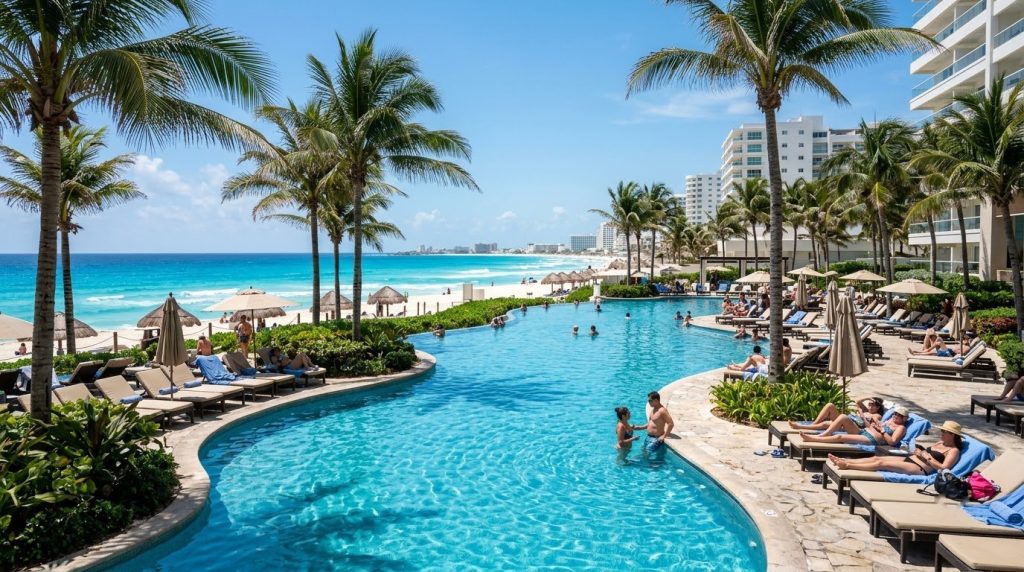
Our Cancun neighborhood guide compares each area in more depth.
Find your Cancun hotel on the map
Live prices from Booking, Airbnb and more — move the map or change dates to compare stays across Cancun.
Frequently Asked Questions
Is Cancun safe to visit right now?
Yes, for most visitors. The US State Department keeps Quintana Roo at Level 2, “Exercise Increased Caution,” and airports, hotels and tours run normally. The realistic risks are theft, drink spiking and scams. Stay in the Hotel Zone, use pre-booked transfers or Uber in the city, and avoid outlying residential neighborhoods at night.
Is the Cancun Hotel Zone safe at night?
Mostly yes. The main stretch of Boulevard Kukulcan is lit, busy and patrolled until late, and resorts have their own security. Late-night risk centers on bars and clubs, where drink spiking is the main concern. Stay off empty beaches after dark and take a car between distant hotels.
Is downtown Cancun safe for tourists?
By day, yes. At night, stick to Parque Las Palapas and Avenida Nader, which are busy and patrolled. Mercado 28 turns dark and deserted after the stalls close around 6 or 7 pm, and residential areas like Bonfil and Región 94 are no place for visitors. Take Uber or a taxi rather than walking between spots.
Can you use Uber in Cancun?
Yes, in the city and the Hotel Zone, where Uber and DiDi are often cheaper than taxis. The airport is the exception: there is still no authorized ride-hail pickup area, and drivers avoid it because of the taxi unions. Pre-book a transfer or use the official airport taxis, about MXN 600–900 to the Hotel Zone.
When is hurricane season in Cancun?
The Atlantic hurricane season runs June 1 to November 30, with most activity from mid-August to mid-October. Direct hits are uncommon, but storms can close the airport and cancel tours. If you travel in September or October, buy insurance that covers hurricane disruption and book refundable rates.