Is Mexico City Safe? An Honest Answer for US Travelers (2026)
Disclosure: Some links in this guide are affiliate links. If you book or buy through them, we may earn a small commission at no extra cost to you — it helps keep our guides free.
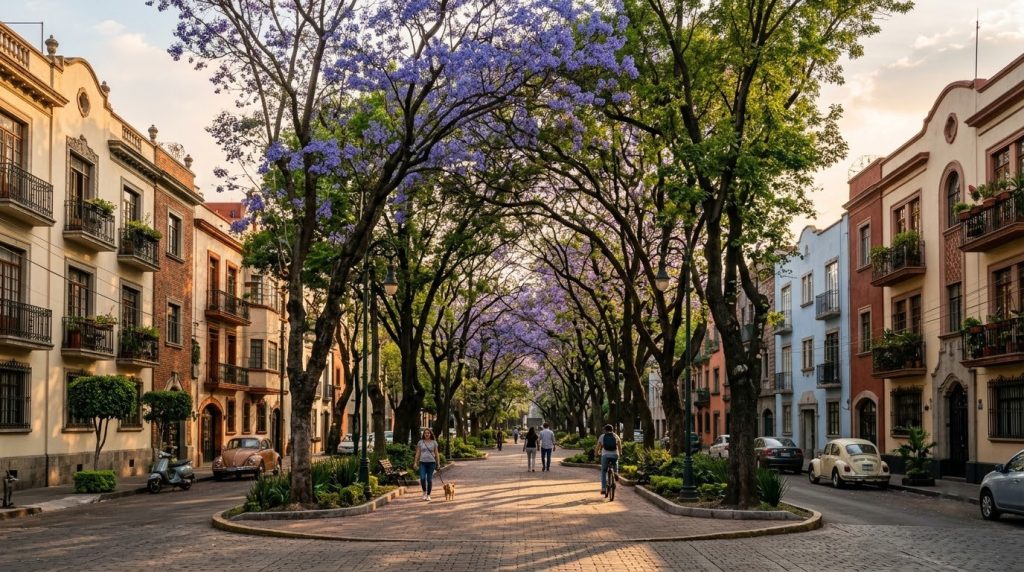
Yes, Mexico City is safe for most visitors who base themselves in Roma Norte, Condesa or Polanco: the US State Department rates Mexico City Level 2 of 4, “Exercise Increased Caution.” That is the same level as France, Italy and the UK. The real risks are phone snatching, pickpocketing, unlicensed taxis and fake-police shakedowns, not cartel violence. Plan your nights and rides and the city is very manageable.
| Risk | Reality | What to do |
|---|---|---|
| Phone and bag theft | The most common problem, including snatches from motorbikes | Keep your phone in a front pocket near the curb; carry a cross-body bag |
| Pickpocketing | Worst on the Metro at rush hour | Ride off-peak; zip bags and keep them in front |
| Fake or street-hailed taxis | Linked to robbery and express kidnapping | Use Uber, DiDi or an authorized airport taxi desk only |
| ATM skimming and theft | Isolated street ATMs are the target | Use ATMs inside banks or malls, in daylight |
| Fake police | Demands for cash or your passport | Stay calm, ask for ID, carry a passport copy |
| Earthquakes | The city has a citywide early-warning siren | Learn the alarm tone and your hotel’s exit route |
What the US advisory actually says about Mexico City
Mexico is rated state by state. The country as a whole sits at Level 2 for terrorism, crime and kidnapping, while several states are Level 4, “Do Not Travel.” Mexico City (CDMX) is Level 2; the advisory notes that violent and non-violent crime occur throughout the city, but it places no special movement restrictions on US government employees there. Check the State Department’s Mexico advisory page before you book, because state levels change.
In practice, most serious violence happens in outer boroughs that tourists rarely enter, and the city received roughly 14 to 15 million hotel guests in 2024. Most of the best things to do in Mexico City, from Chapultepec to the museums of Coyoacán, sit in well-patrolled districts.
Neighborhoods to stay in, and areas to avoid after dark
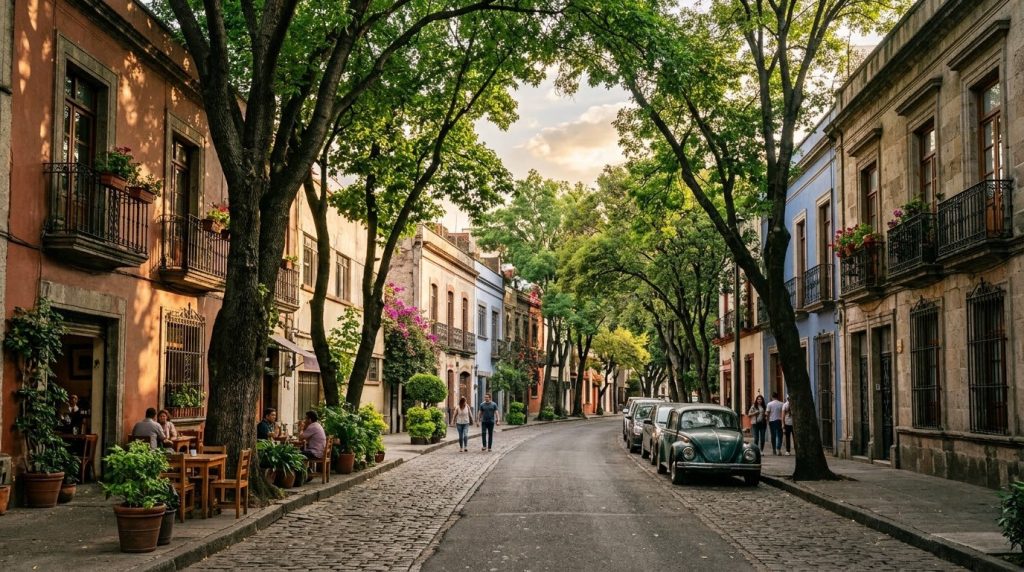
The safest bases are Roma Norte, Condesa, Polanco and central Coyoacán, with steady foot traffic late into the evening. Juárez and Zona Rosa are fine with normal city caution.
Skip these, or go only with a plan:
– Tepito: the black-market district next to the historic center. There is no sight there worth the risk. – Doctores: higher rates of car theft and violent crime.
If you go to lucha libre at Arena México, book your ride there and back. – Centro Histórico after dark: busy by day, but the side streets empty out at night. – Plaza Garibaldi late at night: go early in the evening for the mariachis, then leave by app. – Iztapalapa and Gustavo A. Madero: not places for casual solo wandering.
The scams and thefts that actually happen
Phone theft is the number-one complaint. Thieves on motorbikes grab phones from people checking maps at the curb, so step into a doorway to look at your screen. Pickpockets work crowded Metro trains and the Zócalo.
The other recurring tricks are ATM skimming and “police” who claim an infraction and ask for cash or your passport. Use bank ATMs indoors, carry one card and a passport copy, and ask any officer for identification. Express kidnapping, where victims are driven between ATMs, is rare for visitors and usually tied to unlicensed taxis, which is why the transport rules below matter most.
Getting around safely: airport, Uber and the Metro
Nonstop flights take about 3 hours 45 minutes from Los Angeles and about 5 hours 35 minutes from New York. At the airport (MEX), buy a fixed-price ticket from an authorized taxi desk inside the terminal. Fares are set by zone, typically MXN 300–450 (USD 17–26) to Roma or Condesa, converted at USD 1 = MXN 17.2. Never accept a ride from someone who approaches you in arrivals.
In the city, use Uber or DiDi and check the driver’s name, photo and plate before getting in. The Metro and Metrobús are useful by day, but avoid them at rush hour with luggage or valuables. If you plan side trips, our guide to day trips from Mexico City covers which ones are easy on a tour and which suit an app ride.
Day trips: Teotihuacan and Xochimilco without the hassle
Teotihuacan and Xochimilco are the two day trips most visitors add to a Mexico City stay, and both are safe with a few precautions that matter more than the sights themselves.
For Teotihuacan, a direct bus runs from Terminal Central de Autobuses del Norte to the pyramids roughly every 20 minutes through the day. Buy your ticket at the marked counter inside the terminal rather than from anyone approaching you outside it, and keep your bag on your lap rather than in an overhead rack on the ride out.
Dress for sun rather than crime once you are on site: a hat, sunscreen and a full water bottle matter more than any security concern, since most of the walkways and the pyramids themselves offer no shade. Decline unsolicited “guide” offers at the gate and book through an official counter or a known tour operator instead.
Xochimilco’s canals are popular with families, but the trajinera boats are where good judgment matters most. Choose a boat from one of the marked, numbered docks rather than the first tout who approaches your car, and confirm the price before boarding.
Local rules cap most boats at eighteen passengers, counting children from age four, and limit alcohol brought aboard to one liter of spirits per boat, rules worth knowing since the canals are not a place to want an overcrowded or overserved boat. Weekday mornings are calmer than weekend afternoons, when the canals fill with music and much larger crowds.
Swimming in the canals is not advisable, and a boat ride is not the place to let young kids wander without a hand held.
Teotihuacan also saw a rare, widely reported incident in April 2026, when a lone gunman opened fire from the top of one of the pyramids before dying at the scene from a self-inflicted wound, killing a Canadian visitor and injuring several others.
Mexican authorities treated it as an isolated attack by a single individual rather than an ongoing threat, and the site reopened to visitors afterward.
It is worth knowing about rather than dwelling on: the baseline risk at Teotihuacan remains what it already is for any crowded outdoor site, heat and crowd management rather than violence, and the standard response if a commotion breaks out anywhere is the same, move away from it rather than toward it.
Solo and female travelers
Solo travelers do well here if they stick to the neighborhoods above and use apps at night. For women, transit harassment is a documented problem: surveys reported by NPR found that 9 in 10 women in Mexico City say they have been sexually harassed on the Metro. The front cars on many lines are reserved for women and children under 12.
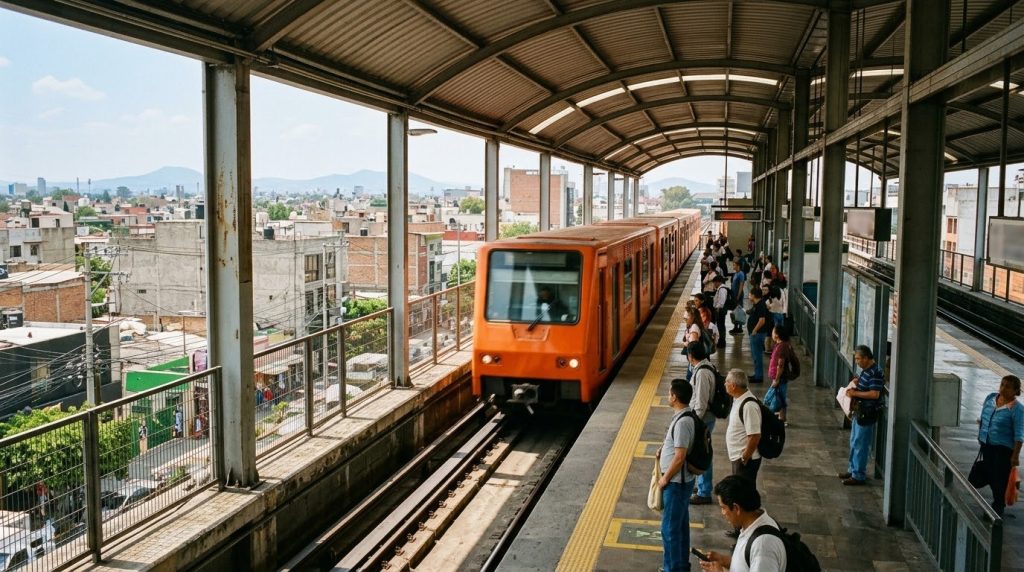
Use them, or take an Uber instead when trains are packed. At bars, watch your drink and arrange your ride home before you leave the table.
Altitude and air quality: what to expect in your first 24 hours
Mexico City’s elevation affects visitors in ways that often surface a day after arrival rather than immediately. Local health guidance notes that altitude sickness symptoms, mainly headache, fatigue and shortness of breath, typically appear between 6 and 24 hours after reaching altitude, which is why a traveler can feel fine on arrival and rough the next morning.
Limiting alcohol on the first night and drinking more water than usual both help, and either symptom lingering past a day or two is worth a same-day clinic visit rather than waiting it out.
Air quality is the less-discussed half of this. The valley’s surrounding mountains trap vehicle and industrial emissions, and smog tends to be at its worst during the city’s drier months of the year.
For most visitors this shows up as haze rather than a health event, but travelers with asthma or other respiratory conditions should pack their usual medication and consider checking a local air quality reading before a heavy day of walking, the same way they might check a rain forecast elsewhere.
Travelers with heart or lung conditions, or anyone arriving directly from sea level with a packed first-day schedule, are the ones most likely to notice the combined effect of altitude and air quality.
Building a slower first day into the itinerary, rather than starting with a long walking tour or an immediate day trip to Teotihuacan, is the simplest way to avoid feeling it. None of this should discourage a trip; most visitors notice nothing beyond mild tiredness, and the adjustment is usually complete well before the second day is out.
Emergencies, earthquakes and health
– Emergency number: dial 911 for police, ambulance and fire, 24/7. – Tourist assistance: 078. – US Embassy Mexico City: +52 55 5080 2000.
Mexico City sits at 2,240 meters (7,350 feet), so take day one easy and drink bottled or purified water, not tap water. The SASMEX earthquake siren sounds from street loudspeakers; leave the building only if you can do it within a minute or two, otherwise take cover away from windows. Buy travel insurance that covers medical evacuation.
Who should think twice about Mexico City right now
Mexico City is not for travelers who want to wander anywhere at any hour without planning, or who refuse to use ride apps. Road-trippers should also reconsider, because some other states carry higher advisory levels than CDMX. If crowds worry you, check the best time to visit Mexico City, since holiday weeks bring packed Metro cars and more pickpocketing.
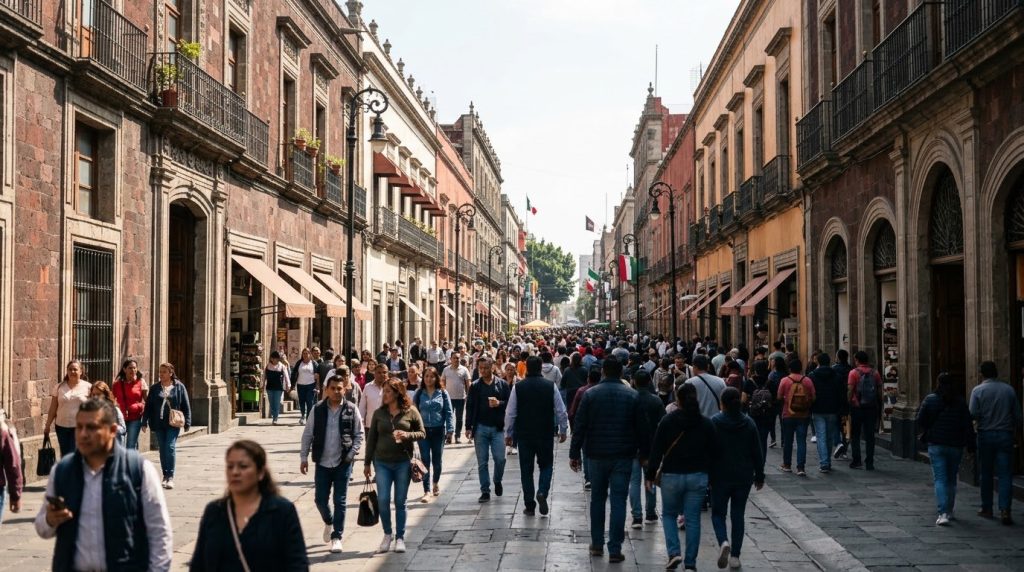
And don’t save money by hailing street cabs: an app ride removes the biggest risk on this list.
Family travel: getting around with kids
Mexico City works well for families who stick to the same central neighborhoods already recommended for solo and first-time visitors. Roma Norte, Condesa and Polanco all have wide, shaded sidewalks and enough green space, especially around Parque Mexico and Bosque de Chapultepec, for kids to burn off energy without crossing major roads.
Chapultepec Park itself is considered safe for families and stays busy with both visitors and local residents most days, which is part of what makes it comfortable; the park’s zoo and lake area are easy half-day stops that do not require advance planning.
For a family exploring on foot, treat the park like any crowded public space: keep younger kids within sight rather than letting them range ahead, since busy and safe still means busy.
The Metro is usable with children but is not stroller-friendly at busy stations, and the crush at rush hour is a real consideration with a child in tow, not just a comfort issue. For a family, Uber or DiDi is the simpler choice outside of off-peak hours, and it avoids the question of which Metro car to use altogether.
Many family-friendly stops, including children’s museums and the lake boats in Chapultepec, run on normal daytime hours and do not require any night-time travel at all, which keeps most family days clear of the after-dark areas named elsewhere in this guide.
Carry a printed hotel address card in Spanish for younger kids who might wander off in a crowd, and agree on a simple meeting point, such as a specific park entrance or museum ticket desk, before heading into anywhere busy. It is an ordinary big-city precaution rather than a Mexico City-specific one, but it matters more in a park as large as Chapultepec than it would at home.
Where to stay
– Roma Norte: walkable, cafe-filled and lively until late. Best for couples and solo first-timers. – Condesa: leafy, park-lined and a little quieter at night. Best for families. – Polanco: polished, with embassies, heavier security and high-end dining. Best for anyone who prioritizes calm nights.
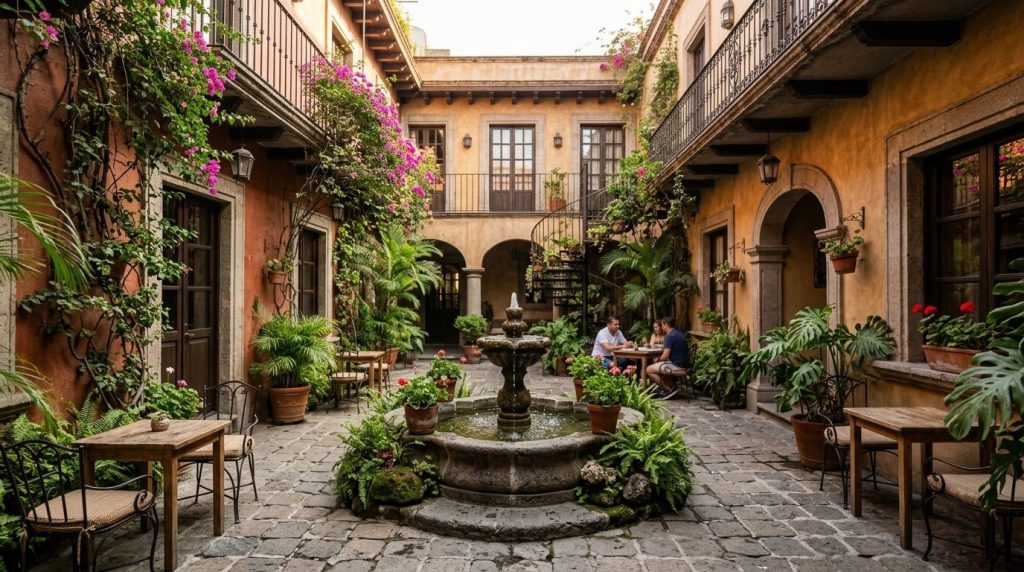
These three areas also work as a base for a 5-day Mexico City itinerary, and our Mexico City neighborhood guide for where to stay compares them street by street.
Find your Mexico City hotel on the map
Live prices from Booking, Airbnb and more — move the map or change dates to compare stays across Mexico City.
Frequently Asked Questions
Is Mexico City safe at night?
In Roma Norte, Condesa and Polanco, yes. Restaurants and bars stay busy late, and walking a few blocks between them is normal. Risk rises in Centro Histórico side streets, Doctores, Tepito and Plaza Garibaldi late at night. After dark, use Uber or DiDi rather than walking far or hailing a cab.
Is Uber safe in Mexico City?
Uber and DiDi are the safest way for visitors to get around. Each ride is tracked and the driver is identified in the app. Always match the plate, photo and name before getting in. At the airport, the fixed-price authorized taxi desks inside the terminal are an equally safe option.
What level is the US travel advisory for Mexico City?
Mexico City (CDMX) is Level 2, “Exercise Increased Caution.” Some other Mexican states are Level 4, “Do Not Travel,” so always check the specific state you plan to visit, not just the country.
Is Mexico City safe for solo female travelers?
Generally yes, with precautions. Stay in central, busy neighborhoods, use ride apps at night and keep an eye on your drink. Harassment on crowded Metro trains is common, so use the women-and-children cars at the front of the train, or skip public transit at rush hour.
Can you drink the tap water in Mexico City?
No. The water is treated at the plant but often picks up contamination in old pipes and rooftop tanks on the way to your faucet. Drink bottled or purified water instead. Ice in established restaurants is usually made from purified water, so it is generally fine.