Rome vs Florence: Which to Choose (2026)
Disclosure: Some links in this guide are affiliate links. If you book or buy through them, we may earn a small commission at no extra cost to you — it helps keep our guides free.
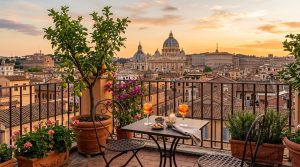
You want ancient history, the Vatican and a bigger, livelier capital city.
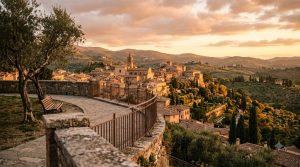
See hotels in Rome →You want Renaissance art, a walkable historic core and a slower pace.
See hotels in Florence →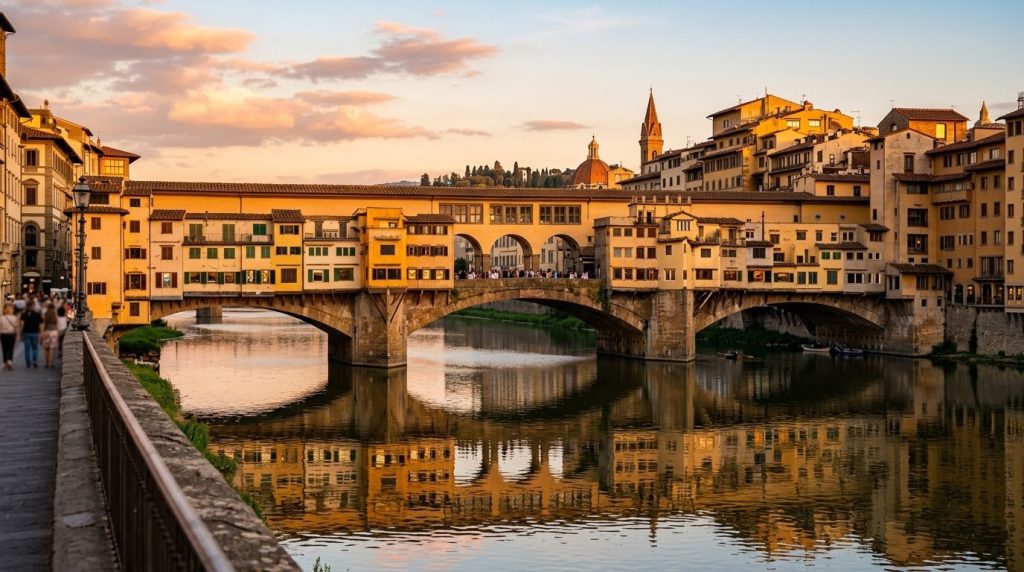
Rome vs Florence comes down to scale versus size: Rome is a capital of 2.75 million people that needs 3 to 4 days for its ancient ruins, baroque squares and the Vatican, while Florence is a compact Renaissance city of about 362,000 people that needs 2 to 3 days and can be crossed on foot in under 30 minutes.
The two cities sit roughly 90 minutes apart by high-speed train, so for most first Italy trips the real question is not which one to skip but which one gets more nights.
Quick answer: Comparing Rome and Florence? Open live hotel prices in each to weigh cost against location:
| Criterion | Rome | Florence |
|---|---|---|
| Best for | Ancient history, the Vatican, baroque grandeur | Renaissance art, walkable streets, gateway to Tuscany |
| Recommended stay | 3 to 4 days | 2 to 3 days |
| City size | Sprawling capital, population 2.75 million | Compact city, population about 362,000 |
| Getting around | Metro and bus needed for most sights | Historic center walkable in about 30 minutes |
| Signature sights | Colosseum, Roman Forum, Vatican Museums, Pantheon | Uffizi Gallery, Duomo, Ponte Vecchio, Michelangelo’s David |
| Pace | Busier, more chaotic, bigger crowds | More relaxed, easier to navigate on foot |
| Nightlife | Livelier, more late-night dining and bars | Quieter, earlier evenings |
| Day trips | Ostia Antica, Tivoli | Siena, Pisa, Chianti wine country |
Rome for scale, ancient history and the Vatican
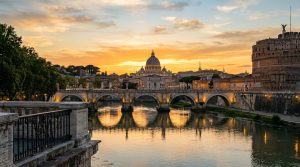
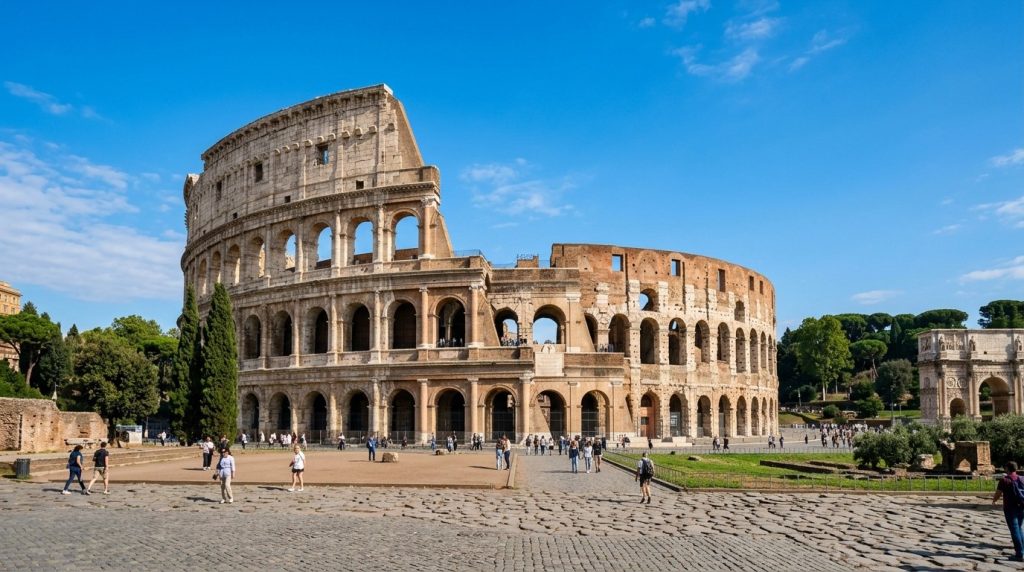
Rome wins on scale, ancient history and the Vatican, so it earns the longer stay of the two cities. The Colosseum and the Roman Forum sit at the center of the historic core, and both need a half day each to see without rushing past the ruins.
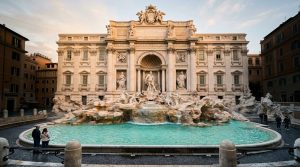
The Vatican Museums and the Sistine Chapel add a full morning or afternoon on their own, and lines build fast after 9am, so an early or pre-booked entry pays off. The Pantheon, Trevi Fountain and Piazza Navona cluster close together in the centro storico and work well as a single walking loop between the bigger sights.
Trastevere, across the river, adds a separate evening loop of narrow lanes, trattorias and bars that most visitors treat as a half day on its own.
Rome is also simply larger as a city, with 2.75 million residents spread across a metro area that mixes ancient ruins with 20th-century sprawl, which is why getting between neighborhoods usually means a metro ride or a taxi rather than a stroll.
Travelers building a full itinerary around the capital can check a detailed 3-day Rome itinerary and compare neighborhoods in the where to stay in Rome guide before booking.
Florence for Renaissance art and walkability
Florence wins on Renaissance art and walkability, so it suits travelers who want a slower, denser dose of culture in a smaller footprint. The Uffizi Gallery holds the city’s core collection of Renaissance painting, and the Accademia Gallery down the street holds Michelangelo’s David, both of which reward a booked time slot rather than a walk-up queue.
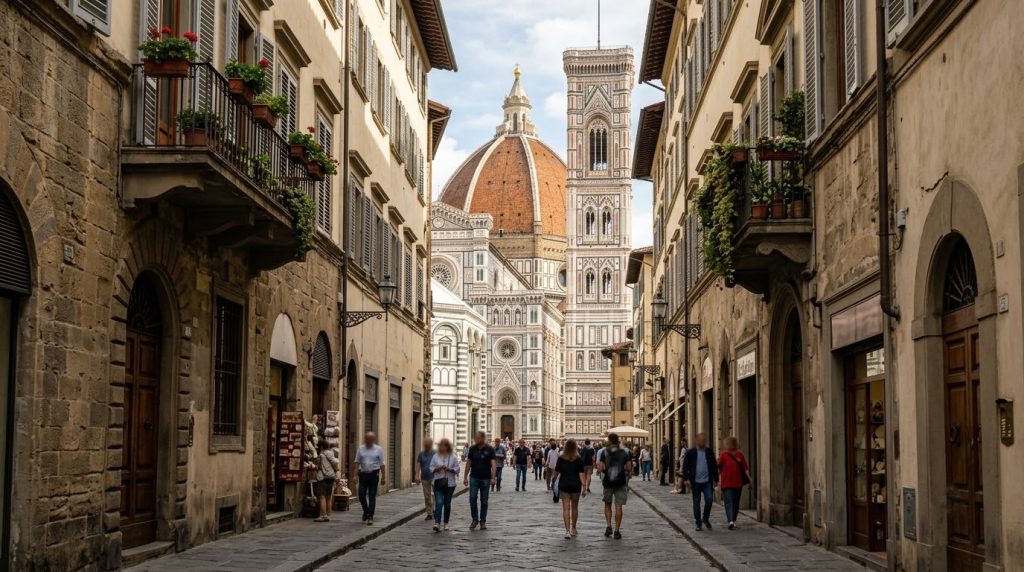
The Duomo complex, with Brunelleschi’s dome and Giotto’s bell tower, anchors the historic center and is visible from almost anywhere in the old city, which is only about 5 square kilometers across.
The Ponte Vecchio and the Oltrarno district on the river’s south bank add workshops and quieter streets a short walk from the main sights, and the climb up to Piazzale Michelangelo gives the classic skyline view over the Arno.
Because the historic center is so compact, most visitors cover the essential sights on foot in 2 to 3 days without needing public transport at all.
Florence is also the natural base for day trips into Tuscany, and travelers weighing whether the city justifies a stop on a broader Italy trip can read the Florence itinerary guide or the breakdown of whether Florence is worth visiting.
Crowds, pace and cost compared
Rome feels busier and more chaotic than Florence at nearly every hour of the day, simply because it has roughly 7.5 times the population packed into a far bigger urban area with more traffic and more competing attractions pulling crowds in different directions.
Florence’s historic center gets just as crowded at its top sights, especially around the Duomo and the Uffizi in peak season, but the smaller footprint makes it easier to duck into a side street and find a quieter piazza within a few minutes.
Pace follows the same pattern: Rome runs later into the night with more restaurants and bars open past 11pm, while Florence tends to quiet down earlier, which suits travelers who want art and food over nightlife.
Food follows a similar split: Rome’s trattorias lean into hearty Roman classics like cacio e pepe, carbonara and supplì across a huge number of options citywide, while Florence is known for bistecca alla Fiorentina and Chianti-region wine, with strong choices packed into a much smaller radius near the center.
On cost, Florence’s historic core has less hotel inventory within walking distance of the main sights than Rome’s larger centro storico, which tends to push rates higher for comparable quality rooms close to the Duomo. Neither city is cheap in high season, and both reward booking accommodation and major museum tickets well ahead of a summer visit.
They are 90 minutes apart – how to split your time
Rome and Florence are close enough by train that most first Italy trips should visit both rather than pick one over the other.
High-speed Frecciarossa and Italo trains connect Roma Termini and Firenze Santa Maria Novella in as little as 1 hour 19 minutes on the fastest departures, with most trains running closer to 1 hour 45 minutes depending on the time of day.
Advance one-way tickets start from around USD 13 (EUR 11) at today’s exchange rate, though prices climb closer to departure and in peak summer months. That means a same-day visit is technically possible but rarely worth it, since both cities deserve at least an overnight stay to see their top sights without rushing.
For a 7-night Italy trip, a common split is 4 nights in Rome and 3 in Florence, front-loading Rome first since it needs the extra day for the Vatican and ancient sites.
Travelers with less time can flip the order and use Florence as a lighter, walkable landing point before tackling Rome’s larger scale, or add Florence as a 2-night stop on either end of a longer Rome-based trip. Either direction works well because the train ride is short enough to not eat into a full day.
Cost comparison: hotels and dining in Rome vs Florence
Florence runs slightly cheaper than Rome overall, but the gap is narrower than the two cities’ size difference suggests, and it does not hold evenly across every category.
Several cost trackers put Florence’s restaurants, groceries and transport each a few percentage points below Rome’s, while Florence’s hotel rates near the historic center can run higher for comparable quality once demand is factored in, since Florence’s walkable core has far less hotel inventory packed into it than Rome’s larger centro storico.
A mid-range hotel in central Rome commonly runs somewhere in the USD 150 to USD 250 (EUR 129 to EUR 215) range per night outside peak season, climbing well past that in summer and around major holidays, and Florence’s comparable mid-range rooms near the Duomo often land in a similar or slightly higher bracket despite the city’s smaller size, precisely because there are fewer rooms to go around within walking distance of the main sights.
Budget travelers who are flexible on location can do noticeably better in both cities by booking a few minutes further from the historic center and walking or taking transit in.
Dining costs follow a gentler version of the same pattern: Rome’s huge number of trattorias citywide means genuinely cheap, good meals are easier to find without hunting, while Florence’s smaller dining footprint concentrates demand onto fewer kitchens near the center, nudging prices up slightly for a tourist-area dinner of similar quality.
Neither city is a budget destination in high season, and both reward booking hotels and skip-the-line museum tickets well ahead of a summer visit, as the existing guide above already notes for crowding.
Travelers splitting a week between the two cities, as most first-time visitors do, rarely notice the cost gap in daily spending once transport, a mix of sit-down and casual meals, and museum tickets are averaged across both stops; the bigger cost lever is which season the trip falls in, not which of the two cities gets more nights.
Safety and common scams: Rome vs Florence
Both cities are considered safe for travelers by the standards of violent crime, and the real risk in each is petty theft and tourist-targeted scams rather than anything more serious.
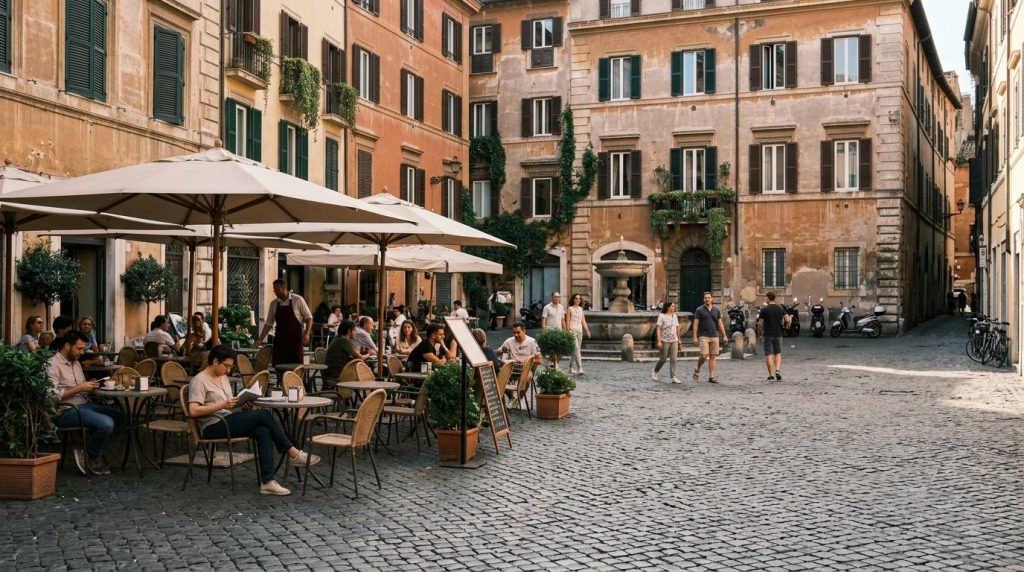
Rome’s larger size and bigger crowds give pickpockets more cover, and the classic targets are the same every year: crowded buses and the metro, the area immediately around Termini station, and dense tourist clusters at the Colosseum, the Trevi Fountain and Vatican City.
Common scams include strangers tying a free bracelet onto a wrist before demanding payment, fake petition clipboards used as a distraction for a bag, and unlicensed taxi drivers quoting inflated flat fares from the airport instead of using the meter.
Florence sees a lighter version of the same pattern, concentrated around the Duomo, the Uffizi queue and Ponte Vecchio, where dense foot traffic and distracted, camera-in-hand visitors create the same opening pickpockets look for everywhere else in Italy.
Both cities also share Italy’s long-running fake designer goods street-seller scene, technically illegal to buy from, and the same advice applies in both: keep bags zipped and in front of the body in crowds, use a money belt or a bag with a cross-body strap for valuables, and agree on or confirm a taxi fare before getting in rather than after arriving.
Neither city’s safety profile should change which gets more nights on a first Italy trip; the practical difference is simply that Rome’s bigger crowds and longer transit rides create more opportunities for petty theft across a stay of the same length, so travelers spending equal nights in both should expect to apply the same bag-and-pocket awareness a little more often in Rome than in Florence.
Standard travel-insurance advice applies in both cities: carry a photocopy or phone photo of your passport, split cash and cards across more than one place, and report any theft to the local police within 24 hours, since many insurers require a police report number to process a claim.
Choose Rome if / choose Florence if
Choose Rome if ancient history, the Vatican and a bigger, livelier capital city matter more to your trip than a compact, easily walkable center. Choose Florence if Renaissance art, a walkable historic core and a slower pace matter more, especially if Tuscany day trips are part of the plan.
Most travelers on a first Italy trip should still do both, since 90 minutes by train is a small cost for two very different cities that together cover ancient Rome, Renaissance Florence and everything in between.
Compare Rome and Florence hotels on the map
Live prices from Booking, Airbnb and more — move the map or change dates to compare stays.