Is Cinque Terre Worth Visiting? (2026)
Disclosure: Some links in this guide are affiliate links. If you book or buy through them, we may earn a small commission at no extra cost to you — it helps keep our guides free.
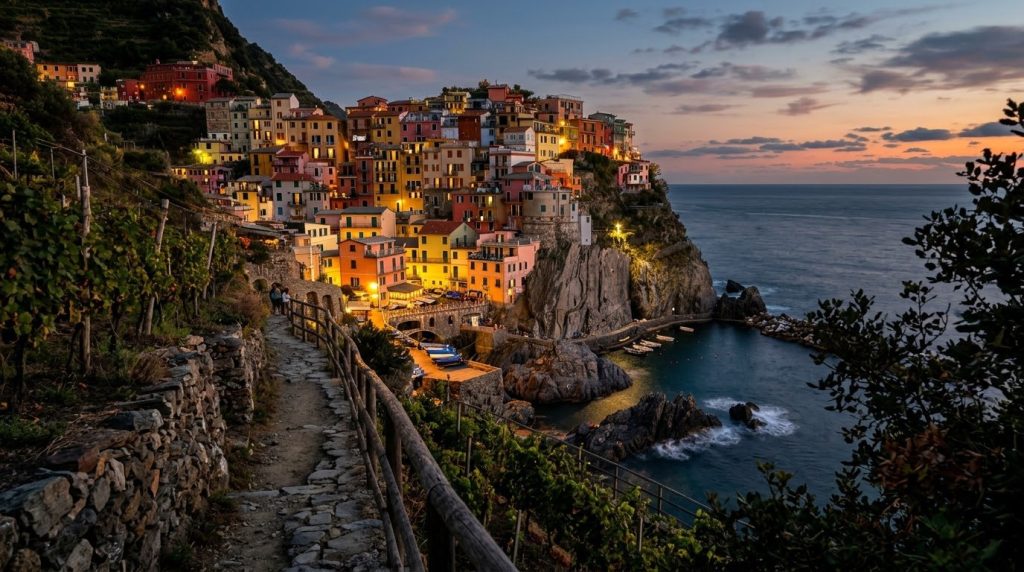
Cinque Terre is worth visiting in 2026, because five villages built for roughly 4,000 residents still deliver scenery worth the 2.5 million visitors who show up to see it every year.
It stops being worth it if you only have a few hours squeezed between a cruise call or a day-trip connection, because the villages you meet in that window are a bottleneck of tour groups, not the coastline in the photographs.
| Traveller type | Worth it? | Nights to give it | Why |
|---|---|---|---|
| Slow traveller | Yes | 2-3 nights | Villages empty out once the last afternoon trains leave, so you get the quiet version everyone photographs |
| Day-tripper from Florence or Milan | Marginal | 0 (day trip) | Doable, but you lose real time queueing for trains and see every village at its most crowded hour |
| Serious hiker chasing the full coastal trail | Mostly no | Skip, or 1 night | The Manarola to Corniglia stretch of the Sentiero Azzurro has been closed by landslides for years |
| Family with young kids | Yes, with care | 2 nights | Steep steps and no real beaches in most villages, but one well-chosen base works |
| Budget traveller | Think twice | 1-2 nights | Train cards, trekking cards and rooms all run high for a small stretch of coast |
| First-time Italy grand tour add-on | Day trip only | 0-1 night | A rushed stop rarely beats giving that extra night to Florence or Venice instead |
What Cinque Terre still delivers
Cinque Terre still delivers a run of cliffside villages that no amount of overtourism has managed to fake anywhere else on the Italian coast.
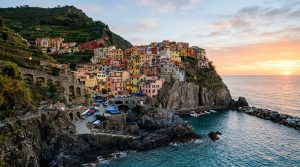
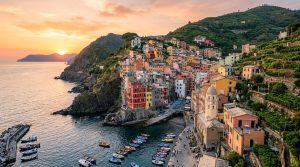
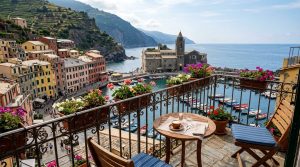
Monterosso, Vernazza, Corniglia, Manarola and Riomaggiore stack pastel houses over the sea between vineyard terraces, and cars are banned from all five centres, so the view from the train platform or the harbour wall still looks like the postcard.
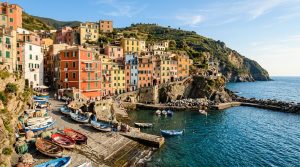
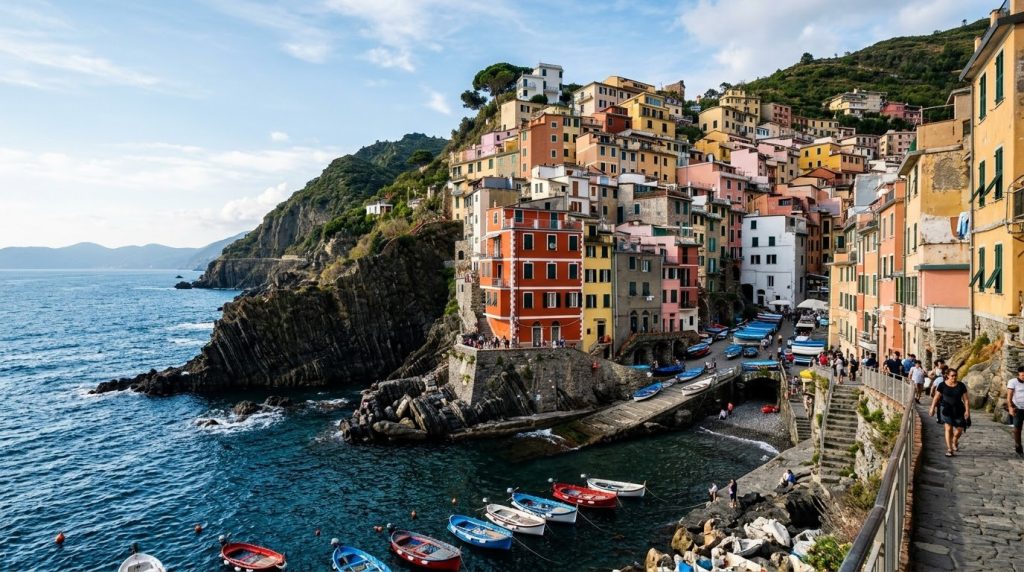
Each village keeps its own character rather than blurring into a single strip: Vernazza has the only natural harbour of the five, Riomaggiore’s tall houses funnel straight down to a boat ramp, Corniglia sits alone on a hilltop above the tracks reached only by a steep staircase, and Manarola turns its rock pool into a swimming spot the moment the weather allows it.
The Via dell’Amore, the cliffside path linking Manarola and Riomaggiore, reopened in August 2024 after more than a decade closed, and for 2026 it runs from 9am to 9pm, with last entry at 8:30pm, from March 29 to October 24, then 9am to 6pm for the rest of the year.
Entry is on timed slots capped at 200 people per half hour, and booking ahead is required rather than optional. A three-day Cinque Terre itinerary that spreads the visit across all five villages, rather than day-tripping from one base, is the version that actually uses this scenery instead of skimming it.
Each village, in brief
The five villages share the same cliffside setting but differ enough in layout and mood that the choice of base changes the trip. A traveller who wants swimming time needs a different village than one who wants quiet evenings or the liveliest restaurant strip.
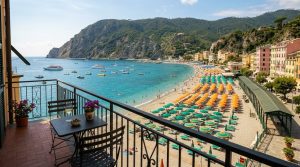
- Monterosso al Mare is the only village in Cinque Terre with a true sandy beach, set along a wider seafront promenade than the other four get. It carries the most hotel rooms of the five, which makes it the easiest base to book on short notice, and it suits travellers who want beach time built into a village-hopping trip rather than hiking alone.
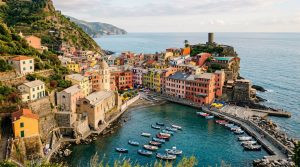
- Vernazza is the only village with a natural harbour, its coloured houses stacked tight around a small piazza that opens straight onto the water. It is the most photographed village from the trail above, and its single main street fills up fastest once the day-trip trains start arriving.
- Corniglia is the only one of the five not built directly on the sea. It sits on a hilltop reached from the train station by the Lardarina staircase, 382 steps, or by a shuttle bus. That climb keeps Corniglia the quietest village once the afternoon trains have cleared out.
- Manarola is known for the rock pool below the village that becomes a swimming spot whenever the sea is calm, and for the vineyard terraces climbing the hill behind it. Its small harbour and the coastal view back toward Corniglia make it one of the more photographed stops along the Via dell’Amore.
- Riomaggiore sits closest to La Spezia, with tall houses funnelling down a single street to a small boat ramp. It carries more restaurants and a later-running evening scene than Corniglia or Vernazza, closer to an ordinary small town than the postcard version of the other four villages.
Portovenere sits beyond the official five villages, reachable by a seasonal boat rather than the regional train, and is a UNESCO World Heritage town in its own right rather than a sixth Cinque Terre village.
It is not covered by the Cinque Terre Card, so travellers who add it usually book a boat tour that combines it with two or three of the five villages rather than treating it as a normal rail stop.
The crowd problem, in numbers
The maths behind Cinque Terre’s crowding is stark enough to change how you plan the trip. Roughly 2.5 million people visit the five villages each year, against a resident population of about 4,000 across all of them combined, which works out to more than 600 visitors for every person who actually lives there.
That crowd is overwhelmingly a day-tripper crowd, arriving by regional train from La Spezia or Levanto and moving through Vernazza and Manarola in the two or three hours either side of lunch, when the narrow lanes fill up faster than the trains can clear them.
Cruise ships calling at La Spezia add another spike on top of the rail-in crowd, funnelling several thousand extra people into the same handful of village centres on the same mornings.
The park authority suspends Cinque Terre Card sales and closes the coastal trail outright during heavy rain, which is a real planning risk in shoulder-season autumn and spring, on top of being a crowding problem in summer.
Crowding is not constant across the year, and the best time to visit Cinque Terre changes that 600-to-1 ratio more than any single tactic on the ground does.
Whether the hiking still justifies the trip
The hiking that first made Cinque Terre worth the trip still works, just not on the exact route most visitors expect. Access to the marked trails requires a Cinque Terre Trekking Card, which costs USD 12 (EUR 10) on standard days and USD 17 (EUR 15) on peak days, at an EUR/USD rate of 1.16.
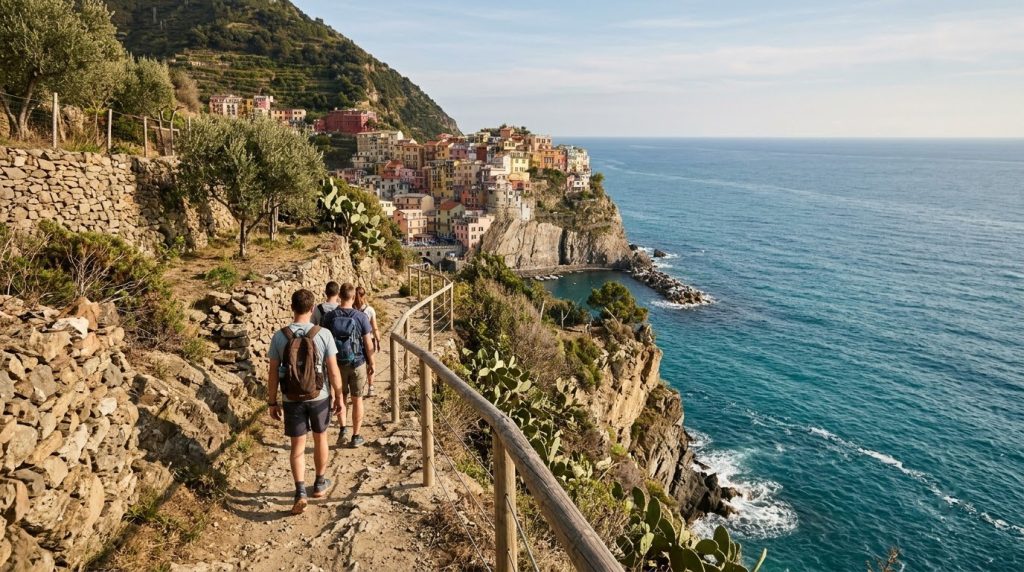
The Via dell’Amore is open again on the timed schedule above, but the Manarola to Corniglia section of the Sentiero Azzurro, the classic blue coastal trail, has been shut by landslides for years with no reopening date announced, and travellers should not plan a trip around it reopening.
Unsuitable footwear on the marked trails carries a fine of about USD 58 (EUR 50), which is the park’s way of saying these are real hiking paths, not a boardwalk. Check the park’s live trail map close to your travel dates rather than trusting an old blog post, because closures shift with weather and season.
Day trip or overnight, and why it changes the answer
Whether Cinque Terre is worth visiting depends more on where you sleep than on which village you pick. Day-trippers arrive mid-morning on trains from Florence, Pisa or Milan and leave again by early evening, which means they experience the villages exactly when the villages are busiest, the trails are most crowded, and the light is flattest.
Travellers who stay overnight get a different place entirely once the last outbound trains pull out around 7 or 8pm, when the harbours quiet down, restaurant tables open up, and the villages read the way the guidebooks promise.
That overnight window is also when a dinner reservation actually matters, because the same handful of harbourside restaurants that turn away walk-ins at 1pm have open tables again once the day-trip crowd has gone home.
Deciding how many days to spend in Cinque Terre is really a decision about which version of the place you want, the packed daytime version or the empty evening one.
Best time to visit Cinque Terre
Cinque Terre’s weather follows a mild Mediterranean pattern, but the comfortable months and the busiest months overlap more than most travellers expect. July and August are the warmest, driest stretch of the year, with highs around 26-27 degrees Celsius and lows near 18, and July is also the single driest month for rainfall.
January is the coldest month, with highs near 9 degrees and lows around 2, and along with February, March, November and December it is also one of the wettest, averaging 12 to 13 days of rain a month.
May and October sit in between, with highs around 19-20 degrees and lows near 12, mild enough for walking the trails without summer heat.
| Season | Months | Typical temperatures | Trade-off |
|---|---|---|---|
| Peak summer | July-August | 26-27 high, 18 low | Driest and warmest weeks, but also the busiest and most expensive of the year |
| Late spring | Late May-June | Around 20 high, 12 low | Trails open and the sea is warm enough to swim, with lighter crowds than July-August |
| Early autumn | September-October | 19-20 high, cooling through the month | Similar trade-off to late spring, with a higher chance of a sudden storm closing a trail |
| Winter | December-February | 9-10 high, 2-4 low | Quietest and cheapest season, but rain and wind can shut trails and the Via dell’Amore with little notice |
Spring and autumn carry a specific risk beyond the rain totals above: sudden heavy showers blowing in from the sea can trigger trail and Via dell’Amore closures with little warning, and this happens more often in these shoulder months than in summer.
That trade-off is why late May through June and September end up recommended most often, since the trails are open, the sea is swimmable, and the villages have not yet reached their August visitor peak.
Travelling in July or August swaps a lower chance of rain for the thickest crowds and the highest accommodation prices of the year; travelling in winter swaps the crowds for a real chance of a wet-weather trail closure cutting a day short.
Who should skip Cinque Terre
Some travellers should skip Cinque Terre outright rather than force it into an itinerary. Cruise passengers docking at La Spezia with less than four or five hours ashore will spend most of that window on trains and platforms rather than in a village, and will see none of the evening version described above.
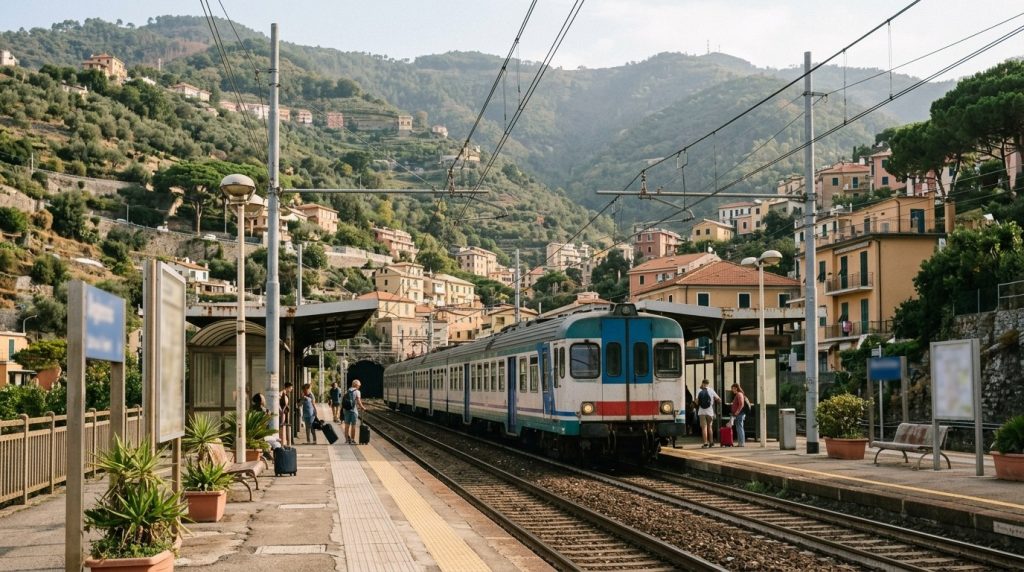
Hikers set on completing the full coastal trail end to end will hit the Manarola-Corniglia closure and have to detour inland, which undercuts the reason they came. Travellers with mobility limitations should be cautious, because every village runs on steep stone steps and narrow lanes with no elevators or ramps between levels, and Corniglia in particular is unreachable without climbing.
Beach-seekers expecting sand will find small pebble coves at best, since most of the shoreline is rock, so travellers set on a beach holiday will be happier elsewhere on the Italian or French Riviera.
Budget travellers unwilling to pay premium train, trekking card and room prices for a small stretch of coast will find better value elsewhere on the Ligurian coast, where the villages are quieter and the same regional trains still reach them.
How to get around Cinque Terre
Trains are the only practical way to move between the five villages, since cars cannot enter any of the village centres and the connecting trail sections do not link all five on foot. The park sells two different passes, and mixing them up is the most common planning mistake.
The Cinque Terre Trekking Card, covered above, pays only for the marked trails and the Via dell’Amore. The Cinque Terre Treno Card adds unlimited second-class travel on the regional trains between La Spezia, the five villages and Levanto, on top of the same trail and Via dell’Amore access, local buses within the villages, and reduced museum entry in La Spezia.
For 2026, in the low-season date band running from March 14 to November 1, a one-day adult Treno Card runs from about USD 26 (EUR 22) up to about USD 41 (EUR 35) on the highest-priced days, with a two-day adult card running from about USD 42 (EUR 36.50) up to about USD 71 (EUR 61).
Children aged four to eleven pay roughly USD 17 to USD 27 for one day and USD 28 to USD 47 for two days, depending on the date band.
The park prices the card by date rather than a flat summer or winter rate, so the figure on any given travel date should be checked close to the trip rather than assumed from a single posted price.
Trains on the La Spezia-Levanto line run throughout the day in both directions, stopping at all five villages, which makes a train-based day plan realistic without a car.
Buying a Treno Card on the first morning of a multi-village day works out cheaper than paying for single one-way tickets, which only cover one hop each and add up fast once the plan covers more than two villages.
Walking between villages covers part of the route, but the long middle section of the Sentiero Azzurro between Manarola and Corniglia has been closed by landslides, so the train covers that gap for everyone, not only time-pressed visitors.
A rental car is a liability rather than a convenience here: none of the five village centres allow private cars, roadside parking at the edges is limited and expensive, and the hairpin coast road above the villages is slower than the train for the same trip.
Where to stay if you decide to go
Find your Cinque Terre hotel on the map
Live prices from Booking, Airbnb and more — move the map or change dates to compare stays across the Cinque Terre.
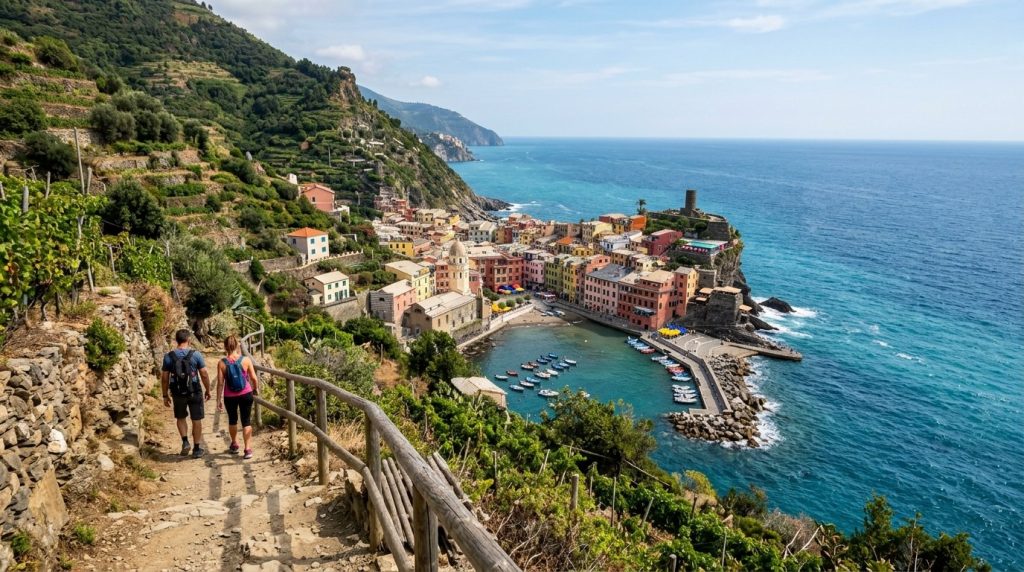
Village choice still matters even with real-time prices on the map above, and the best hotels in Cinque Terre, broken down by village and traveller type, covers that decision in full.