Ultimate Las Vegas Travel Guide 2026
Disclosure: Some links in this guide are affiliate links. If you book or buy through them, we may earn a small commission at no extra cost to you — it helps keep our guides free.
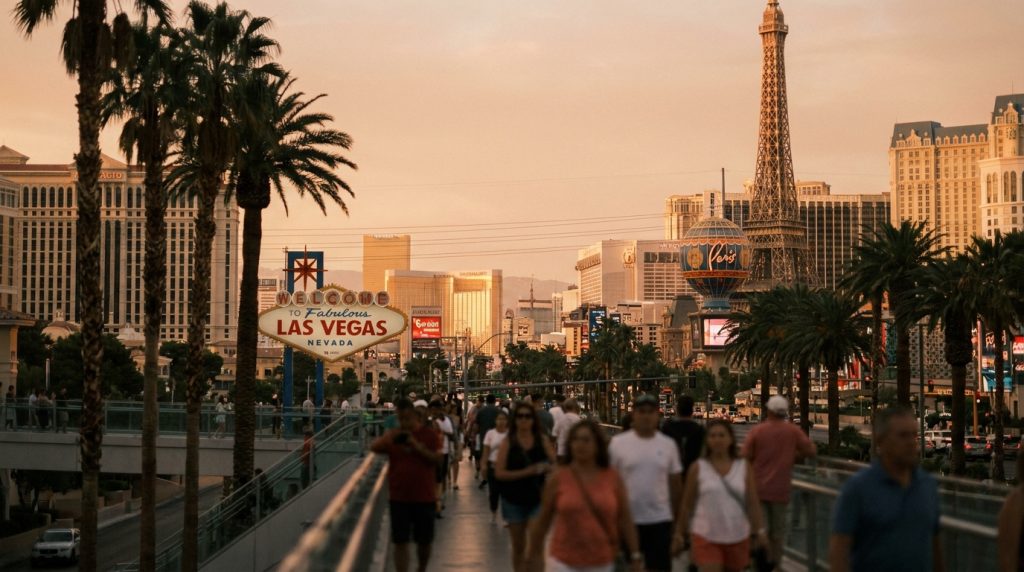
Las Vegas works best when you treat it as a base, not just a casino floor. We’ll show you exactly what a 2026 trip costs, where to sleep on the Strip without overpaying, and how to escape into the desert when the neon gets loud. You’ll leave this page with a plan, not a vague wishlist.
Key Takeaways
– Las Vegas welcomed over 41 million visitors in 2025, a 3% rebound year-over-year (LVCVA, 2025).
– Average Strip hotel rates run $150-$280 a night midweek in 2026, but resort fees add $45-$60 daily (Las Vegas Advisor, 2026).
– The Las Vegas Strip is 4.2 miles long, so walking it end to end takes 90+ minutes (Clark County, 2025).
– Hoover Dam sits just 35 miles southeast, a 45-minute drive that’s the most popular half-day trip (NPS, 2025).
– Average summer highs hit 104°F (40°C) in July, so spring and fall are the comfort sweet spots (NOAA, 2025).
Is Las Vegas Worth Visiting in 2026?

Yes, and it’s a stronger pick than it’s been in years. New resorts, a packed sports calendar, and direct flights from most US and UK hubs make 2026 a good window. The catch is cost discipline. If you book smart and skip impulse spending, you’ll have a great trip on almost any budget.
The city has shifted hard toward entertainment over gambling. Las Vegas now hosts NFL games at Allegiant Stadium, F1 racing every November, and residencies from major touring acts. Casino floors still anchor every resort, but the average visitor in 2025 spent more on dining and shows than on tables (LVCVA, 2025). That’s good news if slots aren’t your thing.
We’d push back on one myth: Vegas isn’t only for partiers. Families fill the pools, foodies chase celebrity-chef restaurants, and outdoor folks use the city as a launchpad for the Mojave Desert and the Grand Canyon. Read our Las Vegas things to do guide for the full range.
What’s genuinely new for 2026 is worth flagging. The Sphere has reshaped the entertainment skyline since opening, drawing visitors who’d never set foot near a casino. Resorts World on the north Strip keeps adding dining and nightlife.
And the Formula 1 Grand Prix, now a fixture every November, turns the Strip itself into a racetrack for one electric weekend. If you time a trip around the F1 race, expect premium pricing but a once-a-year spectacle. If you want calm, steer clear of that weekend entirely.
The flip side of all this growth is that Vegas has gotten pricier and more fee-heavy than the bargain reputation suggests. The $2 shrimp cocktail and free parking era is mostly gone. That doesn’t make it bad value, it just means you need to plan rather than assume the city will be cheap.
Travelers who research rates, book midweek, and skip the impulse buys still come away feeling they got their money’s worth. Those who wing it on a Saturday night tend to be shocked by the bill.
How Much Does a Las Vegas Trip Cost in 2026?

A mid-range Las Vegas trip costs roughly $200-$350 per person per day in 2026, covering a Strip hotel, two meals out, one show, and local transport. Budget travelers can cut that to $120 a day with off-Strip hotels and casual dining. The biggest hidden cost is the daily resort fee, which most hotels charge whether you use the amenities or not.
Here’s a realistic daily breakdown for a couple splitting costs in 2026.
| Expense | Budget | Mid-Range | Luxury |
|---|---|---|---|
| Hotel (per night) | $70-$110 | $160-$280 | $400+ |
| Resort fee (per night) | $25-$40 | $45-$55 | $55-$65 |
| Meals (per person) | $35-$50 | $80-$120 | $200+ |
| Show or activity | $0-$40 | $80-$160 | $250+ |
| Transport (per day) | $10-$25 | $25-$45 | $60+ |
Three costs surprise first-timers. Resort fees are non-negotiable and rarely advertised in the headline rate. Parking on the Strip runs $18-$30 per day at most major resorts. And drinks are only “free” while you’re actively gambling, so factor $15-$22 per cocktail at bars and clubs. We track current pricing in our Las Vegas budget breakdown.
Dining is where budgets stretch or snap. A buffet that once cost $25 now runs $45-$70 at the top resorts, and a steakhouse dinner with wine can clear $150 per person fast. The good news is that Vegas still has excellent mid-range and cheap eats if you walk a block off the main floor.
Food halls inside resorts like the Cosmopolitan and casual spots Downtown serve solid meals for $15-$25. We tend to splurge on one memorable dinner per trip and keep the rest casual, which keeps the food line from doubling overnight.
Here’s how those choices play out over a typical four-night trip for two people in 2026. A budget couple staying Downtown, eating casually, and skipping shows might spend around $1,100 total. A mid-range couple on the central Strip with two shows and a day trip lands closer to $2,600.
A luxury pairing in a suite with fine dining and a helicopter tour easily passes $5,000. None of these is wrong, they’re just different trips, and knowing which one you’re booking prevents nasty surprises at checkout.
To lock in the best room rate, compare hotels early on Check live hotel prices — Vegas prices swing wildly by date, and midweek stays often beat weekends by 40% or more. Set a price alert as soon as your dates firm up, since rates move daily based on convention bookings and event demand.
When Is the Best Time to Visit Las Vegas?
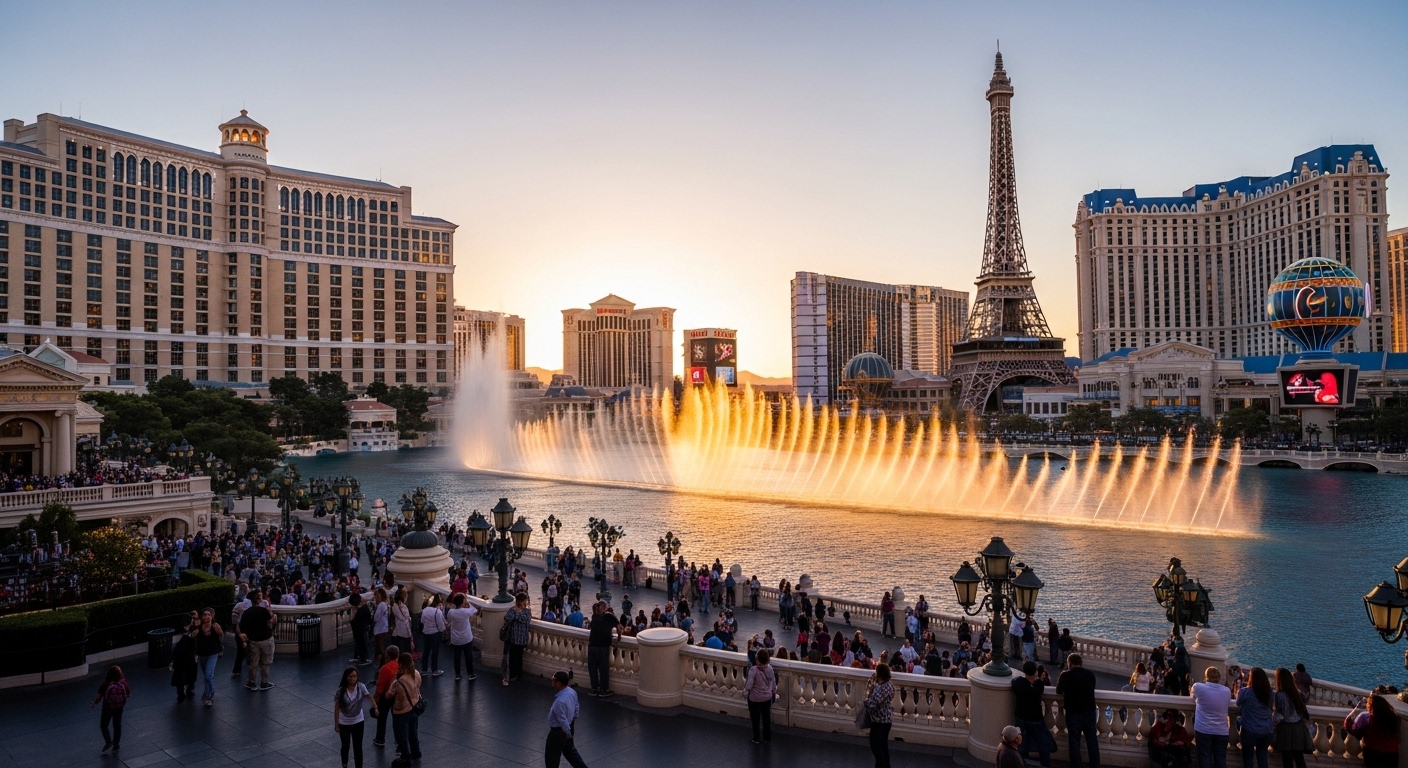
The best time to visit Las Vegas is March through May and September through November, when daytime temps sit between 70°F and 90°F and crowds thin between major events. Summer is brutally hot, with July highs averaging 104°F (40°C), while winter brings cooler, walkable days but chilly nights (NOAA, 2025).
Season matters for your wallet too. January and the weeks after big conventions can deliver the lowest room rates of the year, sometimes under $90 on the Strip. Avoid CES week in early January, F1 weekend in November, and New Year’s Eve unless you want peak pricing and packed sidewalks.
| Season | Avg High | Crowds | Hotel Pricing |
|---|---|---|---|
| Spring (Mar-May) | 78-90°F | Moderate | Mid to high |
| Summer (Jun-Aug) | 100-106°F | Lower midweek | Lower (heat discount) |
| Fall (Sep-Nov) | 75-95°F | Moderate | Mid, spikes for F1 |
| Winter (Dec-Feb) | 55-65°F | High holidays | Low except NYE/CES |
If you can only travel in summer, lean into the pools. Vegas pool season runs April through October, and dayclubs at resorts like Encore and the Cosmopolitan are a core part of the experience. Just hydrate hard and stay out of the midday sun.
Events drive demand as much as weather does. Las Vegas hosts more than 20,000 conventions a year, and a single large one can fill 100,000 hotel rooms and triple nightly rates overnight (LVCVA, 2025). Before you commit to dates, it’s worth a quick search for what’s in town that week.
If a major tech, medical, or trade show overlaps your stay, expect inflated prices, longer rideshare waits, and packed restaurants. Conversely, the gap weeks between big events are when Vegas quietly discounts itself, and those are the dates savvy travelers target.
Weather aside, our honest pick for the best overall window is late September through early November and again in March and April. You get warm-but-walkable days, pool access on the warmer end, manageable crowds, and pricing that hasn’t yet spiked for the holidays. We dig deeper into the monthly tradeoffs in our best time to visit Las Vegas guide.
Find your Las Vegas hotel on the map
Live prices from Booking & Airbnb — tap a pin to compare stays around the Strip and beyond.
Where Should You Stay in Las Vegas?

Stay on the central or mid Strip if it’s your first visit, since you’ll be within walking distance of the most casinos, restaurants, and shows. The central Strip around the Bellagio and Caesars Palace puts you in the action; the south end near Mandalay Bay is quieter; and Downtown’s Fremont Street is cheaper and more retro. Off-Strip hotels save money but require driving or rideshares.
Each zone fits a different traveler. Central Strip is best for first-timers and walkers. The north Strip near Resorts World and the Sphere suits show-goers. Downtown delivers old-school Vegas at half the price, with $40-$80 rooms common midweek. We compare neighborhoods in detail in our where to stay in Las Vegas guide.
| Area | Best For | Typical Nightly Rate (2026) |
|---|---|---|
| Central Strip | First-timers, walkers | $180-$320 |
| South Strip | Quieter stays, families | $140-$260 |
| North Strip | Shows, Sphere, value | $120-$240 |
| Downtown / Fremont | Budget, retro vibe | $40-$120 |
Book refundable rates when you can, because Vegas pricing drops as your dates approach if the city is soft. We use check live hotel prices to hold a refundable room early, then rebook if rates fall. Always read the resort fee line before you commit, since two hotels at the same headline price can differ by $20 a night once fees land.
A few booking tricks save real money. Many resorts run their own loyalty programs that waive parking or resort fees for members, and signing up is free. Sunday through Thursday nights are dramatically cheaper than Friday and Saturday, so a Monday-to-Thursday stay can cost half of a weekend trip at the same hotel.
And if you’re flexible, the older mid-tier properties on the central Strip often deliver the best location-to-price ratio, putting you steps from the marquee resorts without paying their nightly rate. You’re sleeping in the room, not the lobby, so the savings rarely cost you anything that matters.
Off-Strip and Downtown deserve a second look too. Downtown’s Fremont Street has reinvented itself with renovated casinos, a strong bar scene, and rooms that routinely undercut the Strip by 50%. The tradeoff is a 10-15 minute rideshare to the main attractions, but for budget-focused travelers that’s a fair swap. We weigh every zone, including the under-the-radar options, in our where to stay in Las Vegas guide.
What Are the Best Things to Do in Las Vegas?
The best things to do in Las Vegas split into four buckets: shows, dining, free Strip attractions, and outdoor day trips. You can fill three days without ever sitting at a table. Cirque du Soleil shows, the Bellagio fountains, the High Roller observation wheel, and celebrity-chef restaurants headline most itineraries.
Free attractions carry a Vegas trip surprisingly far. The Bellagio fountains run every 15-30 minutes from afternoon to midnight. The Conservatory inside the Bellagio rotates seasonal displays at no charge. Fremont Street’s overhead light show downtown is free and runs nightly. These cost nothing and easily fill an evening.
For paid experiences, book shows and tours ahead to avoid sellouts and inflated walk-up prices. Cirque tickets run $80-$200, the Sphere’s immersive shows start near $100, and a Grand Canyon helicopter tour runs $400-$600. We book activities through GetYourGuide and our live travel map for free cancellation and skip-the-line entry. Our Las Vegas 3-day itinerary sequences it all so you’re not backtracking.
Here are experiences worth pre-booking:
- Cirque du Soleil — “O” at Bellagio and “Mystere” at Treasure Island are the long-running favorites.
- Sphere — the wraparound LED venue near the Venetian, best for the immersive “Postcard from Earth” film.
- High Roller — a 30-minute ride on the 550-foot observation wheel at the LINQ.
- Grand Canyon West tour — full-day bus or quick helicopter, both bookable via our live travel map.
- Gondola rides — indoor and outdoor canals at the Venetian for a classic photo.
Dining is its own attraction in modern Vegas. The city packs a remarkable concentration of celebrity-chef restaurants, from Gordon Ramsay’s steakhouses to outposts from chefs like Wolfgang Puck and Bobby Flay. Reservations for the headline spots fill up weeks ahead on weekends, so book the moment your dates are set.
If you want the experience without the splurge, many of these chefs run more casual concepts inside the same resorts at half the price. A great meal here is as much a highlight as any show.
Beyond the marquee names, build in time for the simple Strip pleasures that cost nothing. Wander the themed lobbies, ride the free trams between sister resorts, watch the Mirage-style volcano and fountain displays, and people-watch from a casino bar. These are the moments first-timers remember as much as the big-ticket shows.
Our 3-day itinerary builds in both the splurges and the free stuff so you don’t burn out or overspend on day one.
How Do You Get Around Las Vegas?
Most visitors get around Las Vegas on foot along the Strip, supplemented by rideshares, the Las Vegas Monorail, and the Strip’s free tram lines. The Strip is walkable but deceptively long at 4.2 miles, so plan for pedestrian bridges and 90-plus minutes to cover it end to end (Clark County, 2025). Renting a car only makes sense for day trips.

Your transport options each have a clear use case. Walking is free and best for short hops between neighboring resorts. The Monorail runs behind the east-side casinos and costs about $5 per ride or $15 for a day pass. Rideshares are convenient but surge hard after shows and on weekends. The Deuce bus runs the Strip and Downtown 24 hours for around $8 a day.
| Option | Cost (2026) | Best For |
|---|---|---|
| Walking | Free | Adjacent resorts |
| Monorail | $5 ride / $15 day | East-side casinos |
| Deuce bus | ~$8 day pass | Strip to Downtown |
| Rideshare | $10-$25 per trip | Late nights, airport |
| Rental car | $40-$80 per day | Day trips, off-Strip |
If you’re planning Hoover Dam, Red Rock Canyon, or the Grand Canyon yourself, a rental car pays off fast versus tour pricing. We compare rates on our live travel map to find pickups right at Harry Reid International Airport. Just budget for Strip parking fees and note that some resorts still waive self-parking for guests.
What Are the Best Day Trips From Las Vegas?
The best day trips from Las Vegas are Hoover Dam, Red Rock Canyon, Valley of Fire State Park, and the Grand Canyon, all reachable within a day by car. Hoover Dam is the easiest at 35 miles southeast, while the Grand Canyon’s South Rim is a longer 4.5-hour drive each way and better as an overnight or air tour.
Red Rock Canyon sits just 20 minutes west of the Strip and offers a 13-mile scenic loop with hiking and dramatic sandstone cliffs. Valley of Fire, about an hour northeast, delivers brilliant red rock formations and ancient petroglyphs for the price of a $15 park entry. Both make excellent half-day escapes when you need a break from the neon.
| Destination | Distance | Drive Time | Best For |
|---|---|---|---|
| Red Rock Canyon | 17 mi | 20 min | Quick nature, hiking |
| Hoover Dam | 35 mi | 45 min | Half-day, engineering |
| Valley of Fire | 55 mi | 1 hr | Red rock photography |
| Grand Canyon West | 125 mi | 2.5 hr | Skywalk, full day |
| Grand Canyon South Rim | 280 mi | 4.5 hr | Overnight, air tour |
If you’d rather not drive, guided tours handle logistics and often bundle multiple stops. A combined Hoover Dam and Grand Canyon West day tour runs $150-$220, and helicopter add-ons push it higher. We book these through GetYourGuide and our live travel map. For a self-drive plan, our Las Vegas day trips guide maps routes and timing.
For the desert day trips, timing and prep matter more than people expect. Start early to beat both the heat and the tour buses, carry far more water than feels necessary, and fill the tank before you leave the city since gas stations thin out fast in the Mojave.
Red Rock Canyon’s scenic loop requires a timed entry reservation in peak season, so book that slot ahead online. Valley of Fire has no reservation system but also no services, so pack snacks. These small steps turn a rushed, sweaty outing into a genuinely relaxing break from the Strip.
How Do You Stay Safe and Healthy in Las Vegas?
You stay safe in Las Vegas by treating it like any major tourist city: keep valuables secure, watch your drinks, and use official taxis or rideshares late at night. The Strip and Downtown’s Fremont area are heavily patrolled and generally safe, but petty theft and aggressive solicitation happen in crowded spots. The bigger health risk for most visitors is the desert heat, not crime.

Dehydration and heat exhaustion send more tourists to first aid than anything else, especially in summer. Symptoms creep up fast when you’re drinking alcohol and walking miles in 100-plus-degree heat. Carry water, take indoor breaks, and ease off the cocktails during the day. Sunscreen is essential even in spring, since the desert sun is stronger than the mild air temperature suggests.
A few street-smart habits go a long way. Don’t flash large amounts of cash at tables or ATMs, ignore people pushing flyers and “free” offers on the sidewalk, and keep your phone and wallet in front pockets in dense crowds. If you’re drinking heavily, stick with your group and arrange how you’ll get back to your hotel before you head out.
Vegas is forgiving of fun but unforgiving of carelessness, and a little awareness keeps the trip on track.
What Should You Know Before You Go?
Before you go, know that Las Vegas is a 24-hour city built around resorts that charge for nearly everything beyond the room rate. The legal gambling and drinking age is 21, IDs are checked strictly, and tipping is expected throughout, from $1-$2 per drink to 18-20% on meals. Pack for extremes, because casinos run cold while the desert outside runs hot.
A few practical rules save money and stress. Carry cash for tips and ATM fees on the Strip, which often top $8 per withdrawal. Drink water constantly, since the dry desert air dehydrates you faster than you’d expect, especially with alcohol. And set a gambling budget before you sit down, treating it as entertainment spending you’ve already lost.
Connectivity is easy to overlook. Resort Wi-Fi is usually bundled into the resort fee, but it can be slow during peak hours. International visitors should sort a US data plan before landing rather than paying roaming rates.
We use an Airalo eSIM for instant US data the moment we step off the plane, which beats hunting for a SIM kiosk at the airport. Check our first-timer Las Vegas tips for the full checklist.
Getting from the airport sets the tone. Harry Reid International is just a few miles from the south Strip, so a rideshare runs $15-$25 and a taxi a bit more. Skip the long-haul scenic route some drivers take through the tunnel by asking for the surface streets, which is usually faster and cheaper.
If you’ve booked a rental car for day trips, the airport pickup desks are convenient, and you can compare rates ahead on our live travel map so you’re not negotiating at a counter after a long flight.
Finally, pace yourself. The biggest first-timer mistake is trying to do everything in one trip, then crashing halfway through. Vegas runs 24 hours, the walking distances are longer than they look, and the dry air plus late nights add up.
Plan two or three anchor activities a day and leave room to wander. The city rewards a relaxed rhythm far more than a packed checklist, and you’ll go home with better stories and a smaller bar tab.
Related guide: 4-Day Las Vegas Itinerary 2026
Frequently Asked Questions
How many days do you need in Las Vegas?
Three to four days is the sweet spot for most first-time visitors. That’s enough to walk the Strip, see one or two shows, eat well, and take a single day trip to Hoover Dam or Red Rock Canyon. Add a fifth day if you want the Grand Canyon, which eats a full day round-trip.
Is Las Vegas expensive in 2026?
Las Vegas can be moderate or pricey depending on your choices. A mid-range trip runs $200-$350 per person per day in 2026, but Downtown hotels, casual dining, and free Strip attractions can cut that below $130. Resort fees and parking are the costs that quietly inflate budgets.
Do you need a car in Las Vegas?
You don’t need a car if you’re staying on the Strip and not leaving the city, since walking, the Monorail, and rideshares cover most trips. A rental car only pays off for day trips to Hoover Dam, Valley of Fire, or the Grand Canyon. Compare rates on Discover Cars before booking.
What’s the cheapest time to visit Las Vegas?
The cheapest time is January and February, outside CES week, plus weekday stays in the slow summer heat. Midweek rooms in these windows can drop under $90 on the Strip. Avoid weekends, New Year’s Eve, F1 weekend in November, and major convention dates for the lowest rates.
Is Las Vegas family-friendly?
Yes, Las Vegas works for families if you plan around adult-only zones. Pools, the High Roller wheel, M&M’s World, and the Shark Reef aquarium all suit kids, and many resorts offer family suites. Just note that casino floors are off-limits to anyone under 21, even walking through.
How hot does Las Vegas get in summer?
Summer is intense, with July and August highs averaging 100-106°F (38-41°C) and occasional days topping 110°F (NOAA, 2025). Pools and air-conditioned casinos make it bearable, but outdoor day trips are tough midday. Spring and fall are far more comfortable for sightseeing and hiking.
Can you visit the Grand Canyon from Las Vegas in one day?
Yes, but choose your rim carefully. Grand Canyon West is 2.5 hours away and doable as a comfortable day trip, often paired with Hoover Dam. The more famous South Rim is 4.5 hours each way, so it’s better as an overnight or a helicopter tour to save time.
Start Planning Your Las Vegas Trip
Las Vegas rewards travelers who plan the big stuff and stay loose on the rest. Lock in your dates around the comfortable spring or fall windows, pick a Strip hotel that fits your budget after resort fees, and pre-book the shows and day trips that matter most to you.
Ready to go? Compare Strip hotels on Check live hotel prices, reserve your shows and Grand Canyon tours through GetYourGuide and our live travel map, and grab a rental car on our live travel map if the desert is calling. Then dig into our Las Vegas 3-day itinerary to turn this guide into a day-by-day plan.