
Disclosure: Some links in this guide are affiliate links. If you book or buy through them, we may earn a small commission at no extra cost to you — it helps keep our guides free.
Ultimate Hoi An Travel Guide 2026: Lanterns, Food & Ancient Town
Hoi An is one of Southeast Asia’s most photogenic towns, and if you plan your visit right, it rewards you with world-class food, genuinely walkable streets, and a pace of life that makes three days disappear without regret. We’ve put together this complete 2026 guide covering when to go, where to stay, what to eat, which tours to book, and how to keep your budget in check.
Key Takeaways
– Hoi An’s Ancient Town received UNESCO World Heritage status in 1999 and welcomed over 5.5 million tourists in 2024, making it Vietnam’s third most visited destination (Vietnam National Administration of Tourism, 2025).
– Budget travellers can get by on USD 40-55/day; mid-range travellers spend USD 80-130/day in 2026.
– The best months to visit are February through April — dry, mild (24-28 C), and before peak-season crowds hit in July-August.
– A 4G eSIM from Airalo costs around USD 6 for 3 GB / 30 days, eliminating airport SIM queues entirely.
– Booking.com lists 600+ Hoi An properties from USD 12/night for hostels to USD 280+/night for boutique resorts.
Why Hoi An Should Be on Your 2026 Vietnam Itinerary

Hoi An punches well above its size. The Ancient Town, a UNESCO World Heritage Site since 1999, compresses 500 years of merchant architecture — Chinese assembly halls, Japanese covered bridges, French colonial facades — into a walkable area roughly 2 km across. In 2024, Vietnam’s tourism authority counted 5.5 million arrivals to the town, a 19% year-on-year rise (Vietnam National Administration of Tourism, 2025). That growth means infrastructure has kept pace: direct flights now connect Da Nang (the nearest hub, 28 km away) to Singapore, Bangkok, Seoul, Tokyo, Hong Kong, and a dozen European hubs via Ho Chi Minh City.
What makes Hoi An different from other “heritage towns” is density of experience per square metre. Within a 20-minute walk you can eat a bowl of white rose dumplings at a family kitchen, get a tailored ao dai sewn in 48 hours, rent a bicycle to cycle to the rice paddies, and watch paper lanterns drift down the Thu Bon river at dusk. It’s that combination of sensory overload and genuine calm that keeps travellers extending their stay.
When Is the Best Time to Visit Hoi An?

February through April is the sweet spot for Hoi An: dry skies, temperatures of 24-28 C, and sea conditions at An Bang Beach that are calm enough for swimming. The Vietnam Meteorological and Hydrological Administration records Hoi An’s wettest months as October and November, when monthly rainfall exceeds 550 mm and flooding of the Ancient Town is routine (VMHA Climate Data, 2025). That’s not necessarily a dealbreaker — some travellers love the moody atmosphere and lower prices — but it does mean ground-floor shophouses get waterlogged and certain tours shut down.
| Month | Avg Temp (C) | Rainfall (mm) | Crowd Level | Verdict |
|---|---|---|---|---|
| Jan | 21 | 80 | Medium | Good — cool, some rain |
| Feb–Apr | 24–28 | 20–40 | Medium–High | Best overall |
| May–Jun | 29–32 | 60–90 | High | Hot, book early |
| Jul–Aug | 30–33 | 80–110 | Peak | Busy, pricier |
| Sep | 29 | 270 | Low–Med | Shoulder: cheap, rain risk |
| Oct–Nov | 25 | 500–580 | Low | Avoid if you hate flooding |
| Dec | 22 | 200 | Low–Med | Quiet, festive around Christmas |
Lantern Festival timing: The Full Moon Lantern Festival runs on the 14th day of each lunar month, when the Ancient Town switches off electric lights and hundreds of silk lanterns are lit along the riverfront. In 2026, notable full-moon festival dates fall on January 13, February 12, March 14, April 12, and May 12.
How to Get to Hoi An From Da Nang Airport
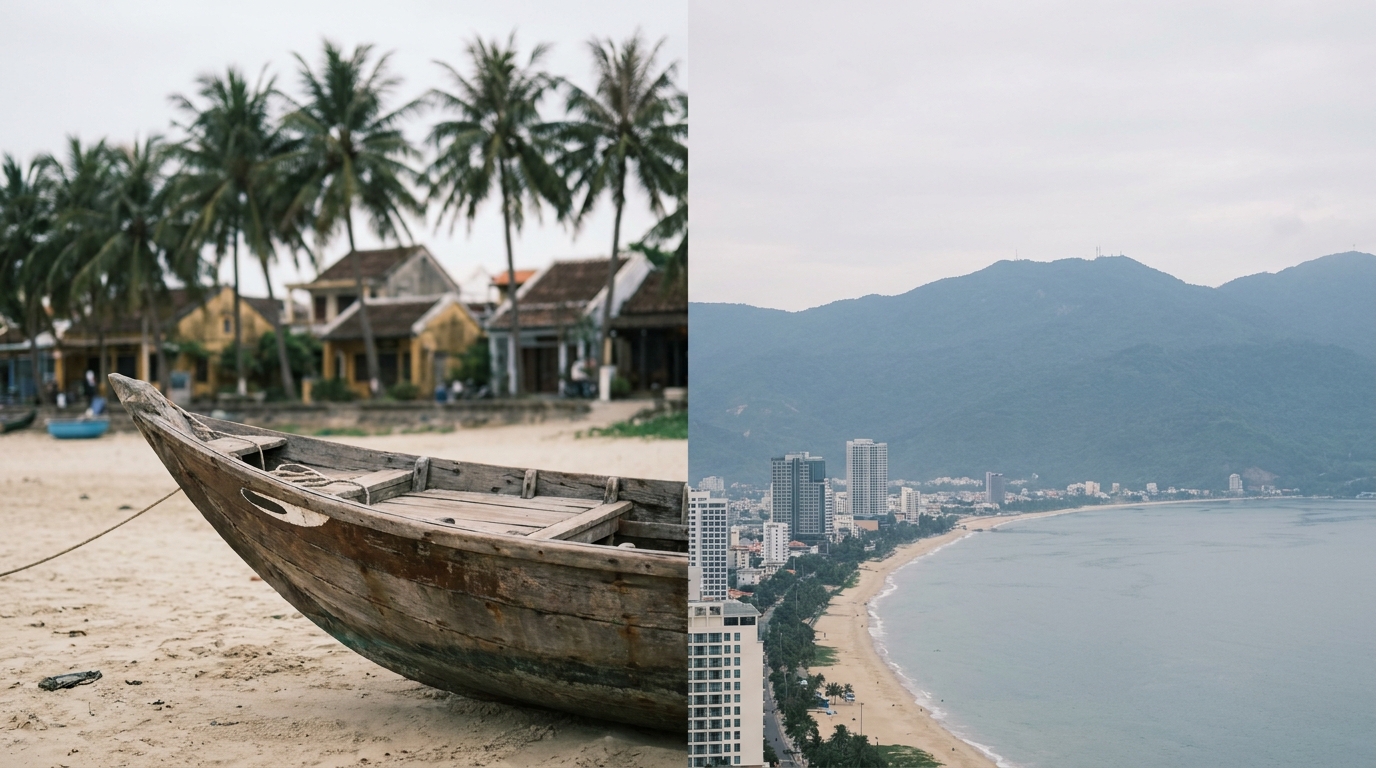
Da Nang International Airport (DAD) is your gateway, just 28 km north of Hoi An. In 2025, over 9.2 million passengers used DAD, making it Vietnam’s third busiest airport (Airports Corporation of Vietnam, 2025). There is no direct rail or bus connection to Hoi An, so your options are taxi, private transfer, or shuttle bus.
Taxi / ride-hailing: Grab (Southeast Asia’s Uber equivalent) from DAD to Hoi An costs VND 250,000-320,000 (approx USD 10-13) and takes 35-45 minutes outside peak hours. Always use the app to avoid metered-taxi surcharges.
Airport shuttle: Several operators run shared minivan shuttles for VND 80,000-100,000 (USD 3-4) per person. They stop at major hotels. Journey time is similar to taxi but add 15-20 minutes for pick-up consolidation.
Private transfer: Pre-booked transfers via GetYourGuide or Klook run USD 18-25 for a private car and include meet-and-greet at arrivals. Worth it if you’re arriving late at night or travelling with heavy luggage.
From Hue or Ho Chi Minh City by train: Vietnam Railways’ Reunification Express connects Hue to Da Nang in about 2.5 hours (USD 8-15 soft-seat). From HCMC to Da Nang takes 15-17 hours overnight. Book via Omio or 12go.asia for English-language booking.
Find your Hoi An hotel on the map
Live prices from Booking & Airbnb — tap a pin to compare stays around the Ancient Town and An Bang Beach and beyond.
Where to Stay in Hoi An: Best Areas and 2026 Prices
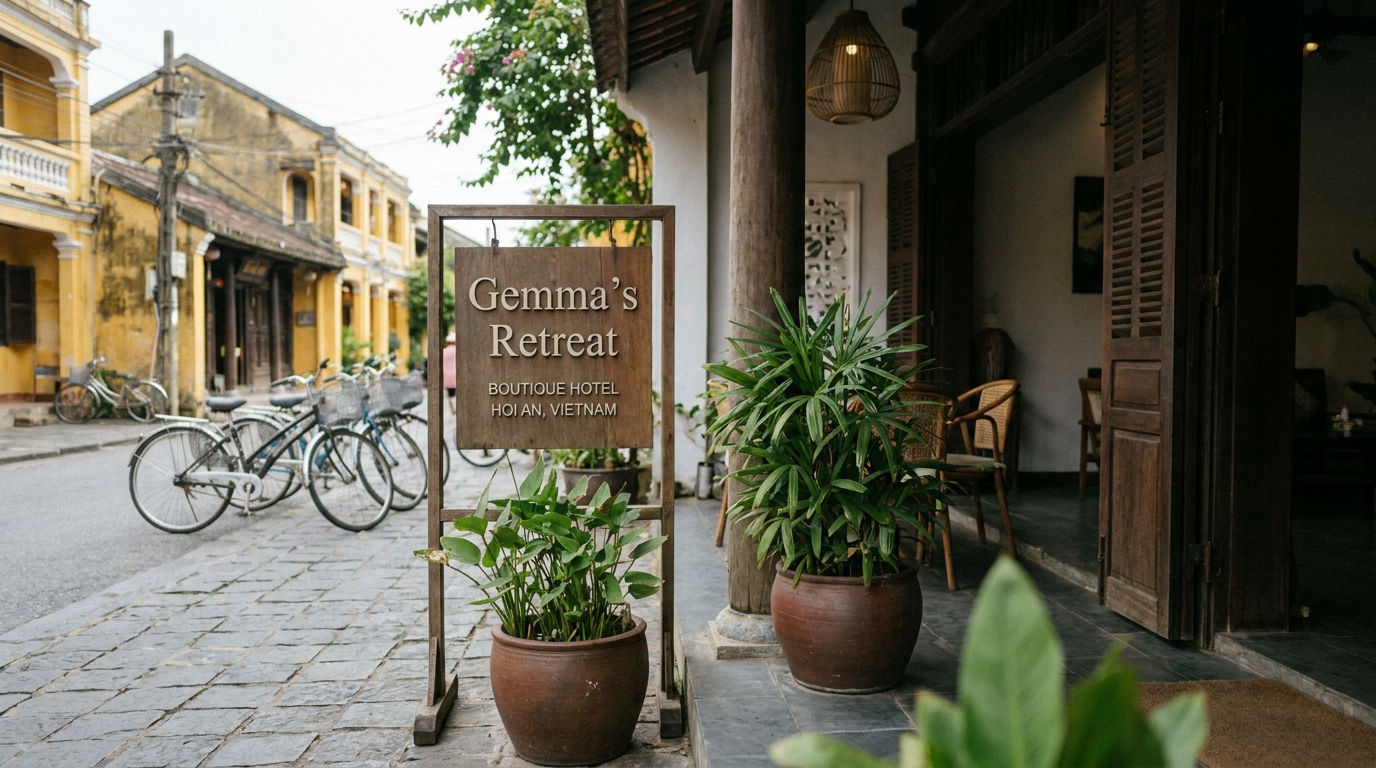
Hoi An has three distinct zones for accommodation, each with a different feel and price point. Booking.com listed 618 active properties in Hoi An as of Q2 2026, with average nightly rates up 7% year-on-year following post-pandemic demand recovery (Booking.com Market Data, 2025).
Ancient Town (Old Quarter): Staying inside the heritage zone means you’re steps from the Japanese Covered Bridge and the night market. Guesthouses here run USD 18-45/night for a double. The trade-off is noise from motorbikes and tour groups from 8 AM onward, and some streets have restricted vehicle access after 7 AM. Boutique properties in a restored shophouse cost USD 90-160/night.
An Hoi Peninsula (Lantern Village): The island directly south of the Ancient Town across the An Hoi Bridge. Quieter than the Old Quarter, a 5-minute walk to the main sights. Good mid-range hotels run USD 35-75/night. This is our recommended base for most travellers.
An Bang Beach (Coastal Zone): 4 km east of the Ancient Town, An Bang is a proper beach with surf-friendly waves from October to March. Beachfront guesthouses run USD 25-55/night; boutique beach resorts go USD 120-280/night. Rent a bicycle (USD 2-3/day) or take a Grab to the Old Town.
| Area | Best For | Budget (USD/night) | Mid-Range (USD/night) | Boutique (USD/night) |
|---|---|---|---|---|
| Ancient Town | Sightseeing, no transfers | 18–35 | 50–90 | 100–180 |
| An Hoi Peninsula | Balance of access + quiet | 25–45 | 55–100 | 120–200 |
| An Bang Beach | Beach, surf, relaxation | 22–50 | 65–130 | 150–280 |
| Cam Kim Island | Remote, rice-field views | 15–30 | 40–70 | 80–150 |
Search live availability and compare photos on Booking.com — they offer free cancellation on most Hoi An properties, which matters given how quickly weather can shift.
What to Eat in Hoi An: The 2026 Food Guide
Hoi An has its own micro-cuisine distinct from the rest of Vietnamese cooking, and it’s arguably the town’s greatest draw. The dish density here is extraordinary: a 2025 survey by CNN Travel ranked Hoi An among the world’s top 10 street food cities for the third consecutive year (CNN Travel Food Cities Index, 2025). Three dishes are non-negotiable.
White Rose Dumplings (Banh Bao Vac): Translucent shrimp dumplings steamed in rose-petal folds, served with crispy shallots and a light dipping sauce. The recipe is so closely guarded that only one family in Hoi An makes the wrappers commercially and supplies every restaurant in town. Price: VND 35,000-55,000 (USD 1.40-2.20) for a plate of 10.
Cao Lau: A thick noodle dish made from rice soaked in water drawn from the ancient Cham wells on Cham Island, mixed with local pork, herbs, and pork-rind crackers. The chewy, smoky noodles have no direct equivalent elsewhere in Vietnam. Price: VND 40,000-70,000 (USD 1.60-2.80).
Banh Mi Phuong: Hoi An’s banh mi has been called “the world’s best sandwich” by Anthony Bourdain on No Reservations (Season 7, 2009, still referenced by locals with obvious pride). Phuong’s stall at 2B Phan Chau Trinh opens at 6:30 AM and regularly sells out by 10 AM. Price: VND 35,000-45,000 (USD 1.40-1.80).
Where to eat beyond street food: For sit-down dining, Morning Glory Restaurant (on Nguyen Thai Hoc St) offers an edited menu of regional dishes at USD 6-14 per main. For cooking classes, Hoi An has over 30 operators; Klook lists them from USD 28/person for a half-day class including a market tour.
Top Things to Do in Hoi An Ancient Town
The Ancient Town entrance ticket covers five heritage sites and costs VND 120,000 (USD 4.80) per person as of 2026, unchanged since the 2023 price revision (Hoi An World Heritage Management Board, 2025). The ticket is valid for one visit to each of five categories: assembly halls, old houses, the Japanese Covered Bridge, a museum, and a handicraft workshop. You don’t need to visit all five on the same day — the ticket is valid until the end of the day of purchase.
Japanese Covered Bridge (Lai Vien Kieu): Built by the Japanese trading community in the early 17th century, this 18-metre covered bridge with its monkey and dog guardian statues is the town’s most photographed structure. Go before 8 AM to photograph it without crowds; the bridge itself closes periodically for restoration work, so check the official Hoi An Tourism website before visiting.
Phuc Kien (Fujian) Assembly Hall: The most ornate of the five Chinese assembly halls, built in 1697 by Fujian merchants. The main courtyard’s dragon-wrapped columns and the inner sanctuary’s incense smoke create one of the most atmospheric interiors in the town. Admission is included in the five-site ticket.
Thu Bon River Boat Ride: Bamboo basket boat tours on the river run USD 8-15 per person for a 1-hour trip that includes coconut-palm waterway navigation by a local fisherman. Book on GetYourGuide or directly at the riverside jetty near An Hoi Bridge. Evening lantern-release boat trips (VND 100,000-150,000 per person) depart from Hoai River promenade.
Tailoring: Hoi An has approximately 400 registered tailors and seamstresses. A custom ao dai (Vietnamese dress) takes 24-48 hours and costs USD 35-80 depending on fabric. A tailored linen shirt runs USD 18-35. Yali Couture, A Dong Silk, and Kimmy Fashion are consistently well-reviewed; book a fitting early in your stay so you have time for alterations before departure.
Cycling to the rice paddies: Rent a bicycle (USD 2-3/day from most guesthouses) and pedal the 6 km to Tra Que vegetable village, where locals still grow 30+ varieties of herbs on land shaped by centuries of Thu Bon river silt. Most cycling tour operators offer guided half-day rides including a herb-garden cooking activity from USD 22/person via Klook.
Day Trips From Hoi An Worth Booking in 2026
Hoi An’s central location in Quang Nam province makes it an excellent base for regional excursions. The two most-booked day trips are My Son Sanctuary and Cham Islands, with over 280,000 combined tour bookings recorded on GetYourGuide in 2025 (GetYourGuide Destination Data, 2026).
My Son Sanctuary (UNESCO, Group B-C tower complex): A 4th-13th century Cham Hindu temple complex set in a jungle valley 40 km from Hoi An. The site is Vietnam’s only UNESCO-listed Cham ruin. Half-day tours depart at 7:30 AM and 1:30 PM; book on GetYourGuide from USD 18/person including transport and guide. Tip: the early morning departure avoids midday heat and the bulk of large groups.
Cham Islands (Cu Lao Cham Marine Park): An archipelago of eight islands 18 km offshore, protected as a UNESCO World Biosphere Reserve since 2009. Snorkelling trips run USD 28-45/person for a full-day boat tour including lunch and equipment. The islands are accessible only from March to August due to winter swells; book via Klook or GetYourGuide.
Da Nang City & Marble Mountains: Da Nang is 28 km north and easily combined in a half-day: the Dragon Bridge, the Marble Mountains pagodas, and the Da Nang Museum of Cham Sculpture (the world’s largest collection of Cham artefacts, free entry). Grab rides between Hoi An and Da Nang cost USD 8-13 one-way.
Hue Imperial City: The former imperial capital is 120 km north via the scenic Hai Van Pass. Day tours by minivan run USD 30-45/person including the Citadel, royal tombs, and Thien Mu Pagoda. Alternatively, take the Reunification Express train through the pass (1.5 hours, USD 5-9) and join a guided walking tour in Hue.
How to Get a Hoi An eSIM (And Why You Need One)
Arriving in Vietnam without data connectivity is an avoidable hassle, and Hoi An’s street navigation and Grab ride-hailing both depend on a working data connection. As of 2026, Airalo offers Vietnam eSIM plans starting at USD 4.50 for 1 GB / 7 days, with the most popular 3 GB / 30-day plan at USD 6.00 (Airalo Pricing, Q1 2026). Activation takes under 10 minutes via the Airalo app before you board your outbound flight.
Vietnam’s 4G network (Viettel, Mobifone, Vinaphone) covers Hoi An and Da Nang with strong signal. The Cham Islands are a notable exception — expect no data coverage at sea or on the islands. Download offline maps (Google Maps or Maps.me) for the islands before departure.
Physical SIM alternative: Da Nang Airport arrivals hall has Viettel and Mobifone counters selling tourist SIMs for VND 100,000-200,000 (USD 4-8) with 4-12 GB data. The queue at peak arrival times can be 20-30 minutes. We prefer the Airalo eSIM route for its convenience, especially since most modern smartphones (iPhone XS and later, most Android flagships) support dual SIM or eSIM.
Hoi An Budget Breakdown: What to Expect in 2026
Vietnam remains one of Southeast Asia’s best-value destinations, but Hoi An is the country’s most expensive city after Ho Chi Minh City for tourist-facing services. A 2025 Numbeo cost-of-living comparison placed Hoi An restaurant prices 34% higher than Hanoi for comparable tourist-district meals (Numbeo, Vietnam City Data, 2025). That said, you can still eat extraordinarily well for USD 10-15/day if you stick to local spots.
| Expense Category | Budget (USD/day) | Mid-Range (USD/day) | Comfort (USD/day) |
|---|---|---|---|
| Accommodation | 12–22 | 45–80 | 100–200 |
| Food (3 meals) | 8–14 | 20–35 | 40–70 |
| Local transport | 2–4 | 5–10 | 12–20 |
| Activities & entrance | 5–10 | 15–30 | 35–60 |
| Miscellaneous | 3–5 | 8–15 | 15–30 |
| Daily Total | 30–55 | 93–170 | 202–380 |
Currency: Vietnam Dong (VND). USD 1 = approximately VND 25,200 (as of June 2026). ATMs are plentiful in the Ancient Town area and charge VND 30,000-88,000 (USD 1.20-3.50) per withdrawal depending on the bank. BIDV and Agribank ATMs tend to have the lowest foreign withdrawal fees.
Tipping: Not traditional in Vietnam but increasingly expected in tourist-facing restaurants and spas. VND 20,000-50,000 (USD 0.80-2.00) per person for a meal is generous by local standards.
Hoi An Safety, Scams, and What to Watch Out For
Hoi An is one of Vietnam’s safest tourist destinations, with violent crime against visitors extremely rare. The main risks are petty theft (bag-snatching on motorbikes) and tourist-price inflation. In a 2024 TripAdvisor survey of Hoi An visitor reviews, 91% rated the destination as “safe” or “very safe” for solo travel (TripAdvisor Destination Safety Survey, 2024).
Common scams to know:
– Taxi overcharging: Unlicensed taxis outside the airport and bus station charge 3-5x the Grab rate. Always open the Grab app first.
– Ancient Town ticket resellers: Touts near the old-town gates sell “discounted” five-site tickets. These are often counterfeit or expired. Buy only at the official booths (green-uniformed staff).
– Tailoring bait-and-switch: A few shops quote low prices then substitute cheaper fabric at pickup. Agree on fabric grade in writing, photograph the swatch, and pay a deposit only.
– Motorbike rental damage claims: Photograph every scratch on a rental bike before leaving the shop. Use reputable guesthouses as your rental point.
Health: Tap water is not safe to drink. Bottled water costs VND 5,000-15,000 (USD 0.20-0.60) at convenience stores. Carry a reusable filtered bottle (LifeStraw or Grayl) to reduce plastic waste. Hoi An has two international-standard medical clinics for minor issues; serious emergencies require transfer to Da Nang’s Vinmec Hospital.
Frequently Asked Questions
How many days do you need in Hoi An?
Three full days covers the main Ancient Town sights, An Bang Beach, one cooking class, and a half-day day trip. Five days is comfortable if you want to do both My Son Sanctuary and a Cham Islands snorkelling trip without feeling rushed. Most repeat visitors say three days is the minimum and five is the sweet spot.
Is Hoi An worth visiting in the rainy season?
October and November bring heavy flooding to the Ancient Town — ground floors can see 30-60 cm of water during peak rainy season. Prices drop 25-40% and the atmosphere is moody and photogenic. Go in November if budget is the priority and you’re prepared for itinerary disruption; avoid October for a first visit.
What is the Ancient Town entrance ticket and how much does it cost?
The five-site heritage ticket costs VND 120,000 (USD 4.80) per adult and VND 60,000 (USD 2.40) for children. It covers one entry each to five site categories: assembly hall, old house, Japanese Covered Bridge, museum, and handicraft workshop. Tickets are valid until midnight on the day of purchase and are available at booths at the main gates.
How do I get from Hoi An to Da Nang Airport?
Grab is the cheapest and most reliable option: VND 230,000-290,000 (USD 9-12) and 35-45 minutes. Book your Grab ride at least 30 minutes before you need to leave to account for driver availability during peak morning hours. Airport shuttle buses cost VND 80,000-100,000 but add 15-20 minutes for hotel pick-up consolidation.
Can I visit Hoi An on a day trip from Da Nang?
Yes — Da Nang to Hoi An is 28 km and 35-40 minutes by Grab (USD 10-13). A day trip is viable but limiting: you’ll see the highlights but miss the evening lantern atmosphere, which is when the Ancient Town looks its best. If you’re staying in Da Nang for a beach holiday, we’d recommend at least one overnight in Hoi An.
Is Hoi An good for solo female travellers?
Hoi An is consistently rated among Vietnam’s most welcoming destinations for solo female travellers. The Ancient Town is walkable and well-lit at night. The main practical advice: use Grab rather than unlicensed motorbike taxis after dark, keep a bag held close in crowded market areas, and book accommodation in the Ancient Town or An Hoi Peninsula for the most walkable, lowest-risk base.
What currency and payment methods work in Hoi An?
Vietnamese Dong (VND) is the working currency. Markets, street food stalls, and small shops are cash-only. Mid-range restaurants and hotels increasingly accept Visa and Mastercard; American Express acceptance is limited. ATMs (BIDV, Vietcombank, Agribank) are within the Ancient Town area. Withdraw VND in larger amounts (VND 3,000,000-5,000,000 per transaction) to minimize per-transaction fees.
Conclusion: Your Next Steps for Planning a Hoi An Trip
Hoi An is the rare destination that justifies its own hype. The Ancient Town really is that atmospheric, the food really is that good, and the pace genuinely does slow down in ways that most travellers don’t expect from a UNESCO-listed tourist magnet. The planning checklist that actually matters: pick your travel window (February to April for the easiest experience), book accommodation early if you want a shophouse guesthouse in the Ancient Town (they sell out 6-8 weeks ahead in peak season), get your eSIM sorted before departure, and leave two mornings free with no plans — the town’s best moments tend to happen before 8 AM.
Start with Booking.com for accommodation — free cancellation policies give you flexibility as your plans firm up.
Sources referenced in this guide:
– Vietnam National Administration of Tourism, Tourist Arrivals Report 2024, retrieved 2026-05-10, https://vietnamtourism.gov.vn
– Vietnam Meteorological and Hydrological Administration, Quang Nam Province Climate Data 2025, retrieved 2026-04-15, https://www.nchmf.gov.vn
– Airports Corporation of Vietnam, Da Nang International Airport Traffic Statistics 2025, retrieved 2026-05-01, https://www.macphuong.com.vn/en/
– Booking.com, Hoi An Market Data Q2 2026, retrieved 2026-06-01, https://www.booking.com
– CNN Travel Food Cities Index 2025, retrieved 2026-04-20, https://edition.cnn.com/travel
– GetYourGuide Destination Data Hoi An 2025-2026, retrieved 2026-05-15, https://www.getyourguide.com
– Hoi An World Heritage Management Board, Ticket Pricing 2025-2026, retrieved 2026-06-01, https://hoianworldheritage.org.vn
– Numbeo Vietnam City Cost of Living Comparison 2025, retrieved 2026-05-10, https://www.numbeo.com/cost-of-living/country_result.jsp?country=Vietnam
– TripAdvisor Destination Safety Survey Hoi An 2024, retrieved 2026-04-10, https://www.tripadvisor.com
– Airalo Vietnam eSIM Pricing Q1 2026, retrieved 2026-06-01, https://www.airalo.com