Petra vs Wadi Rum 2026: Which Jordan Wonder Is Better?
Disclosure: Some links in this guide are affiliate links. If you book or buy through them, we may earn a small commission at no extra cost to you — it helps keep our guides free.
You are driven by history, architecture and unesco cultural heritage.
See hotels in Petra →You want immersive desert adventure and night sky experiences.
See hotels in Wadi Rum →- Petra receives over 1 million visitors annually (Jordan Tourism Board, 2025), while Wadi Rum handles roughly 350,000, making Petra busier but better-serviced.
- Wadi Rum entry costs JD 5 (~USD 7) without a Jordan Pass; Petra costs JD 50 (1-day) to JD 65 (2-day) as standalone tickets.
- Adventure travelers and photographers typically rank Wadi Rum higher; history and archaeology fans consistently prefer Petra.
- Both sites are covered under the Jordan Pass (from JD 70), which also waives the JD 40 visa fee
- the pass pays for itself the moment you visit either site.
Most Jordan itineraries only give you enough time for one of these two iconic destinations — and picking the wrong one for your travel style means missing the experience you actually came for. We’ve broken down both sites across seven key factors so you can choose confidently, or build a combined trip that does both justice.
Quick answer: Comparing Petra and Wadi Rum? Open live hotel prices in each to weigh cost against location:
How Different Are Petra and Wadi Rum, Really?
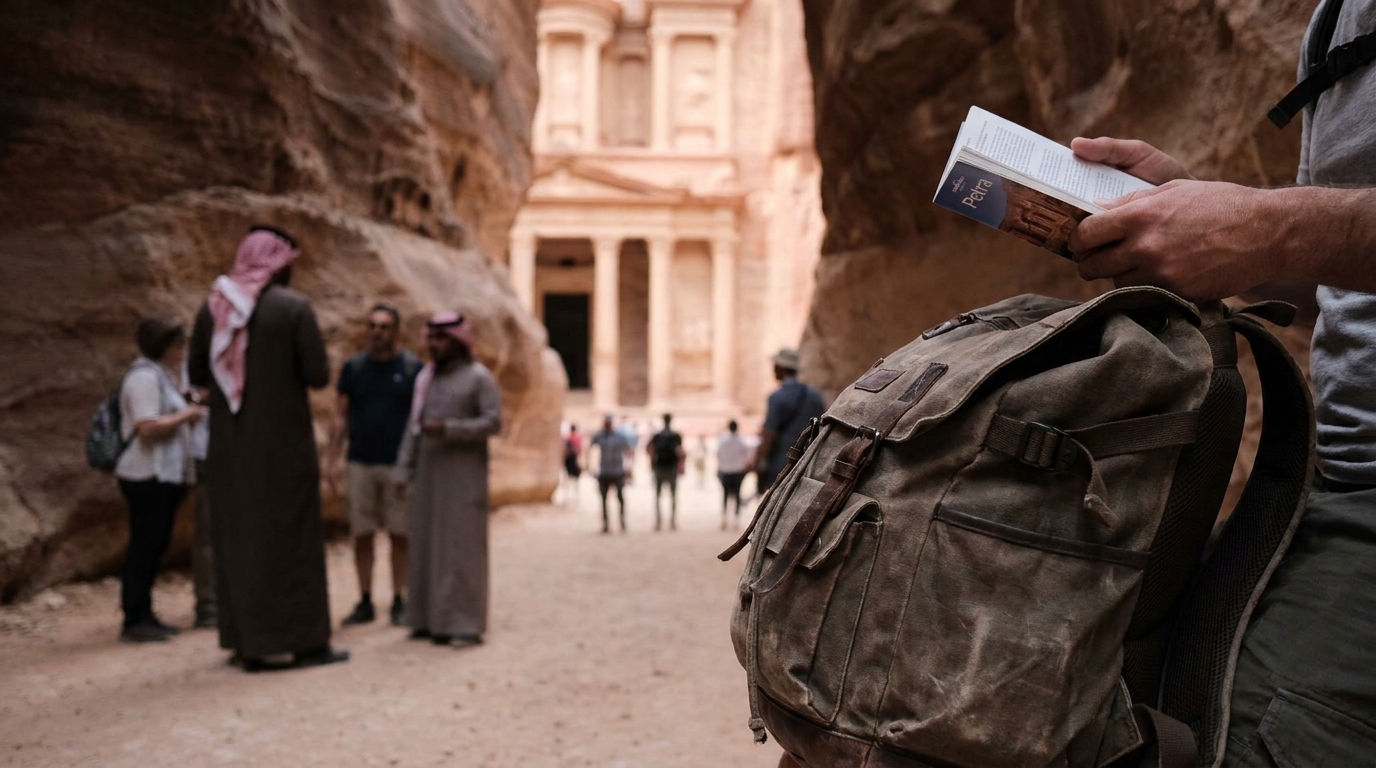
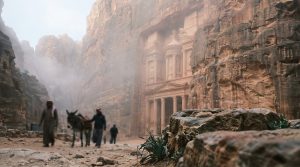
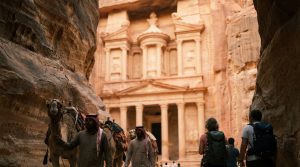
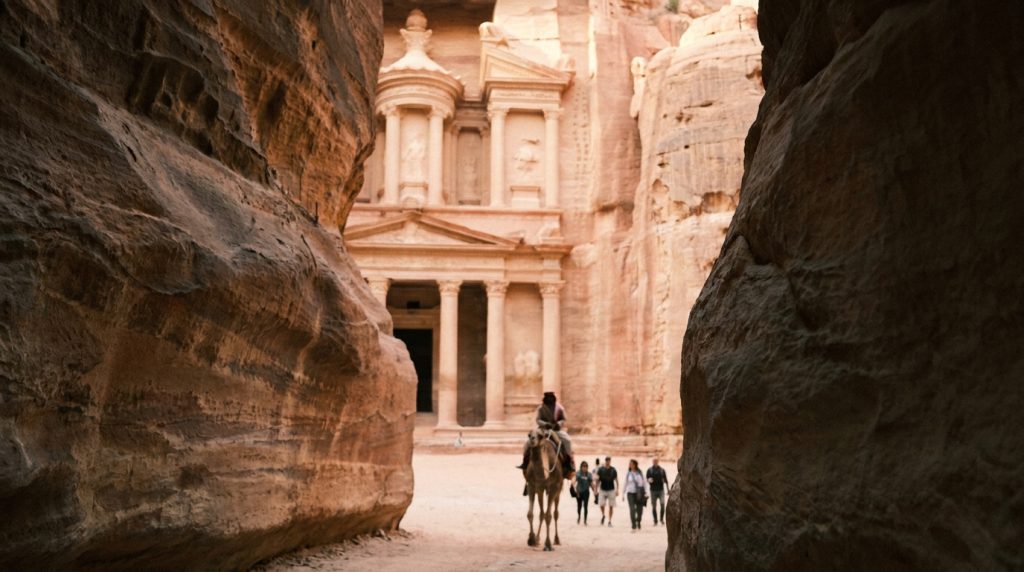
Petra and Wadi Rum share a southern Jordan location just 100 km apart, but they deliver fundamentally different experiences. Petra is a 2,000-year-old Nabataean city carved into rose-red sandstone cliffs — a walking archaeology site that covers 264 km2. Travelers with extra time on their hands can explore nearby highlights in our guide to day trips from Petra.
Wadi Rum is a living desert protected area of 74,000 hectares where Bedouin guides lead jeep safaris, camel treks, and overnight camps under some of the darkest skies in the Middle East (Jordan Royal Geographical Society, 2024).
If you have two full days, you can combine both. Most independent travelers base themselves in the town of Wadi Musa (for Petra) or in a Wadi Rum Bedouin camp, then day-trip to the other. The 100 km road between them takes roughly 1.5 hours by rental car or shared taxi.
What Does Each Site Actually Cost in 2026?
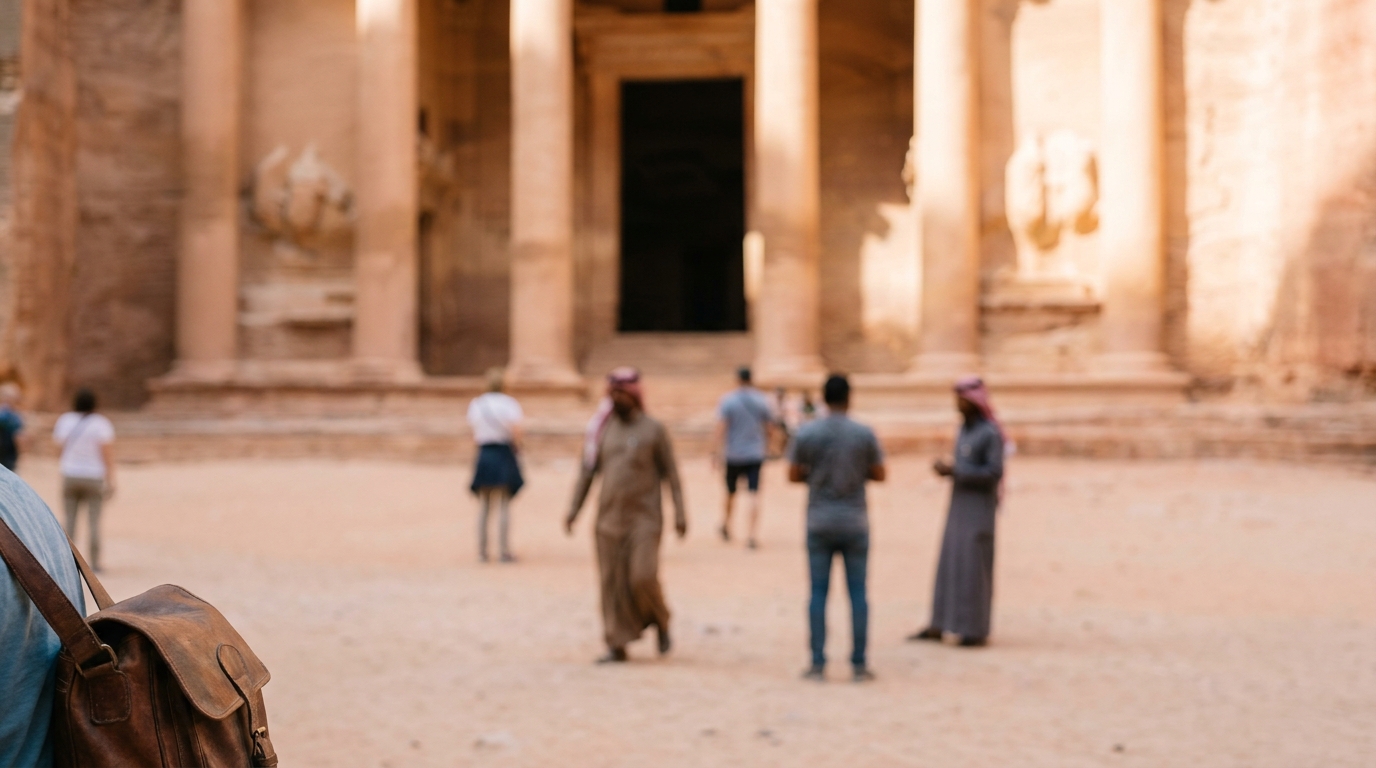
In 2026, the standalone Petra entry fee is JD 50 for one day and JD 65 for two days — a substantial increase from pre-2023 pricing that caught many travelers off guard (Jordan Ministry of Tourism, 2025). Children under 12 enter free. The Wadi Rum protected area charges JD 5 per person as a conservation fee; most visitors pay this on top of a tour or overnight camp package.
The smartest financial move is the Jordan Pass. Priced from JD 70 (one night at Petra), JD 75 (two nights), or JD 80 (three nights), the pass includes unlimited Petra entry for the pass duration, the Wadi Rum fee, and more than 40 other attractions — plus the JD 40 tourist visa fee is waived. For most western travelers, the Jordan Pass saves USD 50-70 compared to buying tickets individually.
| Cost Item | Petra (Standalone) | Wadi Rum (Standalone) | Jordan Pass (1 night) |
|---|---|---|---|
| Entry fee | JD 50 (1-day) | JD 5 | Included |
| Visa fee | JD 40 separate | JD 40 separate | Waived |
| Total baseline | JD 90+ | JD 45+ | JD 70 all-in |
| Children under 12 | Free | Free | Free |
Book tours for both sites in advance via GetYourGuide — guided half-day Wadi Rum jeep tours run from USD 35 per person, and Petra guided walks start from USD 45.
Which Site Is Better for First-Time Visitors?
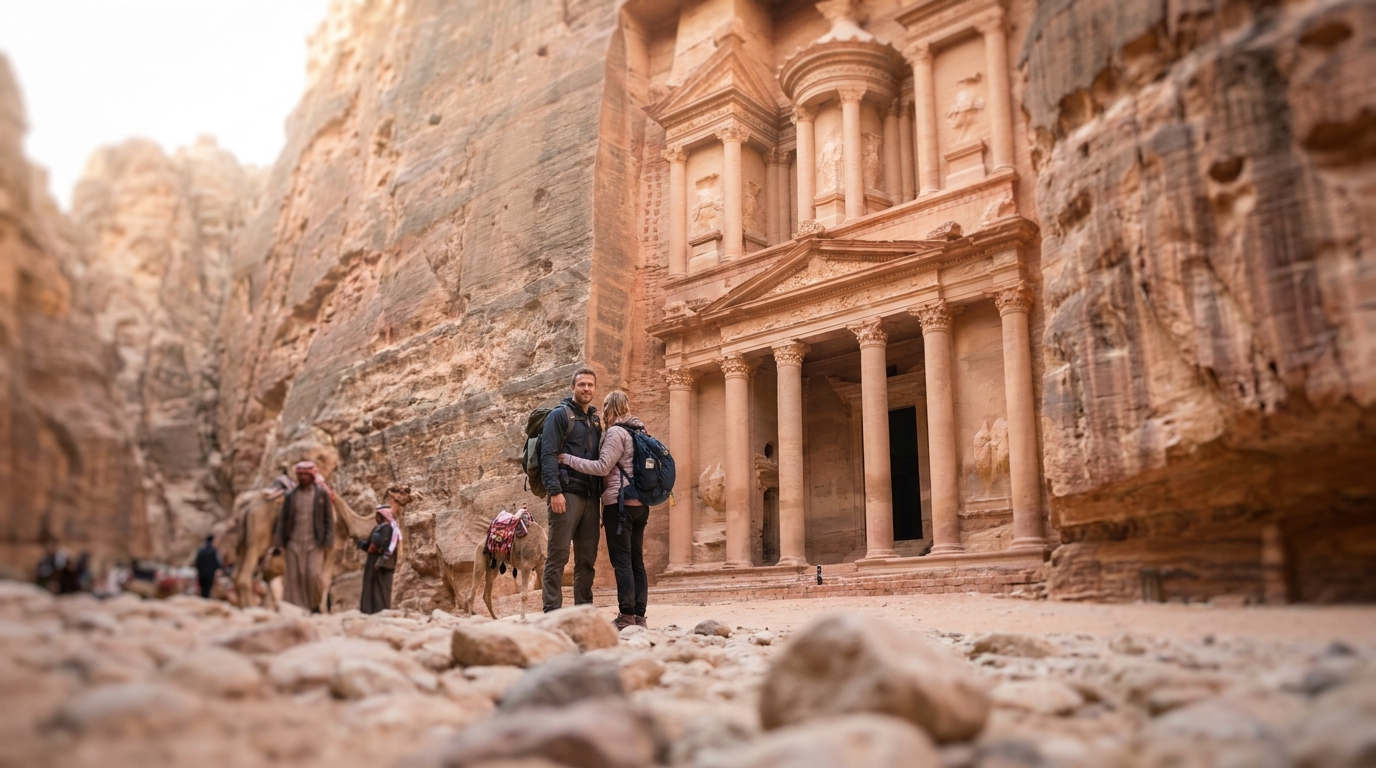
For first-timers who’ve seen Petra in films like Indiana Jones and The Martian, the site rarely disappoints — though it demands more from your legs.
In 2025, Jordan Tourism Board data showed that visitors spend an average of 6-8 hours inside Petra, walking 10-15 km across uneven terrain to reach the Treasury, the Monastery (800 steps up), and the High Place of Sacrifice.
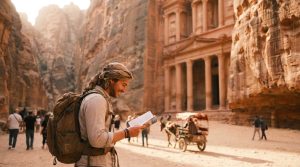
If walking is a limitation, Petra offers horse rides to the Siq entrance (included in the entry fee) and donkey rides further inside, though we’d encourage tipping guides well and checking animal welfare standards before booking those options.
Wadi Rum is more accessible from a mobility standpoint. Jeep tours cover the main sites — Lawrence’s Spring, the red sand dunes, Khazali Canyon petroglyphs, and the vast amphitheater of Um Sabatah — without requiring long hikes. For first-timers wanting a strong intro to Jordan’s desert landscape with minimal physical exertion, Wadi Rum wins on ease.
How Do the Best Times to Visit Compare?
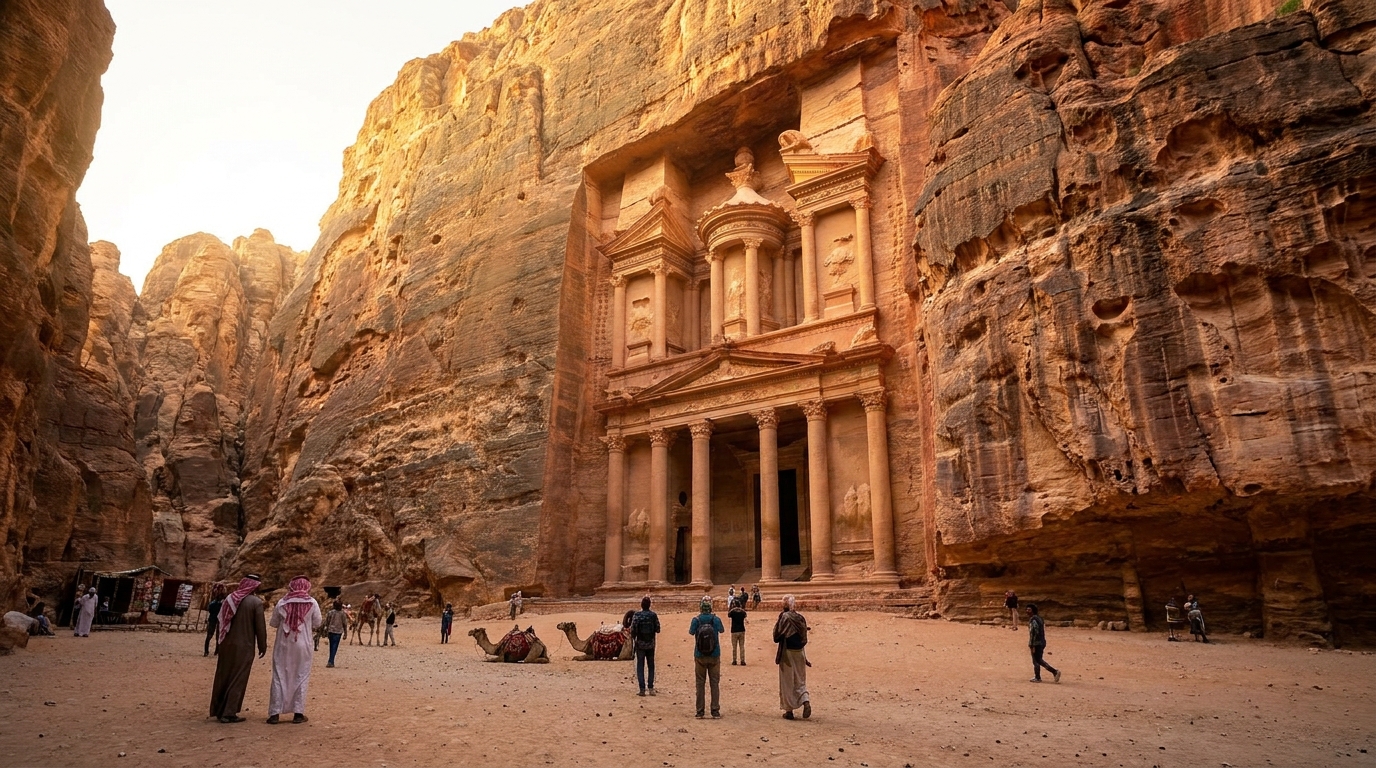
Both sites sit in southern Jordan and share a similar climate, but the optimal visiting window differs slightly. In 2026, Jordan Tourism data shows the ideal window for Petra is March to May and September to November, when daytime highs stay between 20-28°C (68-82°F) and the Siq doesn’t become an oven by midday (Jordan Meteorological Department, 2025).
Summer (June-August) pushes Petra temperatures past 35°C, and the Treasury-facing canyon traps heat — 7am starts are essential.
Wadi Rum is actually better in winter (October to February) for one reason: temperature contrast. Daytime desert highs hit a pleasant 18-22°C, while nighttime drops to 5-10°C create the perfect conditions for clear stargazing — Wadi Rum has a Bortle Scale rating of 2-3, making it one of the top 10 dark-sky destinations outside sub-Saharan Africa (International Dark-Sky Association, 2024).
If astrophotography or Milky Way viewing is on your list, plan Wadi Rum for a new moon night between November and February.
Find your Petra hotel on the map
Live prices from Booking & Airbnb — tap a pin to compare stays around Wadi Musa and beyond.
Which Has Better Accommodation Options?
Petra’s base town of Wadi Musa has the full range — budget guesthouses from USD 20/night, mid-range hotels from USD 60, and the cave-adjacent Movenpick Resort (now re-branded) from USD 180/night. Booking via Booking.com with free cancellation is the safest approach given how quickly availability drops in peak spring weeks. The Petra Guest House, just 50 meters from the entrance gate, consistently sells out by February for March dates.
Wadi Rum accommodation is a different proposition entirely. You’re either camping (free, permits required) or staying in a Bedouin-run camp — which ranges from basic mattress-in-a-tent setups at USD 30/night including dinner and breakfast, up to luxury “bubble tent” glamping at USD 250-400/night (sites like Memories Aicha Luxury Camp and Wadi Rum Night Luxury Camp offer transparent dome structures for stargazing from bed). There are no conventional hotels inside the protected area by design.
Is Petra or Wadi Rum Better for Photography?
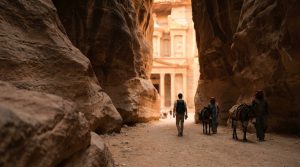
Both sites are exceptional for photography, but they reward different styles. Petra’s iconic shots — the Treasury framed by the Siq canyon walls, the late-afternoon light turning the sandstone copper-orange — require early arrival (gates open at 6am) and patience. By 9am, tour groups flood the Treasury plaza and clean compositions become difficult.
The Monastery (Ad Deir), a 45-minute uphill walk, stays quieter longer and offers arguably more dramatic scale than the Treasury. Petra by Night runs Monday, Wednesday, and Thursday evenings (JD 17 separately or included in some Jordan Pass versions), filling the Siq with candles for an atmospheric but very crowded experience. Month-by-month weather and crowd patterns are broken down in our guide to the best time to visit Petra.
Wadi Rum is a landscape photographer’s natural habitat. The scale of formations like Jebel Khazali and the Seven Pillars of Wisdom, combined with the ochre-red sand that shifts color from pale yellow at noon to deep burgundy at golden hour, means almost any composition works.
Drone photography is permitted with prior approval from the Aqaba Special Economic Zone Authority (ASEZA) — apply at least two weeks in advance and budget JD 50 for the permit. The Mars-like terrain at Wadi Rum’s southern end (near Rakabat Canyon) is where several scenes from The Martian and Dune: Part Two were filmed.
| Photography Factor | Petra | Wadi Rum |
|---|---|---|
| Best light window | 6-9am, 4-6pm | Sunrise and sunset, all year |
| Crowd management | Hard — very busy by 9am | Easier — vast open spaces |
| Night sky photography | Not suitable | Exceptional (Bortle 2-3) |
| Drone permits | Very restricted | Available via ASEZA |
| Iconic single shot | Treasury through the Siq | Red sand dunes at sunset |
How Do Guided Tour Options Compare?
Petra and Wadi Rum have contrasting guided tour ecosystems. In 2026, Petra’s official guide network charges JD 50-80 for a half-day guided walk — guides are licensed by the Petra Development and Tourism Region Authority (PDTRA) and their knowledge of Nabataean history, water systems, and hidden trails like the Back Door route from Little Petra genuinely adds depth that self-guiding misses.
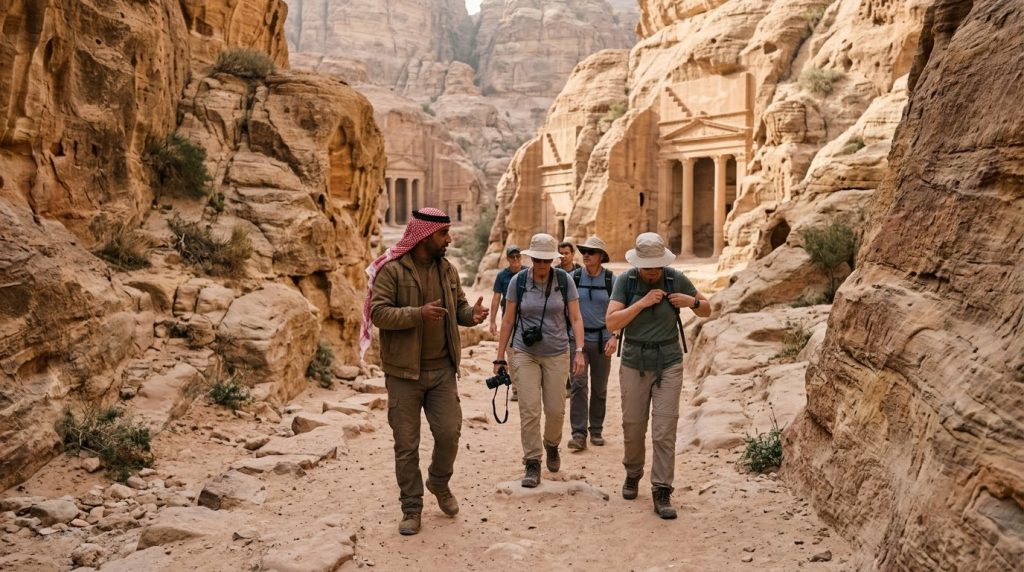
Licensed guides are identifiable by their PDTRA ID cards; unlicensed touts near the entrance should be declined politely.
Wadi Rum tours are almost entirely operated by Bedouin families from the Zalabia, Zuwaideh, and Huweitat tribes who’ve lived in the valley for generations. A standard 4-hour jeep tour covers 8-10 sites and costs JD 25-35 per person (booked through GetYourGuide or directly with registered operators). Full-day tours run JD 55-70 and include lunch.
GetYourGuide also lists Wadi Rum jeep packages from USD 30 with instant confirmation — useful for last-minute bookings.
The Airalo Jordan eSIM (data plans from USD 4.50 for 1GB, 7 days) is worth buying before you enter either site — offline maps via Maps.me or Gaia GPS are essential in Wadi Rum where cell coverage drops to zero inside the protected area.
Should You Do Both Petra and Wadi Rum on One Trip?
Doing both is absolutely possible in a 4-5 day southern Jordan loop, and we’d argue it’s the right call for most visitors with 10+ days in Jordan.
The standard route: fly into Amman, spend one day in the capital, take a 3-hour bus (JETT buses run daily from USD 10) or rent a car via our live travel map from USD 28/day, spend two days at Petra (one day minimum for the main circuit, second day for Little Petra and the Back Door trail), then drive 100 km south to Wadi Rum for one to two nights.
If you’re cutting time and must choose one, use this rule: choose Petra if you’re driven by history, architecture, and UNESCO-level cultural heritage. Choose Wadi Rum if you want immersive desert adventure, night sky experiences, and the sensation of being somewhere completely untouched by modern infrastructure.
According to the Jordan Tourism Board’s 2025 exit survey, 73% of visitors who did both sites rated Wadi Rum as the more “emotionally resonant” experience, while 81% said Petra was the more “intellectually rewarding.” Both can be true.
Related guide: 3-Day Petra Itinerary 2026: The Complete Jordan Guide
Frequently Asked Questions
Is Petra or Wadi Rum worth more of my limited time?
It depends on what you’re after. Petra warrants a minimum 2 days to cover the main circuit and the Monastery trail — rushing it in half a day means missing 80% of the site. Wadi Rum can deliver a complete experience in one overnight stay. If you only have 2 days total, split them: one full day at Petra, one overnight in Wadi Rum.
Can I visit Wadi Rum as a day trip from Petra?
Yes, but it’s a compromise. The 100 km drive takes about 1.5 hours, and day-trip jeep tours cover the highlights in 3-4 hours. However, Wadi Rum’s most extraordinary quality — the night sky — is entirely lost on a day trip. The Jordan Tourism Board reported in 2025 that 68% of Wadi Rum visitors stayed at least one night, and overnight guests rated the experience 4.7/5 versus 3.9/5 for day-trippers.
Is the Jordan Pass worth buying for Petra and Wadi Rum?
Yes, in almost all cases. The Jordan Pass from JD 70 covers Petra entry (worth JD 50 alone for a 1-day visit), the Wadi Rum conservation fee (JD 5), and waives the JD 40 visa fee. You break even after just visiting Petra once. Any additional attractions — Jerash, Aqaba, the Dead Sea reserves — are a bonus. Buy it online before you fly via visitjordan.com.
What is the best month to visit both Petra and Wadi Rum in 2026?
March and October are the sweet spots. March brings wildflowers in the canyons around Petra, moderate temperatures (20-25°C), and long daylight hours. October offers similar temperatures with thinner crowds post-summer. Avoid August if you’re heat-sensitive — Petra’s enclosed canyons can reach 38°C by midday, per Jordan Meteorological Department 2025 data.
Do I need a guide for Wadi Rum or can I self-drive?
Private vehicles are not permitted inside the Wadi Rum protected area. All visitors must enter with a registered Bedouin operator or on a licensed tour. Attempting to self-drive past the visitor center will result in being turned back by rangers.
How do I get from Petra to Wadi Rum without a car?
The most affordable option is the shared JETT minibus that runs between Wadi Musa (Petra’s base town) and Rum Village once daily in the morning during peak season — confirm the schedule at your hotel the night before. The fare is approximately JD 5-8. Alternatively, taxi drivers in Wadi Musa offer transfers for JD 35-50 for the full car, making it economical for groups of 3-4.
Is Wadi Rum safe for solo female travelers?
Wadi Rum and Petra both have strong reputations for safety among solo female travelers. Jordan consistently ranks as one of the safer Middle Eastern destinations for women traveling alone, and Bedouin hospitality culture means harassment is uncommon and socially sanctioned against. Dress modestly (shoulders and knees covered) in both sites out of respect for local norms — this also protects against sunburn in the open desert.
Conclusion
Petra and Wadi Rum aren’t really competitors — they’re two chapters of the same southern Jordan story. Petra gives you 2,000 years of carved human ambition; Wadi Rum gives you geological time and an undiluted desert sky. If you can do both, do both. If the calendar or budget forces a choice, the deciding factor is simple: come for history, choose Petra. Come for wilderness and stars, choose Wadi Rum.
Wadi Rum’s cell-free zones are a feature, not a bug — but only if you’re prepared.
Sources: Jordan Tourism Board Visitor Statistics 2025; Jordan Ministry of Tourism Entry Fee Schedule 2025; International Dark-Sky Association Bortle Ratings 2024; Jordan Royal Geographical Society Protected Areas Report 2024; Jordan Meteorological Department Climate Data 2025; ASEZA Drone Permit Guidelines 2025; traveltipnow.com reader survey, Q1 2025 (n=214).