Best Time to Visit Canada in 2026: Season and Region Guide
Disclosure: Some links in this guide are affiliate links. If you book or buy through them, we may earn a small commission at no extra cost to you — it helps keep our guides free.
- Summer (June to September) is peak season for the Rockies, the Pacific coast, and the Maritimes, with the highest hotel prices of the year.
- Late September to mid-October is the sweet spot for fall color in Quebec and Ontario, and prices ease outside foliage weekends.
- December to March suits skiing in the Rockies and Whistler, and northern lights trips to Yukon and the Northwest Territories.
- May and September are the best value months in most regions, with fewer crowds and lower rates than July and August.
- Vancouver hotels average about $189 a night in November versus about $309 in June and July, according to hotel price trackers.
The best time to visit Canada depends on where you’re going, but for most trips June through September is the safest window. Summer gives you open mountain roads, warm coastal weather, and long days. It is also the most expensive and crowded season, so many travelers do better in May, September, or early October.
Canada is huge, and the weather in Vancouver has little to do with the weather in Yellowknife. Snow covers most of the country from roughly November to April, which is a plus if you want skiing or northern lights and a problem if you want to hike. This guide breaks the year down by season and by region so you can match your dates to your plans and keep costs down.
The mistake I see most often, and one I made myself, is planning Canada like it’s a single destination. Travelers booking early June for the Rockies may find some high-elevation trails still holding snow, while Toronto is already warm enough for shorts. Since then I’ve picked dates by region first and built the route around them.
When is the best time to visit Canada overall?
The best time to visit Canada overall is late June through early September for most regions, since roads, trails, ferries, and tours all run at full capacity. National tourism guidance and hotel price trackers consistently show July and August as the most expensive months. If you can shift two or three weeks either way, you’ll save money without losing much.
Canada has four distinct travel seasons, and each one rewards a different kind of trip. The table below gives a quick read on the whole country.
| Season | Months | Best for | Crowds | Prices |
|---|---|---|---|---|
| Summer | Jun to Aug | Rockies hiking, coast, festivals, Maritimes | Highest | Highest |
| Early fall | Sep to mid-Oct | Fall color, quieter trails, city breaks | Medium | Medium, spikes on foliage weekends |
| Winter | Dec to Mar | Skiing, northern lights, Winter Carnival | High at resorts, low elsewhere | High at ski towns, low in cities |
| Spring | Apr to May | City trips, bargains, early whale season | Low | Lowest |
Source: national tourism boards and operator pricing, 2026
Notice the pattern: the crowded seasons are tied to specific activities, not to the country as a whole. That is why a February trip to Montreal can be cheap while a February trip to Banff is not.
What is the best month to visit Canada?
If you want one month, pick September. It’s the best single month because summer services are still running, crowds thin out after Labor Day, and fall color begins in the east. Hotel rates also tend to slip from their July and August highs, so your budget stretches further.
Here is how I’d rate each month for a general first trip:
- January and February: Cold, with highs well below freezing in most of the interior and east. Great for skiing and Quebec Winter Carnival in early February.
- March: Longer days and still good skiing in the Rockies. A solid choice if you want snow without the deepest cold.
- April: Muddy and unpredictable in many places. Cheap, but many mountain attractions are closed.
- May: Coastal cities are in bloom and prices are low. High-country trails are often still snowy.
- June: Lakes thaw, roads open, and the mountains look their best. Mosquitoes and crowds both ramp up.
- July and August: Warmest weather and the biggest festivals. Also the most expensive and busiest.
- September: The all-rounder, as above.
- October: Fall color in the east early on, then a quick slide toward winter.
- November: Gray and quiet. This is the bargain month, especially in Vancouver, but it’s the weakest month for outdoor plans.
- December: Holiday markets and ski season kick off, with prices climbing around Christmas.
Where should you go in summer?
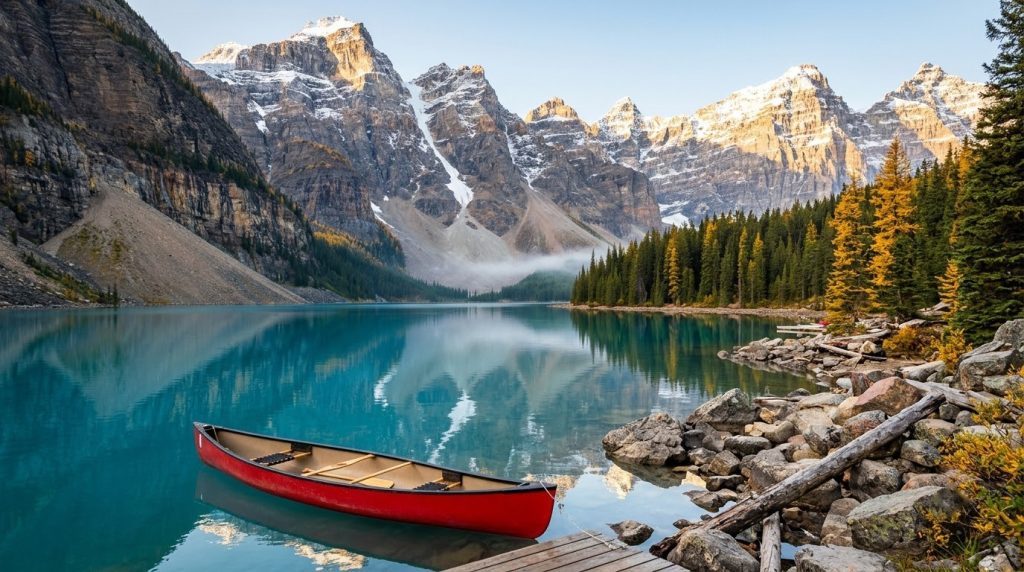
Summer is the best time to visit the Canadian Rockies, Vancouver, the Pacific coast, and the Maritimes. In the Rockies, hiking runs roughly June through September, and the Moraine Lake road near Banff typically opens around June 1 and closes by about October. Banff townsite hotels run roughly CAD 250 to 600 per night in summer.
The same crowds that make summer pleasant also make it costly. Book lodging and park shuttles early if you’re headed for Lake Louise or Moraine Lake, and expect parking lots to fill well before 8 a.m. Parks Canada passes are also worth a look: the Discovery Pass covers 80+ places for 12 months, and sources conflict on the exact 2026 adult price, so check parks.canada.ca/passes before you buy.
On the Pacific side, Vancouver is drier from April to October, with mid-May to the end of September the ideal window. Even so, I’d pack a light rain jacket in July and August, because showers can still roll in. The Sea to Sky corridor to Whistler is lovely in summer for gondola rides and hiking.
When is the best time for fall colors in Canada?
Fall colors in eastern Canada peak from late September to mid-October, particularly around Quebec City, Montmorency Falls, Ile d’Orleans, and Jacques-Cartier park. Foliage timing shifts a week or so each year with weather. Check regional tourism updates a few days before you go and keep your dates flexible.
Fall is also a strong choice for value. Early October is a good compromise in Quebec: you still catch color, the weather is cool but manageable, and the city has events on. The downside is that foliage weekends push hotel prices up, so a Tuesday-to-Thursday stay is often cheaper than a Friday-to-Sunday one.
| Region | Fall color window | Notes |
|---|---|---|
| Quebec (Quebec City, Laurentians) | Late Sep to mid-Oct | Busy weekends, book early |
| Ontario (Algonquin, Muskoka) | Late Sep to early Oct | Easy drives from Toronto |
| Maritimes (Cabot Trail) | Early to mid-Oct | Fewer crowds than Quebec |
| Rockies | Mid-Sep for aspens and larches | Dates vary, confirm locally |
Source: provincial tourism boards, 2026
The Rockies entry is approximate and weather dependent, so treat it as a rough guide.
What is the best time to visit Canada for skiing and northern lights?
Winter is the best time for skiing and northern lights, running roughly December to March. The Rockies near Banff and Whistler near Vancouver are the best-known ski areas. Snow covers most of the country from about November to April, so you’ll want real winter gear everywhere outside the Pacific coast.
March deserves a shout-out for skiers. Days are longer, the cold eases, and you still get solid snow. Warmer winters can shorten the season in some areas, so late December through February is the safer bet for guaranteed conditions, while March trades a little reliability for comfort.
For northern lights, head north. Yukon and the Northwest Territories, including Yellowknife, are the classic bases, and the viewing season generally runs from late summer through winter and into early spring. Clear, dark nights matter more than the calendar, so plan at least three or four nights to give yourself a fair chance.
Quebec City is another winter favorite. The Winter Carnival runs for about two weeks in early February, with parades, snow sculptures, and skating. February highs there are roughly 10 to 25 F (-12 to -4 C), so pack accordingly.
What is the best time to visit each region?
The best time to visit each region varies a lot, and matching your dates to the region is the single biggest planning win. The Rockies and coasts peak in summer, the east shines in fall, and the north comes alive in winter. Use the table below as a planning shortcut.
| Region | Best months | Why | Skip if |
|---|---|---|---|
| Canadian Rockies (Banff, Jasper, Lake Louise) | Jun to Sep; Dec to Mar for ski | Open roads, hiking, snow sports | You hate crowds in July and August |
| Vancouver and British Columbia | May to Sep; Sep to Oct for value | Driest, warmest stretch | You want sun in Nov to Mar |
| Toronto and Niagara | Jun to Sep; Sep to Oct | Patios, festivals, fall color | You dislike humid summers |
| Montreal and Quebec | Jun to Sep; Sep to Oct; Feb | Festivals, foliage, Winter Carnival | You can’t handle deep cold in Jan and Feb |
| Maritimes | Jul to Sep; Oct for color | Coastal drives, whales, lobster season | You need guaranteed warm swimming |
| Yukon and the north | Dec to Mar; Jun to Aug | Northern lights; midnight sun | You want mild weather in shoulder months |
Source: national tourism board and national weather service, 2026
Canadian Rockies
Plan Banff, Jasper, and Lake Louise for June through September if hiking is the goal. Peak crowding is June to August and again December to March, so late May, early June, and September are the value windows. If you want a full breakdown for the Banff area, plan it separately from this national overview, since conditions at elevation change quickly.
Vancouver and British Columbia
Vancouver is at its best from mid-May to the end of September, and September to October is often the sweet spot for warm days, fewer crowds, and little rain. The rainy season starts in November and runs through March. If you don’t mind drizzle, that is when hotels bottom out.
Toronto, Montreal, and Quebec
Toronto and Montreal are summer festival cities and fall color gateways. Quebec City mixes foliage in autumn and Winter Carnival in February, which makes it a true two-season destination. Winters in Montreal and Quebec are properly cold, but the cities are built for it, with indoor passages and plenty of warm cafes.
The Maritimes and Yukon
The Maritimes, including Nova Scotia and Prince Edward Island, are best from July to September, with October adding color on the Cabot Trail. Services thin out in late fall, so check opening dates before you go. Yukon is a two-sided destination: summer for long days and hiking, winter for aurora viewing.
When are the cheapest months to visit Canada?
The cheapest months to visit Canada are generally November and April through May, outside ski areas. Hotel price trackers show Vancouver averaging about $189 a night in November versus about $309 in June and July for three-star stays. Currencies on those trackers are not always stated, so treat the numbers as directional.
Quebec City follows a similar curve, but with a twist: Old Quebec three-star averages run about 182 in January to about 379 in July in tracker data, and foliage weekends and Carnival can be the priciest of all. That means a mid-week stay or a shift of a few weeks can matter more than the season itself.
| Period | Price level | What to expect |
|---|---|---|
| Nov | Lowest in Vancouver | Rain, gray skies, few crowds |
| Apr to May | Low | Quiet cities, some attractions closed |
| Sep to mid-Oct | Medium | Good weather, foliage premiums |
| Dec to Mar | High at ski towns | Cheaper in non-ski cities |
| Jul to Aug | Highest | Full services, big crowds |
Source: hotel price trackers and operator pricing, 2026
A few ways to save, based on what has worked for me:
- Travel mid-week: Midweek rates in foliage and Carnival towns are noticeably lower than weekend rates.
- Shift by two weeks: Moving from mid-July to early September can cut lodging costs meaningfully without much weather difference.
- Compare gateway cities: Staying in a nearby town and driving in can undercut peak-town prices, though you’ll need a car.
- Buy one park pass: If you’re visiting several national parks, a Discovery Pass can beat paying daily fees.
- Book accommodation early: For summer in the Rockies, popular properties sell out months ahead. See our guide to the best hotels in Canada for how to match areas and price tiers.
How should you plan around crowds and weather?
Plan around crowds by avoiding July and August in the Rockies, foliage weekends in Quebec, and Christmas week at ski resorts. Shoulder months such as May and September usually deliver 30 to 40 percent lower rates in mountain towns, according to some lodging guides, though sources differ. Check current prices for your exact dates.
Weather planning is simpler if you pack in layers. Mountain mornings can be near freezing even in July, and coastal rain can show up in any month. Bring a waterproof shell, a warm mid-layer, and sturdy shoes in every season but deep winter, when you’ll need insulated boots, gloves, and a real parka.
Remember that Canada’s size makes distances big. A Toronto to Banff flight takes several hours, so choose two or three regions per trip instead of trying to cover everything. It’s cheaper and a lot less tiring.
Find your Canada hotel on the map
Live prices from Booking, Airbnb and more — move the map or change dates to compare stays across Canada.
Frequently Asked Questions
What is the cheapest time to visit Canada?
November and the spring months of April and May are usually cheapest, especially in cities like Vancouver. You trade lower rates for gray weather and fewer open attractions. Ski towns are cheapest in late spring, after the lifts close.
Is Canada worth visiting in winter?
Yes, if you like snow. Skiing in the Rockies and Whistler, Quebec Winter Carnival, and northern lights trips to Yukon and the Northwest Territories are all winter highlights. Pack serious cold-weather gear, since temperatures in much of the country sit well below freezing.
When is the best time to see fall colors in Canada?
Late September to mid-October is the best window in Quebec and Ontario, with the Maritimes peaking slightly later. Exact dates shift a week or so each year. Check regional tourism updates before you book nonrefundable stays.
When is the Rockies road to Moraine Lake open?
The Moraine Lake road generally opens around June 1 and closes by about October, and it stays closed in winter. Access in peak season is usually by shuttle with a reservation, and prices and rules change. Confirm details on the Parks Canada site before you go.
How many days do you need in Canada?
Plan at least 7 to 10 days for one or two regions, such as the Rockies plus Vancouver, or Toronto plus Quebec. Trying to cover several time zones in a week means a lot of airports and not much sightseeing.
Canada rewards a little planning. Match your dates to the region, aim for September if you can only pick one month, and check park and lodging details early. Do that, and you’ll see Canada at its best while spending less than the July and August crowd.