Best Time to Visit Aruba in 2026: Month-by-Month Weather Guide
Disclosure: Some links in this guide are affiliate links. If you book or buy through them, we may earn a small commission at no extra cost to you — it helps keep our guides free.
- Weather is steady: highs stay in the mid-80s F year-round, and Aruba is a desert-style island with far less rain than most of the Caribbean.
- High season runs mid-December to April, with the driest days, the busiest beaches, and the highest nightly rates.
- Hotel prices drop roughly mid-April to mid-December, which is the best window for travelers who want to save money.
- Hurricane risk is low, not zero: Aruba sits south of the usual storm track, but late-season rain and travel insurance are still worth a look.
- Trade winds are constant: go to Baby Beach and snorkel spots in the morning, before the afternoon chop.
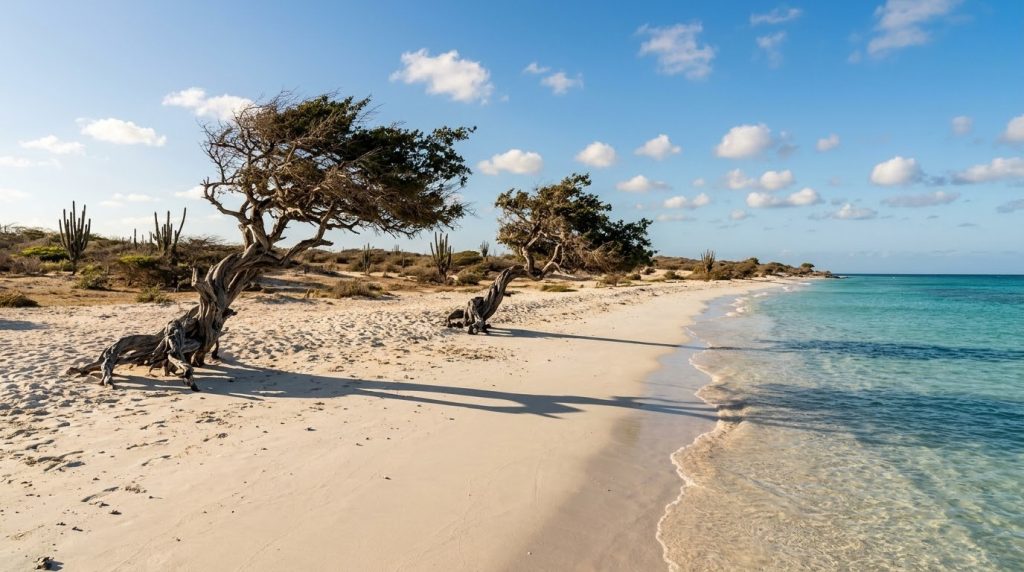
The best time to visit Aruba depends on what you want to pay. For the driest, sunniest weather and the biggest crowds, go from mid-December through April. For lower hotel rates and quieter beaches with still-reliable sun, aim for mid-April to early July or the calm weeks of September.
Aruba is unusual in the Caribbean. It sits just off the coast of Venezuela, far enough south that it is usually outside the main hurricane belt, and it gets very little rain compared with islands to the north. Highs hover around the mid-80s F all year. So the real question isn’t “when is the weather good?” It’s “when is the price right?”
Many travelers assume June is a gamble in Aruba because of hurricane season. Booking anyway can pay off, since the rooms are much cheaper. I spent a week mostly in sunshine, with one short shower that was over before I finished my coffee. The thing I noticed most was the wind. It kept the heat comfortable on the beach, but it also meant my afternoon snorkel at the southern end was much choppier than the morning one.
When is the best time to visit Aruba?
Most travelers find the best time to visit Aruba is mid-April through early July, or September if you can handle the storm-season label. Aruba’s climate is hot, dry, and breezy year-round, with annual rainfall typically quoted at roughly 16 to 20 inches, according to the national weather service. You get beach weather in every month.
The practical split is simple. Winter and early spring give you the lowest chance of rain and the highest prices. Late spring and summer give you slightly warmer, more humid days and noticeably better deals. Autumn is the wettest stretch, though “wet” in Aruba usually means short, passing showers.
If you want one safe pick, choose late April or May. The winter crowds have thinned, rates have dropped, and the weather is still very reliable. It’s the sweet spot I’d point a first-timer toward.
| Season | Months | Weather | Crowds | Best for |
|---|---|---|---|---|
| High season | Mid-Dec to April | Driest, sunny, breezy | Busiest | Perfect weather, Carnival, honeymoons |
| Shoulder | Mid-April to June | Hot, sunny, windy | Moderate | Deals with dependable sun |
| Low season | July to early Sept | Hottest, more humid | Family travel peaks, otherwise lighter | Lowest-risk bargains, water sports |
| Wet shoulder | Late Sept to mid-Dec | Occasional showers | Quiet | Flexible travelers, calm seas |
Source: national weather service and national tourism board seasonal guidance, 2026
Is Aruba really outside the hurricane belt?
Aruba is generally considered outside the main Atlantic hurricane belt, and direct hits are rare. The Atlantic hurricane season runs June 1 to November 30, according to the national weather service. Aruba sits around 12 degrees north, close to South America, where most storms track further north.
Low risk isn’t no risk. Outer bands from distant storms can bring a few days of wind and rain, and flights through other Caribbean hubs can be delayed by weather elsewhere. I wouldn’t skip a summer or fall trip over this, but I’d treat the hurricane window as a reason to plan, not to panic.
Here’s what I’d do to protect the trip:
- Buy travel insurance that covers weather cancellations and delays, and read the exclusions on named storms.
- Choose refundable or flexible rates if you book between August and October.
- Check the forecast a week out rather than relying on historical averages.
- Book nonstop flights where you can, so you aren’t caught by a storm at a connecting airport.
Sources disagree on how much to worry here, and honestly that matches my experience. Some travel guides call Aruba “safe” all year, while others still flag late fall for rain. The truth sits in the middle: fine odds, sensible precautions.
What is Aruba’s weather like month by month?
Aruba’s weather changes less than most destinations, with daytime highs in the mid-80s F in every month. The driest period generally runs from about January through April, and showers become more likely from October into early winter. Sea temperatures stay warm enough to swim year-round, according to national weather service data.
That means you can plan around price and events rather than climate. Still, small differences matter. Here’s how each month usually feels.
| Month | Typical feel | Rain chance | Notes |
|---|---|---|---|
| January | Dry, breezy, sunny | Low | Peak season, book early |
| February | Dry, very sunny | Low | Carnival parades, high prices |
| March | Dry, sunny | Low | Spring break crowds |
| April | Dry, warm | Low | Prices start easing mid-month |
| May | Hot, sunny, windy | Low | Great value, quiet beaches |
| June | Hot, windy | Low | Hi-Winds windsurfing, Dera Gai |
| July | Hottest, more humid | Low to moderate | Family vacations, steady winds |
| August | Hot, humid | Low to moderate | Warm water, some outer-band risk |
| September | Hot, calm days | Moderate | Quiet, often good snorkeling |
| October | Warm, some showers | Moderate | Quietest, deep discounts |
| November | Warm, showery | Highest of the year | Cheapest stretch before holidays |
| December | Dry again by mid-month | Low to moderate | Holiday prices spike |
Source: national weather service climate averages and national tourism board, 2026
Is Aruba’s wet season actually wet?
Aruba’s wet season is mild by Caribbean standards. November and December tend to be the rainiest months, but the rain often arrives as a short shower, and the sun returns quickly. Many visitors never lose a full day. If you’re comparing it with Florida or the Dominican Republic in the same months, Aruba is usually far drier.
If you travel in November, pack a light rain jacket and plan indoor options for one flexible afternoon. Cave tours, a museum, a long lunch in Oranjestad, or a spa session all work well. I’d keep beach days for mornings, when skies tend to be clearer.
When is high season in Aruba, and how crowded does it get?
High season in Aruba runs from mid-December to April, when hotels are fullest and rates are at their highest. This is also the driest stretch of the year, so you’re paying for near-guaranteed sun. Spring break and holiday weeks are the most crowded, according to the national tourism board’s seasonal patterns.
On Palm Beach, that means busy sun beds, longer restaurant waits, and a strong need to reserve dinners ahead. Eagle Beach stays calmer because it’s wider and more residential, but even there the best spots fill by mid-morning.
If you must travel in peak months, a few moves help:
- Book flights and rooms four to six months out for Christmas, New Year’s, and February.
- Reserve popular dinners and sunset sails a week or more ahead.
- Pick Eagle Beach over Palm Beach if you want space more than nightlife.
- Visit attractions on weekday mornings to avoid tour-bus timing.
For a closer look at the full cost side of a peak trip, see our breakdown of whether Aruba is expensive.
When are the cheapest months to visit Aruba?
The cheapest months to visit Aruba are generally mid-April through mid-December. One travel guide pegs hotel rates as lower across that whole window, and the deepest discounts tend to land in September through early December. Airfare often follows, though it varies by departure city and airline.
Expect room rates to fall noticeably compared with February, depending on the resort and room type. The size of the drop changes by property, so compare your exact dates rather than trusting averages.
| Period | Typical hotel pricing | Crowd level | Money-saving angle |
|---|---|---|---|
| Mid-Dec to early Jan | Highest of the year | Very busy | Book 6+ months out |
| Jan to Mar | High | Busy | Midweek stays, Eagle Beach condos |
| April | High, easing late | Busy to moderate | Aim for the last two weeks |
| May to June | Lower | Light | Package deals, free cancellation |
| July to Aug | Lower to moderate | Moderate, families | Kitchen condos, early booking |
| Sept to mid-Dec | Lowest | Quiet | Last-minute sales, flexible rates |
Source: approximate resort rate patterns from operator pricing, 2026. Prices change; check current rates.
A few ways to stretch your budget year-round:
- Fly midweek. Tuesday and Wednesday departures are often cheaper than weekends.
- Choose a condo-style hotel. A kitchen cuts restaurant spending, since most food on the island is imported and priced accordingly.
- Rent a car only for a day or two. Daily rentals commonly run roughly $40 to $70, so a short rental for the national park often beats a full week.
- Eat lunch out, not dinner. Midday menus are usually cheaper for the same kitchens.
What are the best months for beaches, snorkeling, and water sports?
Beach weather in Aruba is reliable in every month, but conditions vary by activity. Snorkeling is typically best on calmer days, and several sources point to September through November for gentle seas. Windsurfing and kitesurfing prefer the strong trade winds of roughly June through August, according to local operators.
Wind matters more here than rain. The trade winds blow from the east, so the north and east coasts stay rough while the southwest coast, home to Palm Beach and Eagle Beach, stays much calmer.
Some practical rules I follow:
- Go early to Baby Beach. The shallow lagoon is lovely in the morning and choppier once afternoon winds pick up.
- Snorkel the Antilla wreck in the morning. Catamaran cruises usually visit it first, and visibility tends to be best before the breeze builds.
- Check conditions before the Natural Pool. Swimming there depends on sea conditions, and rough days can close it off.
- Pick the leeward side for kids. Palm Beach and Eagle Beach water is gentle most days.
If you’re building a full itinerary around the weather, our guide to the things to do in Aruba covers jeep safaris, snorkel cruises, and beaches, with rough prices.
Which month is best for a jeep tour of Arikok?
Dry months make the best jeep days, mostly January through April, when dirt tracks are firm and skies are clear. Arikok National Park entry is about $22 per adult, and children under 17 enter free. The park is hot at midday year-round, so bring water, a hat, and an early start.
Even in the wetter stretch, jeep tours generally run. A short shower won’t cancel most itineraries, though the rugged east-coast track can feel rougher after heavy rain.
What events and festivals should you plan around?
Aruba’s calendar runs from Carnival in winter to windsurfing and local festivals in summer. Carnival is the biggest event, with parades building through January and February, and the national tourism board lists it as the island’s signature celebration. Crowds and prices rise with it, so book early if you want to attend.
Here are events worth knowing about. Dates shift each year, so confirm them before booking.
- Carnival (January to February): costumed parades, music, and street parties, ending the Sunday or Monday before Ash Wednesday.
- Flag Day (March 18): a national holiday with local pride and cultural events.
- King’s Day (April 27): a Dutch-influenced celebration marked across the island.
- Dera Gai (late June): a traditional St. John’s Day harvest festival with music and dancing.
- Aruba Hi-Winds (June or July): an international windsurfing competition that suits wind-lovers.
If your plans center on one of these, the shoulder-season rates can still apply to events outside January through March.
So when should you actually go?
Pick your month by priority. For perfect weather and festivities, choose February or March and accept higher prices. For the best balance, go in late April, May, or June. For the lowest rates, travel in September through early December and pack a light rain layer.
My rule of thumb for savvy travelers: book a refundable rate in May or October, watch the forecast, and keep a few flexible days. It has saved me money more than once.
Families should note school calendars. July and August can fill up with vacationing families, so prices rise slightly even though it’s technically low season. Couples seeking calm will do better in May, June, or early autumn.
Find your Aruba hotel on the map
Live prices from Booking, Airbnb and more — move the map or change dates to compare stays across Aruba.
Frequently Asked Questions
What is the cheapest month to visit Aruba?
October and November are usually the cheapest months to visit Aruba. Hotels drop rates sharply after the summer family rush, and beaches are quiet. November is also the rainiest month, so expect showers. Prices are approximate and change, so compare your dates before committing.
Is Aruba too hot in summer?
Summer in Aruba is hot, with daytime highs in the mid-to-upper 80s F and higher humidity than winter. Constant trade winds make it feel more comfortable than the thermometer suggests. Plan beach time for mornings, take a midday break indoors, and drink plenty of water.
Should I worry about hurricanes in Aruba?
The risk is low because Aruba sits south of the main hurricane belt. Hurricane season officially runs June 1 to November 30, and distant storms can still bring wind or rain for a few days. Travel insurance and flexible bookings are sensible precautions between August and October.
What is the rainiest month in Aruba?
November is generally the rainiest month in Aruba, with December close behind. Even then, rain usually comes as brief showers rather than all-day storms. Many travelers report spending nearly every day at the beach, particularly in the mornings.
How many days do you need in Aruba?
Five to seven days gives you enough time for beaches, a jeep tour of Arikok National Park, a snorkel cruise, and a couple of slow evenings in Oranjestad or Palm Beach. Three or four days works for a quick getaway. Weekly stays often qualify for better rates.
Aruba rewards flexibility more than perfect timing. The weather is good almost year-round, so the smartest choice is the month that matches your budget and your tolerance for crowds. Check rates for late April through June first, then compare them against winter before you book.