Best Things to Do in Aruba in 2026: 8 Top Picks and Money Tips
Disclosure: Some links in this guide are affiliate links. If you book or buy through them, we may earn a small commission at no extra cost to you — it helps keep our guides free.
- Eagle Beach and Palm Beach are free: you only pay for chairs, umbrellas, and drinks, so bring your own shade to save money.
- Arikok National Park entry is about $22 per adult: children under 17 get in free, and a guided jeep tour usually costs more but covers the rough roads.
- Snorkel cruises start around $69: the Antilla shipwreck is typically the first stop, and light food and drinks are often included.
- Go early at Baby Beach: afternoon trade winds make the water choppier, so mornings are best for kids and snorkeling.
- Daily costs add up fast: read our guide on whether Aruba is expensive before you lock in a budget.
At a glance
| Attraction | Entry | Hours | Time needed |
|---|---|---|---|
| Eagle Beach | Free | 2-4 hours | |
| Palm Beach | Free | 2-4 hours | |
| Arikok jeep safari | $85-150 | 4 hours | |
| Natural Pool | Park entry about $22 | 1-2 hours | |
| Catamaran snorkel cruise | From about $69 | 3 hours | |
| Baby Beach | Free | 2-3 hours | |
| Downtown Oranjestad | Free to browse | Half day |
The best things to do in Aruba combine calm beaches with a surprisingly rugged interior. Spend a morning at Eagle Beach, a day in Arikok National Park, an afternoon on a snorkel catamaran, and an evening wandering Oranjestad. Most of it costs far less than the resort prices suggest.
Aruba is small, flat, and easy to cover in four or five days. The island also sits south of the main Caribbean hurricane belt, so the weather is steadier than on many neighbors (low risk, not zero risk, so check forecasts before you book). This guide covers eight activities with rough prices, timing, and who each one suits. If you’re still choosing dates, our best time to visit Aruba guide breaks down the seasons.
A cheap pop-up umbrella and a cooler of drinks from a supermarket can replace the resort chairs. We spent most mornings on the sand by 8:30, before the wind picked up, and saved the jeep tour for a day when the sea looked calm. The best moments cost almost nothing, which surprised us on an island with such high hotel rates.
What Are the Best Things to Do in Aruba?
The best things to do in Aruba fall into three groups: beaches, outdoor adventure, and town culture. According to the Aruba tourism board, the island is known for soft white sand and calm water, and that matches what we saw. Beaches cost nothing, while tours run roughly $59 to $150 per person in 2026 (operator pricing, 2026).
Here’s a quick view of what each activity costs and how long it takes.
| Activity | Approx. cost (USD) | Time needed | Best for |
|---|---|---|---|
| Eagle Beach | Free | 2-4 hours | Couples, relaxing |
| Palm Beach | Free | 2-4 hours | Nightlife, restaurants |
| Arikok jeep safari | $85-150 | 4 hours | Adventure seekers |
| Natural Pool | Park entry about $22 | 1-2 hours | Photographers, swimmers |
| Catamaran snorkel cruise | From about $69 | 3 hours | Snorkelers, groups |
| Baby Beach | Free | 2-3 hours | Families with kids |
| Downtown Oranjestad | Free to browse | Half day | Culture, shopping |
| Windsurfing | Varies by lesson | 1-3 hours | Active travelers |
Source: Operator pricing and Aruba tourism board, 2026. Prices are approximate and change by season.
Most travelers pick one big paid tour and fill the rest of the days with free beach time. That approach keeps costs sensible without feeling like you’re missing out.
Which Aruba Activities Are Worth Your Time and Money?
Eight activities stand out on Aruba, and each one fits a different style of trip. Park entry at Arikok runs about $22 per adult (national park, 2026), while the beaches are free. Our list moves from the most relaxing options to the most active, so you can mix and match days.
1. Eagle Beach
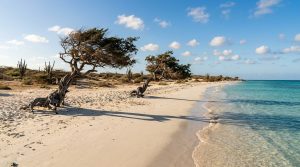
Eagle Beach is the easy first stop. It has wide, soft white sand and calm water, and it’s often ranked among the best beaches in the world. It’s free to visit, and it tends to feel less crowded than the resort strip to the north.
Plan two to four hours, ideally in the morning. Low-rise condo-style hotels line the back of the beach, so there are cafes and small shops within a short walk. We recommend bringing a hat, reef-safe sunscreen, and your own umbrella, since rental chairs add up over several days. The beach suits couples, families, and anyone who wants a slow day.
2. Palm Beach
Palm Beach is the island’s liveliest stretch, with big resorts, restaurants, and beach bars packed along the sand. The beach itself is free, though food and drinks here cost more than elsewhere. It’s the best place for sunset cocktails and an easy dinner without needing a car.
Allow an afternoon and evening. The water is calm for swimming, but the sand gets busy around midday, particularly in high season. Palm Beach suits travelers who like a social atmosphere, short walks to dinner, and plenty of choice. If you want quiet, you’ll find it more easily at Eagle Beach.
3. Arikok National Park jeep safari
Arikok covers a large part of the island’s rugged east and interior, and it’s where Aruba feels least like a resort. A 4×4 tour typically visits the Natural Pool, Dos Playa, and limestone caves with Caiquetio drawings. Tours run year-round, and the roads are rough enough that a guide is worth it.
Expect around four hours. Guided jeep tours generally cost about $85 to $150 per person (operator pricing, 2026), and some include park fees and snorkel gear. If you rent your own vehicle, park entry is about $22 per adult, and children under 17 enter free. Confirm whether your rental agreement allows off-road driving first.
4. Natural Pool (Conchi)
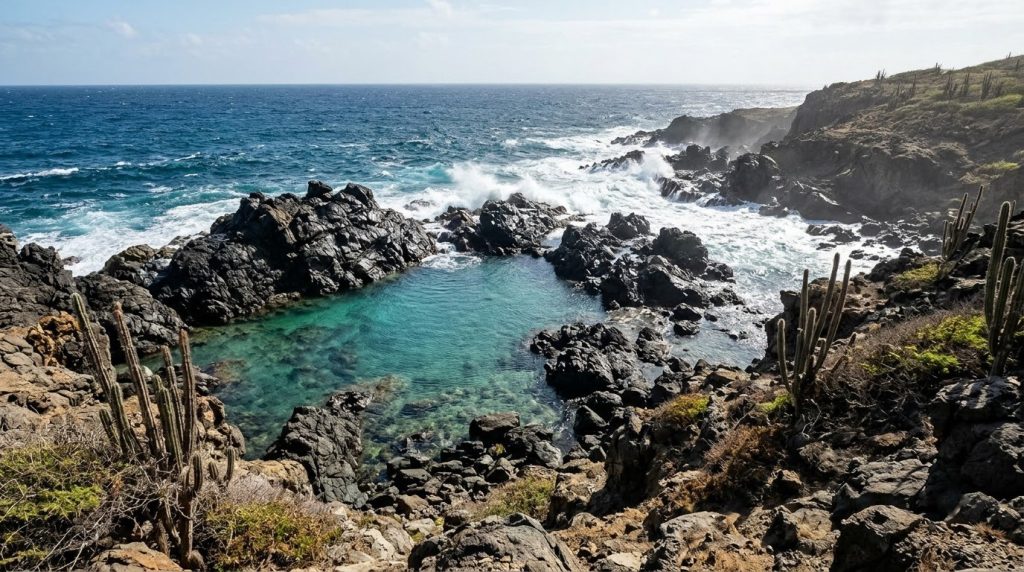
The Natural Pool, also called Conchi, is a rock-ringed basin on the wild north-east coast. You reach it by 4×4 or by hiking. Swimming depends on sea conditions, so look at the water before you change. When the waves are high, it’s best to admire it from above.
Budget one to two hours here. The scenery is the main draw, and it’s a great spot for photos. Bring water shoes, since the rocks are sharp and slippery. This stop is easiest to fit into a jeep tour, which usually combines it with the caves and Baby Beach, often at around $89 per person for a half day (operator pricing, 2026).
5. Catamaran snorkel cruise to the Antilla wreck
A catamaran snorkel cruise is the classic Aruba day on the water. A typical three-hour trip stops first at the Antilla, a German freighter wreck, then at one or two reefs. Light lunch and an open bar are common inclusions. Cruises run year-round and start from about $69 per person (operator pricing, 2026).
A shorter sunset dolphin-watching catamaran of around two hours can start closer to $59. We’d pick the snorkel cruise if you want to see fish and the wreck, and the sunset sail if you prefer a relaxed evening. Both suit groups and couples. Book early for busy weeks, and choose a morning departure for the calmest water.
6. Baby Beach
Baby Beach is a shallow lagoon at the island’s southern tip, and it’s the best choice for families with young kids. The water stays knee-deep for a long way out, which makes wading easy and snorkeling gentle. Entry is free. Snorkel gear rental is a small extra, often roughly $25 to $50 for activities, though prices vary.
Go early. Afternoon trade winds make the water choppier, and the shade is limited. Plan two to three hours, and pack water, snacks, and sun protection because services are thin compared with the resort areas. It’s about a 45-minute drive from Palm Beach, depending on traffic.
7. Downtown Oranjestad
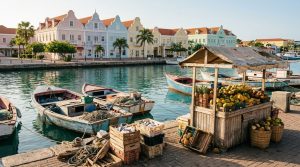
Oranjestad is the island’s capital, with colorful Dutch colonial-style buildings, harbor views, shops, and local restaurants. Browsing is free. You can walk the main streets in a half day, and the harbor area is pleasant in the early evening when the heat eases.
It’s the best spot to see how locals live and eat, away from the resorts. Look for small cafes and snack counters, where cheap meals often run about $5 to $15 per source estimates. Many goods on the island are imported, so souvenir prices can feel high, and it pays to compare before buying.
8. Windsurfing
Aruba’s steady trade winds make it a respected windsurfing destination. The best conditions are usually on the sheltered northwest side near Palm Beach, where schools offer lessons and gear hire. Lessons suit beginners as well as experienced riders who want to progress.
Book a one-to-three-hour session and ask for current rates, since pricing varies by school and season. Mornings are gentler, while afternoons bring stronger wind for advanced riders. If you’re not sure you’ll like it, start with an intro lesson before paying for a multi-day package.
Which Free Sights Are Worth Adding Beyond the Beaches?
Once the main eight are covered, several low-cost stops fill a half day. Most sit along the north coast or in the interior, so they pair well with a rental car or a guided island tour.
Bushiribana Gold Smelter Ruins
The stone smelter was built in 1872 to process gold ore from the Seroe Plat area and operated for about ten years. Walls, chimneys, and arches remain, and window openings frame the sea. There is no admission fee. VisitAruba notes that visitors could once walk through the ruins, so confirm current access before you go.
The ground is uneven and rocky. Wear sturdy shoes and bring water and sunscreen, since shade is scarce.
Alto Vista Chapel
This small Catholic chapel sits on a hill above the north shore and is widely described as one of the island’s oldest places of worship. Tour listings report free admission and free parking. It works best as a quiet 20-minute stop on the way between the north coast and Oranjestad.
Ayo and Casibari rock formations
Both sites are clusters of large boulders in the island’s interior. Ayo is the bigger of the two, with a harder scramble and preserved rock drawings. Casibari is smaller and easier, and visitors can climb to the top for views across the island.
Many island tours combine these stops with the California Lighthouse. VisitAruba lists Ayo, Alto Vista, and the lighthouse as sites near the Bushiribana ruins, which makes a loop of the north and center practical in a single morning. Check opening status for the lighthouse before planning around it.
Arikok’s caves and Boca Prins: what to see inside the park
Arikok National Park is more than the Natural Pool. Two caves are open to the public daily, Fontein and Quadirikiri, and each has a ranger at the entrance who leads visitors through. Fontein Cave is subject to the same park rules as the rest of Arikok, including entry fees and visiting hours.
Boca Prins is a beach inside the park where turtles nest, with a small bar or cafe. The surf is rough on this coast, so treat it as a viewpoint and photo stop rather than a swimming beach.
Hours and fees: check before you go
Third-party sources put park hours at about 8 AM to 4 PM daily, with one listing last tickets at 3 PM. Entry fees differ between sources, and the older and newer figures do not agree with each other.
The figure quoted earlier in this guide is one of several, so check the official Aruba parks website for the current price before you plan a self-drive day.
Children under 17 enter free according to several listings. Start early, because the caves and trails are exposed, hot, and have little shade.
Is Aruba Outside the Hurricane Belt?
Aruba is generally described as sitting outside the main Caribbean hurricane belt, which means storms are rare compared with islands farther north. Several travel sources describe the risk as low but not zero (travel guide estimates, 2026). That makes it one of the more dependable Caribbean choices during the Atlantic season.
Still, check your forecast and read your booking’s cancellation rules. Travel insurance that covers weather disruption is worth a quick look, particularly for the later months of the Atlantic season. For a month-by-month view of weather and prices, our best time to visit Aruba guide goes deeper.
The key point: you don’t need to avoid Aruba during hurricane season, but you should plan with flexibility. Flexible tickets and refundable hotel rates cost slightly more up front and save a lot if plans change.
How Do You Get Around Aruba Without Overspending?
Aruba has three practical options: the public bus, taxis, and a rental vehicle. The right mix depends on how many of the activities above sit far from your hotel. Most beach days need no transport at all if you stay near Eagle Beach or Palm Beach.
Public bus
The Arubus network lists fares of USD 2.60 (AWG 4.50) one way, USD 5.00 (AWG 8.75) return, and USD 10.00 (AWG 17.50) for a day pass (VisitAruba, 2026). Routes run between Oranjestad and the hotel strip, including Malmok, Arashi, and the Marriott area.
Buses do not stop in front of every low-rise resort. The official schedule notes that stops near Divi Divi, Manchebo, Bucuti and Tara, and Costa Linda are skipped, with the nearest stop close to the hospital. Departures are spaced roughly an hour apart in places, so check the posted times before a late dinner.
Taxis
Taxis do not use meters. Fares are fixed by zone and set by the government. For 2026, the official guide lists USD 26 (AWG 46.80) from the airport to Oranjestad, USD 37 (AWG 66.60) to Eagle Beach, and USD 41 (AWG 73.80) to Palm Beach. Those fares cover up to four passengers.
Between areas, Oranjestad to Eagle Beach is USD 16 and Oranjestad to Palm Beach is USD 22. A USD 5 surcharge applies on Sundays, public holidays, and between 11:00 PM and 7:00 AM. Extra bags beyond one standard bag and one carry-on per passenger cost USD 3 each.
Rental car or 4×4
An international driving license, or a valid license held for at least two full years, is usually required. Rental companies commonly ask for a USD 500 deposit or an open credit card slip. Road signs differ from U.S. signs, and roads turn slick after rain, so slow down in wet weather.
A 4×4 helps on the unpaved roads toward the north coast and Arikok. Read the rental agreement first, because some policies exclude damage on unpaved roads. If your plan includes only one rough-road day, a guided tour often costs less than upgrading to a 4×4 for the whole stay.
Arrival costs: the sustainability fee and getting paid up
Aruba charges air visitors a sustainability fee of USD 20 per visitor, in effect since July 1, 2024. It is paid online while you complete the ED Card, and it must be paid in advance because it cannot be paid at the airport. Cash is not accepted, and the official page lists Visa, Mastercard, and Discover.
Who is exempt
- Residents registered with the Aruba Census.
- Children under eight.
- Visitors leaving Aruba for another destination the same day.
- Airline or ship crew entering for work.
- Repeat visitors within the same 365-day period, who must request a refund because the system cannot recognize them.
Cruise passengers usually do not need an ED Card, so the fee generally does not apply to them. The page advises checking with the cruise line.
Budget it as part of day one
For a couple, add USD 40 for the fee and about USD 37 for the taxi to Eagle Beach before you buy a single drink. That is roughly USD 77 of fixed arrival costs, so count it before deciding between a paid tour and a free beach morning.
Taxi extras and longer routes beyond the hotel strip
The earlier section covers the airport and hotel-strip fares. Longer trips and tour-style hires follow the same government rules, with a few extras. The official guide, updated in May 2026, lists these fixed base fares for up to four passengers.
| Route | Fare |
|---|---|
| Airport to Noord | USD 34 |
| Airport to the cruise terminal | USD 39 |
| Airport to San Nicolas | USD 45 |
| Airport to Baby Beach | USD 60 |
| Palm Beach to the cruise port | USD 33 |
| Noord to Palm Beach | USD 11 |
Rules that change the bill
- Fares are not metered. The minimum fare is USD 10.
- Passengers 5 through 7 cost USD 3 each, and the maximum is 7 passengers.
- Waiting time is USD 1 per minute.
- Hourly hire is USD 60 per hour with a 2-hour minimum, which can work out cheaper than a tour for a group that wants a custom loop.
- On non-airport, non-hotel trips, a USD 3 flat charge applies for using the trunk.
For routes not on the list, the guide points to the official fare calculator.
How Much Should You Budget for Aruba Activities?
Most visitors spend between $125 and $600 per person per day depending on style, based on blog estimates compiled for 2026. Activities are only one slice of that, and meals and lodging take a larger share. Beaches are free, so a trip heavy on sand and light on tours costs far less.
| Travel style | Daily budget per person (approx.) | Typical activity mix |
|---|---|---|
| Budget | $125-200 | Free beaches, one tour, cheap local meals |
| Mid-range | $250-400 | Two tours, restaurant dinners, rental car |
| Luxury | $400-600+ | Private tours, resort dining, water sports |
Source: Travel budget blogs and operator pricing, 2026. Ranges are approximate.
Meals run roughly $40 to $100 per day for most travelers, and a rental car is about $40 to $70 per day. Those two lines often decide whether the trip feels affordable. For the full picture, see our breakdown of whether Aruba is expensive.
Flamingo Beach on Renaissance Island: is the day pass worth it?
Flamingos wander the sand at Flamingo Beach on Renaissance Island, which is why it appears on many wish lists. Non-guests need a day pass. Guides report the adult pass at about USD 125, with children aged 6 to 12 at about USD 60 and younger children free. Those figures come from 2023 and 2024 articles, so confirm the current price.
One guide says tickets are released online at 9 AM each Saturday for the following Monday to Sunday week. Dates sell out in high season, so plan around that release time.
When it makes sense
It suits travelers who want a calm, private-feeling beach day and are willing to pay for it. If the goal is simply a beautiful beach, the free ones listed earlier cover that. At that price, it is a splurge for one special day, not a daily routine.
What Are the Best Ways to Save Money in Aruba?
The simplest way to save in Aruba is to lean on free beaches and book only one or two paid tours. Eagle Beach condo-hotels start around $95 per night (hotel booking data, 2026), while Palm Beach rooms can reach hundreds. Small choices on lodging and meals matter more than any single activity.
Here are the habits that saved us the most:
- Stay near Eagle Beach: the Manchebo and Divi strip tends to cost less than Palm Beach.
- Bring a beach kit: a cheap umbrella and a cooler beat paying for rental chairs every day.
- Shop at supermarkets: buy water, snacks, and breakfast items instead of eating every meal out.
- Eat at local counters: small spots serve meals for roughly $5 to $15.
- Share a jeep tour: splitting a rental or tour among four people lowers the cost per person.
- Travel in the cheaper months: hotel prices tend to drop from roughly mid-April to mid-December.
Prices change often, so treat every number here as a starting point and check current rates before you commit.
Low-cost add-ons: Hooiberg, the donkey sanctuary, and more
A few inland stops fill a gap day. Hours and prices were not listed on the source page for most of them, so confirm before you drive across the island.
- Hooiberg (Haystack Mountain): A hill over 500 feet tall with 561 steps to the top. On a clear day the views can reach the Venezuelan coast. Climb early, because there is little shade.
- Donkey Sanctuary: Reported open 9 AM to noon. Petting is free, and feeding the donkeys costs a small fee.
- Butterfly Farm: A guided look at butterfly habits and metamorphosis.
- Ostrich Farm: A walking tour of the pens and incubator.
- Aloe vera factory in Oranjestad: A short stop on aloe farming and products.
- Balashi Gardens brewery: Reported open 6:30 AM to 4 PM, with brewery tours Monday through Friday.
Fitting them in
Hooiberg, the aloe factory, and the donkey sanctuary can sit in one morning if you have a car or hired taxi. Do the climb first, then drive to the donkeys before they close at noon.
What Does a Balanced 4-Day Aruba Plan Look Like?
A balanced plan alternates one active day with one beach day, which keeps costs and sun exposure manageable. Use this as a template and swap days based on the forecast.
- Day 1: Eagle Beach in the morning, then an easy evening along Palm Beach for sunset and dinner.
- Day 2: A guided Arikok jeep safari or a self-drive loop with the Natural Pool, followed by a rinse and a rest afternoon.
- Day 3: A morning catamaran snorkel trip to the Antilla wreck, then free time on the sand.
- Day 4: Baby Beach early, then Oranjestad in the late afternoon when the heat eases.
On a fifth day, the free north-coast and interior stops above fit in a morning. A windsurfing lesson fits any morning when the wind is moderate.
Driving Rules and Bus Hours on Aruba
If you rent a car, a few local rules differ from the mainland United States. A travel wiki lists these.
- No turns on red.
- The urban speed limit is 40 km/h and the out-of-town limit is 60 km/h, with signs and speedometers in kilometers.
- At unmarked intersections, traffic from your right has the right of way.
- Avoid the tram tracks in downtown Oranjestad and watch for unmarked bus-only roads with pits.
Airport rental cars are delivered to the alley behind the rental offices, and you return them there. Note that buses stop at 9 PM except on the western beaches, so plan a taxi for late dinners away from the hotel strip.
Natural Pool access
The Natural Pool is reachable only by ATV or a trail-rated 4×4, and the source advises bringing a spare tire. That is another reason a guided tour often makes sense for it.
Oranjestad Museums, Snorkel Spots, and Windsurf Beaches
Oranjestad has more than shopping. The wiki lists the Aloe Vera factory, historical, archaeological, numismatic, and model train museums, and the De Oude Molen windmill.
Beyond the Antilla
Snorkel tours visit sites such as Boca Catalina and the Antilla shipwreck, a scuttled German cargo ship off Malmok Beach. De Palm Island is described as a good shallow snorkeling spot. Baby Beach reaches no more than five feet deep at any point and has some of the best snorkeling on the island.
Windsurfing and Arikok’s size
The wiki names Hadikurari (Fisherman’s Huts) and Bachelor’s Beach for windsurfing. Arikok National Park covers about 18% of the island, so plan on selecting a few sights instead of trying to see all of it.
If rain or wind keeps you off the water, a museum morning in Oranjestad is an easy swap.
What Mistakes Should You Avoid in Aruba?
Most budget overruns come from small choices made on arrival. A few habits prevent them.
- Taking a taxi for every trip. Fixed fares add up quickly across a week. Price the USD 10 bus day pass against two or three taxi rides before you decide.
- Booking tours without checking inclusions. Park fees, snorkel gear, food, and drinks are included on some tours and not on others. Compare the full package, not just the headline price.
- Driving off-road without checking the rental terms. Damage on unpaved roads can fall outside coverage.
- Swimming at the Natural Pool in rough seas. If the waves are high, view it from above.
- Skipping sun protection. Trade winds make the heat feel milder than it is, and shade is limited at Baby Beach and the north coast.
Island basics: money, water, food, and weather
Aruba is easy for first-time Caribbean travelers, and a few basics save money and confusion.
- Currency: The local currency is the Aruban florin, but US dollars are widely accepted. A travel wiki lists roughly 1.75 to 1.80 florins per dollar at shops and hotels. Major credit cards are accepted at most places, and personal checks are not.
- Tap water: Described as safe to drink, so carry a refillable bottle.
- Languages: Dutch and Papiamento are official, and English is widely spoken.
- Shopping hours: Shops are generally open Monday to Saturday, roughly 9 AM to noon or 1 PM and again from 2 PM to 6:30 PM.
- Food to try: Keshi yena, the national dish, is spicy chicken and peppers with capers, olives, and tomatoes baked in a Gouda cheese shell.
Weather and safety
The climate has little seasonal temperature change. January to March is high season at about 76 to 85 degrees F, and April to December runs about 79 to 88 degrees F. Rain usually falls at night, and a constant light breeze keeps the heat tolerable.
Aruba is described as generally very safe, day or night. Drug laws are strictly enforced, and cannabis is illegal.
Frequently Asked Questions
How many days do you need in Aruba?
Four to five days covers the main activities comfortably. That gives you two beach days, one Arikok jeep tour, one snorkel cruise, and time in Oranjestad. Aruba is small, so you can see most of it quickly, and a shorter trip works if you mainly want beach time.
Is Arikok National Park worth visiting?
Yes, if you want a break from resort areas. Park entry is about $22 per adult, and children under 17 are free. The Natural Pool, caves, and rugged coastline are the highlights. A guided jeep tour handles the rough roads and often includes snorkel gear.
Can you swim at the Natural Pool?
Sometimes. Swimming depends on sea conditions, and the pool can be dangerous when waves are high. Check the water before you get in, wear water shoes, and follow your guide’s advice. If conditions look rough, enjoy the view and skip the swim.
What is the best beach in Aruba for kids?
Baby Beach is usually the top choice for families because the lagoon is shallow and calm. Go in the morning, since afternoon trade winds make the water choppier. Eagle Beach is a good second option for older children and relaxed days.
Do you need a car in Aruba?
Not always. You can reach Palm Beach, Eagle Beach, and Oranjestad with taxis or buses, but a rental car, at about $40 to $70 per day, gives freedom for Baby Beach and Arikok. Many travelers rent for only a day or two, which keeps costs down.
Find your Aruba hotel on the map
Live prices from Booking, Airbnb and more — move the map or change dates to compare stays across Aruba.
Final Thoughts
Aruba rewards a simple plan: free beaches in the morning, one standout tour, and an easy evening in Oranjestad or Palm Beach. Pick one adventure, like the Arikok jeep safari or the Antilla snorkel cruise, and let the rest of the trip stay relaxed. For timing and costs, start with our best time to visit Aruba guide and our look at whether Aruba is expensive.