Best Time to Visit Quebec City in 2026: Month-by-Month Guide
Disclosure: Some links in this guide are affiliate links. If you book or buy through them, we may earn a small commission at no extra cost to you — it helps keep our guides free.
- Best for color: late September to mid October brings peak foliage at Montmorency Falls, Ile d’Orleans, and Jacques-Cartier park.
- Best for winter fans: the Winter Carnival runs about two weeks from early February, with highs around -12 to -4 C (10 to 25 F).
- Best for value: January and March are the cheapest months, with Old Quebec 3-star rooms averaging about $182 in January versus about $379 in July.
- Best compromise: early October gives you leaf color plus city events, though evenings turn cold.
- Book early: Carnival and foliage weekends are the priciest and sell out first.
The best time to visit Quebec City is late September to mid October for fall color, or early February if you want the Winter Carnival and don’t mind real cold. Summer is the easy, lively choice, and December brings the Christmas lights. Late spring and early November are the quiet, cheaper windows.
Your pick really comes down to what you want to feel: snow and parades, patio dinners, or red maples over a walled city. This guide breaks down each season, shows what hotels tend to cost, and points out where you can save money without missing the best parts. Once you’ve chosen your dates, our guide to the best hotels in Quebec City helps you book the right neighborhood.
A mid-week stay in early October lets visitors walk the ramparts at sunrise with almost nobody around. By afternoon the crowds had arrived, but the maples along the river made up for it. What I’d do differently: pack a real jacket. The temperature drops fast once the sun sets over the St. Lawrence.
What is the best time to visit Quebec City overall?
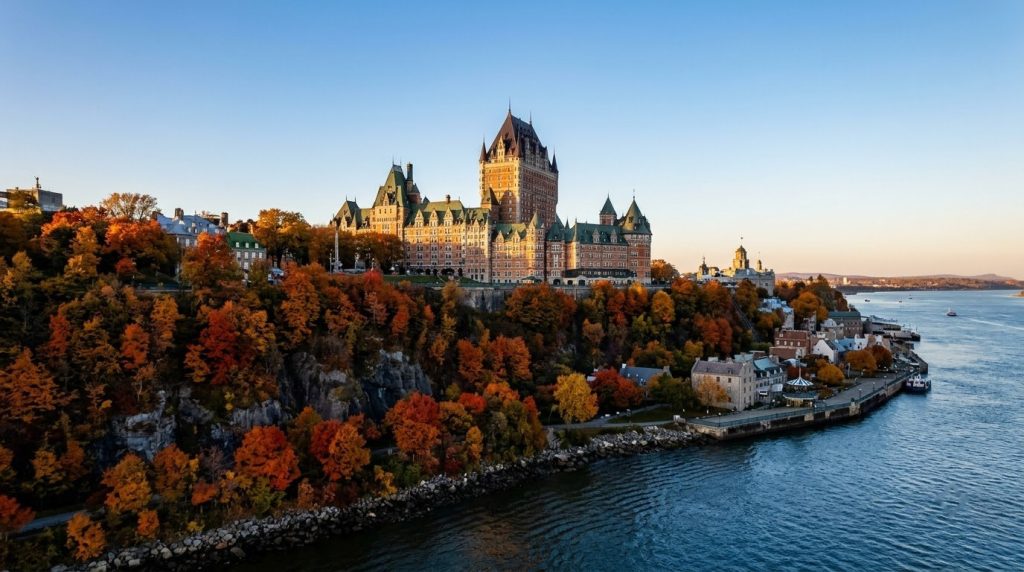
Late September through mid October is the best overall window, because foliage peaks at Montmorency Falls, Ile d’Orleans, and Jacques-Cartier park right as outdoor events are still running (regional tourism board, 2026). Days are crisp, patios are open, and the walled city looks its best.
Summer is a close second if you want long evenings and festivals. Winter wins if you love snow, since the city is built for it. We’ve found that first-timers who dislike cold are happiest in early October or late June, while repeat visitors often prefer February.
Quebec City is a four-season destination, so “best” depends on you. Here’s a quick way to decide:
- Want color and photos: go late September to mid October.
- Want snow and festivals: go early February.
- Want warm patios: go July or August.
- Want low prices: go January, March, April, or early November.
Shoulder months deserve a second look too. April and May are quiet, November is cheap, and the old town is just as walkable when the crowds thin out. You trade festivals and color for space and lower rates, which is a fair deal for many budget travelers.
What does each month look like in Quebec City?
Quebec City swings from deep winter cold to warm, humid summers, with February highs of about 10 to 25 F (-12 to -4 C) according to the national weather service (2026). The table below summarizes what each month is good for, so you can match your dates to your priorities.
| Month | Typical weather (approximate) | Best for | Watch out for |
|---|---|---|---|
| January | Very cold, snow cover | Cheap rooms, quiet streets | Short days, icy sidewalks |
| February | Highs about -12 to -4 C | Winter Carnival, skating | Peak winter pricing on Carnival weekends |
| March | Cold, slowly thawing | Low prices, maple season | Slush and gray days |
| April | Cool, muddy melt | Lowest crowds | Some seasonal sites still closed |
| May | Mild, spring blooms | Walking, fewer visitors | Cool evenings |
| June | Warm and green | Long daylight, patios | Rain showers |
| July | Warm to hot, humid | Summer festivals | Highest hotel rates |
| August | Warm, still lively | Outdoor events, river views | Crowds around the old town |
| September | Cooling, early color | Hiking, value before peak | Weekend rates rise late in the month |
| October | Crisp, cold evenings | Fall foliage | Foliage weekends sell out |
| November | Cold, gray, first snow | Low prices, quiet streets | Some tours slow down |
| December | Cold, snowy | Christmas lights, markets | Highest winter rates near the holidays |
Source: national weather service and regional tourism board, 2026
Weather shifts year to year, so treat these as rough patterns. Check the forecast a week before you fly, especially in shoulder months.
When is the Quebec City Winter Carnival?
The Winter Carnival runs for about two weeks starting in early February, with parades, snow sculptures, and skating (regional tourism board, 2026). February highs sit around -12 to -4 C (10 to 25 F), so this is a trip for people who truly enjoy winter.
Carnival weekends are among the priciest of the year for hotels, and rooms near the old town sell out early. If you go, book as soon as dates are announced. A weekday visit during the same two weeks is usually calmer and a little cheaper.
Dress in layers, with a windproof outer shell, insulated boots, and a hat that covers your ears. Hand warmers are cheap and worth packing. Honestly, the cold is manageable if you keep moving between warm cafes, and the Petit-Champlain district feels especially cozy in the snow.
How cold is too cold?
Wind chill, not the thermometer, is what catches people. A -10 C day with wind feels far harsher than a calm -15 C day. We’d suggest planning shorter outdoor blocks of about an hour, then ducking into a cafe or museum. Kids and anyone who hates the cold may prefer a different month.
When is fall foliage at its best in Quebec City?
Fall color peaks from late September to mid October around Quebec City, especially at Montmorency Falls, Ile d’Orleans, and Jacques-Cartier park (regional tourism board, 2026). Montmorency Falls sits about 14 km from the city and drops roughly 100 feet farther than Niagara.
Ile d’Orleans is about 15 minutes by car from the city, and its farm stands and tasting trail make it a good half-day. The exact peak moves with the weather, so don’t lock in a nonrefundable trip for one specific weekend.
Early October is the sweet spot many travelers suggest. You usually get strong color plus city events, though it’s colder. Pack warm layers and rain protection. Book early, because foliage weekends are among the most expensive of the year.
Money tip: a mid-week stay in early October often costs noticeably less than a weekend in the same hotel. If your schedule is flexible, shift your dates by two or three days and compare.
Is summer a good time to visit Quebec City?
Summer is the liveliest season in Quebec City, and it’s also when Old Quebec 3-star hotels average about $379 a night in July according to hotel pricing data (2026). Patios fill, streets host street performers, and the days are long enough to explore until late.
July and August bring the big summer festivals, including a major music festival in July and historical events in the old town. Dates change each year, so confirm them on the official event sites before booking.
Heat and humidity can be real, but evenings along the river are pleasant. The trade-off is cost and crowds. Rooms near the Chateau Frontenac and in the walled city go first, so reserve early.
If you want summer without peak prices, try June or early September. You’ll still get green hills and open patios, with fewer lines at the main sights.
What about Christmas markets and the holiday season?
December brings Christmas lights to the old town, and hotel prices peak near the holidays, with the Fairmont Le Chateau Frontenac at its priciest in December in sampled rates (hotel pricing data, 2026). The Petit-Champlain district, with its 17th-century facades, looks especially festive under snow.
The old town also hosts holiday markets with seasonal food and crafts. Opening dates vary, so check the official tourism calendar before you go.
Is it worth the premium? In our experience, yes, for the first week of December. Rooms are cheaper than the holiday stretch, the lights are already up, and the crowds are thinner. Avoid the days around Christmas and New Year if you’re watching your budget.
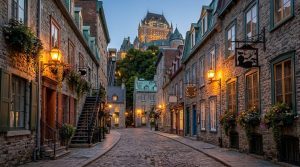
Bring waterproof boots with grip. Cobblestones and icy slopes can be slippery, and the lower town involves stairs and hills.
Are spring and early November worth considering?
Spring and early November are worth it if price matters most, since March is the cheapest month in sampled Fairmont Le Chateau Frontenac rates and January 3-star rooms in Old Quebec average about $182 (hotel pricing data, 2026). You give up festivals and color, but you keep the walled city almost to yourself.
March is still wintry, so expect cold and slush rather than flowers. By May the city feels green and gentle, and walking the ramparts is pleasant again. Some seasonal attractions open on reduced schedules in April and November, so check hours before you plan a day around one.
In our experience, these months suit travelers who care more about atmosphere and a good dinner than a packed event calendar. Pair a cheap room with a food tour or a long lunch in the Petit-Champlain district, and you’ll spend far less than in July.
Here’s a simple rule of thumb for shoulder-season trips:
- Pack for three seasons: a waterproof jacket, warm layers, and shoes with grip.
- Check opening hours: tours and boat services can run less often.
- Plan indoor backups: museums and cafes are your friends on gray days.
When are hotels cheapest in Quebec City?
Hotels are cheapest in January, March, and April, with Old Quebec 3-star rooms averaging about $182 in January versus $379 in July per hotel pricing data (2026). That’s roughly half price for the same room. Sampled rates show the Fairmont Le Chateau Frontenac cheapest in March and priciest in December.
| Season | Crowds | Hotel prices (approximate) | Best deal strategy |
|---|---|---|---|
| Winter (Jan) | Low | About $182 for a 3-star in Old Quebec | Book mid-week, walk the old town |
| Carnival (early Feb) | High | Peak winter rates | Book months ahead |
| Spring (Mar-May) | Low | Lowest of the year, March cheapest | Go for value and quiet |
| Summer (Jun-Aug) | High | About $379 for a 3-star in July | Try June or late August |
| Fall foliage (late Sep-mid Oct) | High | Among the priciest weekends | Choose mid-week dates |
| Late fall (Nov) | Low | Below peak | Book flexible rates |
| Christmas (Dec) | Medium to high | Highest near the holidays | Visit early December |
Source: hotel pricing data and regional tourism board, 2026. Prices are approximate and change often.
For specific properties and neighborhoods, see our best hotels in Quebec City guide. A few general money-saving tips apply across all seasons:
- Stay just outside the walls: you’ll walk 10 to 15 minutes and often pay less.
- Choose free cancellation: it lets you rebook if prices drop.
- Skip Carnival and foliage weekends: shift to a weekday and save.
- Eat your big meal at lunch: many restaurants offer cheaper set menus.
Which season fits which kind of traveler?
The right season depends on your budget and tolerance for weather, since January rooms average about $182 while July rooms average about $379 (hotel pricing data, 2026). Matching your style to the calendar can save you hundreds on a four-night stay.
- Budget travelers: go in January, March, April, or November. Prices are lowest, and you’ll still see the main sights.
- Photographers: go late September to mid October for color, or February for snow and Carnival.
- Families: June and early September offer mild weather and fewer crowds than July.
- Couples: early October or the first week of December feel romantic and walkable.
- Food lovers: any season works. An Old Quebec food tour with 10 or more tastings runs about 3 hours and roughly $112 to $123 per person (operator pricing, 2026).
Walking Old Quebec is free year-round, and it’s the only walled city north of Mexico, with four gates and surviving fortifications. That makes it a good-value destination in any season.
Frequently Asked Questions
What is the cheapest month to visit Quebec City?
January, March, and April tend to be cheapest. Old Quebec 3-star hotels average about $182 in January compared with about $379 in July (hotel pricing data, 2026). March is often the lowest point for luxury hotels. Prices are approximate and change by date.
Is Quebec City worth visiting in winter?
Yes, if you enjoy snow and festivals. The Winter Carnival runs about two weeks from early February, with parades, snow sculptures, and skating. Highs sit around -12 to -4 C, so pack serious layers. It’s a poor choice for anyone who dislikes cold.
When do the fall colors peak in Quebec City?
Peak foliage is usually late September to mid October at Montmorency Falls, Ile d’Orleans, and Jacques-Cartier park. The exact timing shifts with weather each year. Early October is a popular compromise, with strong color and city events, although evenings are colder.
How many days do you need in Quebec City?
Two to three days covers Old Quebec, Petit-Champlain, and Montmorency Falls. Add a day for Ile d’Orleans if you want farms and tasting stops. In winter, shorter outdoor blocks work better, so a slower pace suits the season.
Do I need a car in Quebec City?
Not for the old town, which is very walkable. A car helps for Ile d’Orleans, which is about 15 minutes away, and for Montmorency Falls, about 14 km from the city. Tours are an alternative if you’d rather not drive on snowy roads.
Find your Quebec City hotel on the map
Live prices from Booking, Airbnb and more — move the map or change dates to compare stays across Quebec City.
Final Thoughts
Pick late September to mid October for color, early February for Carnival, or January and March for the lowest prices. Whatever you choose, book mid-week where you can and reserve early for foliage and Carnival weekends. When your dates are set, compare neighborhoods in our best hotels in Quebec City guide so you stay close to the sights without overpaying.