Best Time to Visit Buenos Aires in 2026: Month-by-Month Guide
Disclosure: Some links in this guide are affiliate links. If you book or buy through them, we may earn a small commission at no extra cost to you — it helps keep our guides free.
- Best overall window: October-November and March-April offer comfortable weather, fewer crowds, and better rates than summer.
- Spring bonus: jacaranda trees bloom from roughly late September through November, and many travelers call November the single best month.
- Summer is hot and humid: January highs reach about 86F (30C), and late December hotels can book up months ahead.
- Winter is the budget play: June to August is cooler and quieter, with highs near 60F (16C) and tango shows running as usual.
- Tango never stops: shows and milongas run year-round, so weather rarely changes your evening plans.
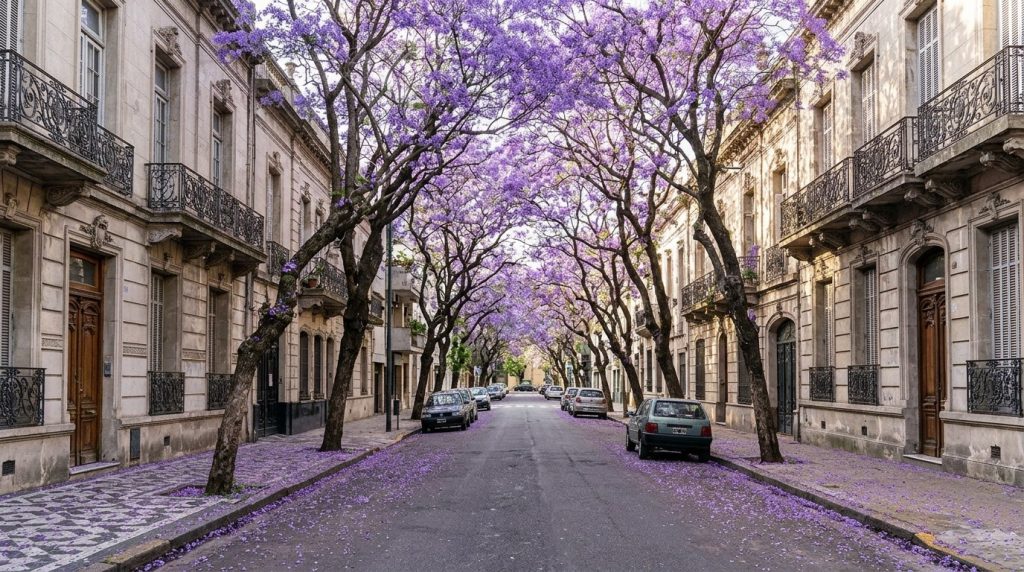
The best time to visit Buenos Aires is spring (September to November) or fall (March to May). Days are mild, the city is lively, and hotel prices sit below the summer peak. October and November are the sweet spot for most people, because the jacaranda trees turn whole streets purple.
Remember that Argentina is in the Southern Hemisphere, so the seasons are flipped from the US. December to February is hot and humid, and June to August is cool and quiet. Below you’ll find a season-by-season breakdown, a price and crowd table, the main events, and a few ways to save money whichever month you pick.
I’ve visited Buenos Aires in both late October and mid-July, and the two trips felt like different cities. In October, visitors can walk for hours without a jacket, stopping for coffee under purple blossoms in Recoleta. In July I wore a wool coat at night, but I got a table at any parrilla I wanted without booking ahead, and I paid noticeably less for my room.
When is the best time to visit Buenos Aires?
Most sources, including Lonely Planet and Civitatis, point to spring (September to November) and fall (March to May) as the best balance of weather, crowds, and cost in Buenos Aires. Daytime highs typically sit in the 60s and 70s F (about 18 to 26C), which is ideal for walking neighborhoods like Palermo and San Telmo.
If you can only pick one month, I’d choose November. Lonely Planet calls it perhaps the best month of the year, with jacaranda in bloom and long, pleasant days. Some local sources say the bloom starts as early as September, so late September through November is a safe range.
The second-best choice is March to April. The summer heat breaks, the evenings turn comfortable for dinner outdoors, and the cultural calendar picks up again after the holiday lull. Both windows suit first-timers who want to see the major sights without sweating through them.
| Season | Months | Typical weather | Best for |
|---|---|---|---|
| Spring | Sep-Nov | Mild to warm, about 60-77F (16-25C), some rain | Jacaranda, walking, parks, outdoor dining |
| Summer | Dec-Feb | Hot and humid, highs about 82-90F (28-32C), thunderstorms | Rooftop pools, nightlife, polo, summer festivals |
| Fall | Mar-May | Mild and drier, about 55-77F (13-25C) | Sightseeing, food, wine, art and book events |
| Winter | Jun-Aug | Cool, highs about 55-62F (13-17C), cold nights | Low prices, tango, museums, cafes |
Source: national weather service climate averages, approximate, 2026
What is Buenos Aires like in spring (September to November)?
Spring in Buenos Aires runs from September to November, with temperatures climbing from the mid 60s F to the mid 70s F (about 18 to 25C). Lonely Planet highlights November as potentially the best month. Jacaranda trees bloom across the city, and the parks fill with picnickers and families.
This is prime time for walking. The Palermo parks, the Costanera Sur nature reserve, and the cobbled streets of San Telmo all feel their best. Expect a few rainy days, since spring storms can roll in, so pack a light rain jacket.
Spring is also a busy season for events. Late in the year, Palermo hosts major polo matches, and the city’s cultural calendar is full. Hotels cost more than in winter but typically less than during the peak of December and January.
Is jacaranda season worth planning around?
Yes, if you like photography or just pretty streets. The blossoms are short-lived, and the timing shifts a little each year with the weather. Late October through mid-November is the most reliable stretch. Recoleta, Palermo, and the area around Plaza San Martin are good places to look.
How hot is Buenos Aires in summer (December to February)?
Buenos Aires summers are hot and humid, with January highs around 86F (30C) and occasional heat waves that push higher. Lonely Planet notes the season is busy, and late-December accommodation can need booking up to a year ahead. Afternoon thunderstorms are common, and the humidity can feel heavier than the thermometer suggests.
Summer works well if you like nightlife and don’t mind the heat. Dinner starts late in Argentina, often after 9 p.m., and cooler evenings make terraces pleasant. Weather Spark’s tourism score also favors mid-January through early April for hot-weather activities, such as pools and outdoor cafes.
A practical note: during January and February, many locals leave town for the coast. Some smaller shops and restaurants may close for vacation, while the major attractions stay open. Check hours before you plan around a particular place.
How do you handle the heat?
Do the big walking days early in the morning, then retreat to a museum, cafe, or hotel pool from about 1 p.m. to 5 p.m. Book a room with reliable air conditioning, and ask about it before you pay. Carry a refillable water bottle, because it saves money and keeps you comfortable.
Is fall a good time to visit Buenos Aires (March to May)?
Fall is one of the two best windows for Buenos Aires. Sources including Travel and Time recommend March to April in particular, when temperatures settle into the 60s and 70s F (roughly 16 to 26C) and humidity eases. It is dry enough for long city walks, and the light is soft in the late afternoon.
March can still feel summery, so you’ll see people in short sleeves. By May, nights get properly cool, and a light jacket is useful. The city’s café culture is at its best, and restaurant terraces stay open without the summer swelter.
Fall also tends to offer better hotel deals than spring. If you want most of the benefits of the high season without the highest prices, aim for late April or early May. Easter week brings a short domestic travel bump, so book early for those dates.
Is winter a good time to visit Buenos Aires (June to August)?
Winter in Buenos Aires is cool rather than freezing, with daytime highs of about 55 to 62F (13 to 17C) and nights that can drop into the 40s F. It’s the quietest and cheapest period for most travelers, and it’s a strong choice if you want museums, cafes, and tango without crowds.
You won’t need heavy snow gear. A warm coat, scarf, and layers handle almost everything. Rain can show up, and the damp air makes it feel colder than the number suggests, so pack a waterproof layer.
Winter is when you save the most. Hotels often discount, and you can usually walk into well-known restaurants with little or no wait. The one wrinkle is school holidays in July, which bring more domestic visitors to some areas. Even then, the city stays far less crowded than in December and January.
When are prices and crowds lowest?
Prices and crowds in Buenos Aires peak around late December and January, then fall in the shoulder seasons and bottom out in winter. Lonely Planet advises booking late-December stays far ahead. Momondo’s hotel data puts Buenos Aires near EUR 45 a night on average, making it the cheapest major city in Argentina, though peak dates cost far more.
Use the table below as a planning guide. These are relative levels, not exact quotes, because rates change with demand, exchange rates, and how early you book.
| Period | Crowds | Hotel prices | Notes |
|---|---|---|---|
| Late Dec-Jan | High | Highest | Book far ahead; some locals away |
| Feb | Medium to high | High | Carnival season, still hot |
| Mar-Apr | Medium | Moderate | Great weather, Easter bump |
| May | Low to medium | Moderate to low | Cool, comfortable, good value |
| Jun-Aug | Low | Lowest | July school holidays add domestic visitors |
| Sep | Low to medium | Moderate | Spring warms up, early jacaranda |
| Oct-Nov | Medium | Moderate to high | Prime weather, popular |
Source: national tourism board and hotel pricing trends, approximate, 2026
How can you save money in any season?
A few habits help regardless of the month. Book flights and hotels well ahead for December and January. For tours, compare operator pricing, since the same experience can vary a lot. A tango show runs from about $37 to $68 per person, while a premium dinner show can reach around $280.
Choose a hotel in Palermo, Recoleta, or San Telmo with a kitchen or free breakfast to trim food costs. Skip the airport taxi when you can, and use a licensed remis or ride-hailing app instead. Always check current exchange conditions before you pay for anything, because Argentine pricing and payment options change.
What events and festivals should you plan around?
Buenos Aires has a packed calendar, and the right event can justify choosing one month over another. Tango is the constant: shows such as Piazzolla in Galeria Guemes (about 75 minutes) and Senor Tango run every week of the year, so you never have to time your trip to see one.
Beyond tango, a few well-known events shape the calendar:
- Tango festival and world championship (August): Held in winter, it draws dancers and fans. Check dates with the city tourism board.
- Polo season (late spring): Top matches take place in Palermo around November and December. Tickets and seats vary by match.
- Carnival (February): Neighborhood groups perform street parties, called murgas, in many barrios.
- Book fair (spring, usually April-May): One of the largest in the Spanish-speaking world, according to local organizers. Verify the exact dates each year.
Event dates shift, so confirm them on official city or organizer pages before booking nonrefundable flights.
How many days do you need, and what should you pack?
Three to four days covers the highlights of Buenos Aires: a tango show, the La Boca and Caminito area, Recoleta Cemetery where Evita is buried, San Telmo, and Palermo. Add a day for the Tigre Delta boat trip, which is often combined with a city tour in about eight hours. Add more time if you plan to see Iguazu or Patagonia.
Packing depends on the season. In summer, bring light fabrics, sunscreen, and a compact umbrella for storms. In spring and fall, bring layers and a light rain jacket. In winter, bring a warm coat, scarf, and comfortable closed shoes. Good walking shoes matter all year, because the sidewalks can be uneven.
If you’re also planning a wider Argentina trip, remember that Patagonia has its own season, which doesn’t match Buenos Aires. Check the weather for each stop separately before you finalize dates.
Find your Buenos Aires hotel on the map
Live prices from Booking, Airbnb and more — move the map or change dates to compare stays across Buenos Aires.
Frequently Asked Questions
What is the cheapest month to visit Buenos Aires?
June, July, and August are generally the cheapest months, since winter brings fewer international visitors and hotels discount. Expect cool weather, with highs around 55 to 62F (13 to 17C). July school holidays add some local travelers, so early June or August can be the best bargains.
What is the rainiest time in Buenos Aires?
Sources differ on exact rainfall, so it’s best not to rely on a single number. Rain can fall in any season, with summer thunderstorms and spring showers being common. Pack a light rain jacket year-round, and keep your plans flexible for a day or two.
Is Buenos Aires worth visiting in winter?
Yes. Winter is cool but not harsh, and you get lower prices and short lines. Tango shows, museums, cafes, and steakhouses all operate normally. Bring a warm coat for evenings, and you’ll find it one of the most relaxed times to explore the city.
When does the jacaranda bloom in Buenos Aires?
The bloom typically runs from late September through November, with the most reliable color in late October and November. Timing varies a little from year to year with the weather. Palermo, Recoleta, and the streets around Plaza San Martin are popular spots.
Should I visit Buenos Aires in December?
December is hot and busy, and late-December accommodation can sell out far in advance. It works if you want summer nights, holiday energy, and polo, but book early and expect higher prices. If you’re flexible, early November or March is cooler and better value.
If you want the easiest, best-value trip, aim for late October to mid-November or late March to April. Winter suits bargain hunters, and summer suits heat lovers who book early. Whichever month you choose, book flights and your first few nights ahead, then leave room to wander.