Disclosure: Some links in this guide are affiliate links. If you book or buy through them, we may earn a small commission at no extra cost to you — it helps keep our guides free.
The 30-second version
Five villages: Monterosso al Mare, Vernazza, Corniglia, Manarola, and Riomaggiore (Wikipedia, 2025)
UNESCO status: listed in 1997, with a protected area of 4,511.54 hectares (Wikipedia, 2025)
Treno Card 2026: USD 24 (EUR 22) for one day in low season, up to USD 39 (EUR 35) at peak (Cinque Terre card page, 2026)
Sentiero Azzurro: about 12 km (7.5 miles) and 5+ hours end to end (Wikipedia, 2025)
Via dell’Amore: closed from late 2019 until February 2025 (Wikipedia, 2025)
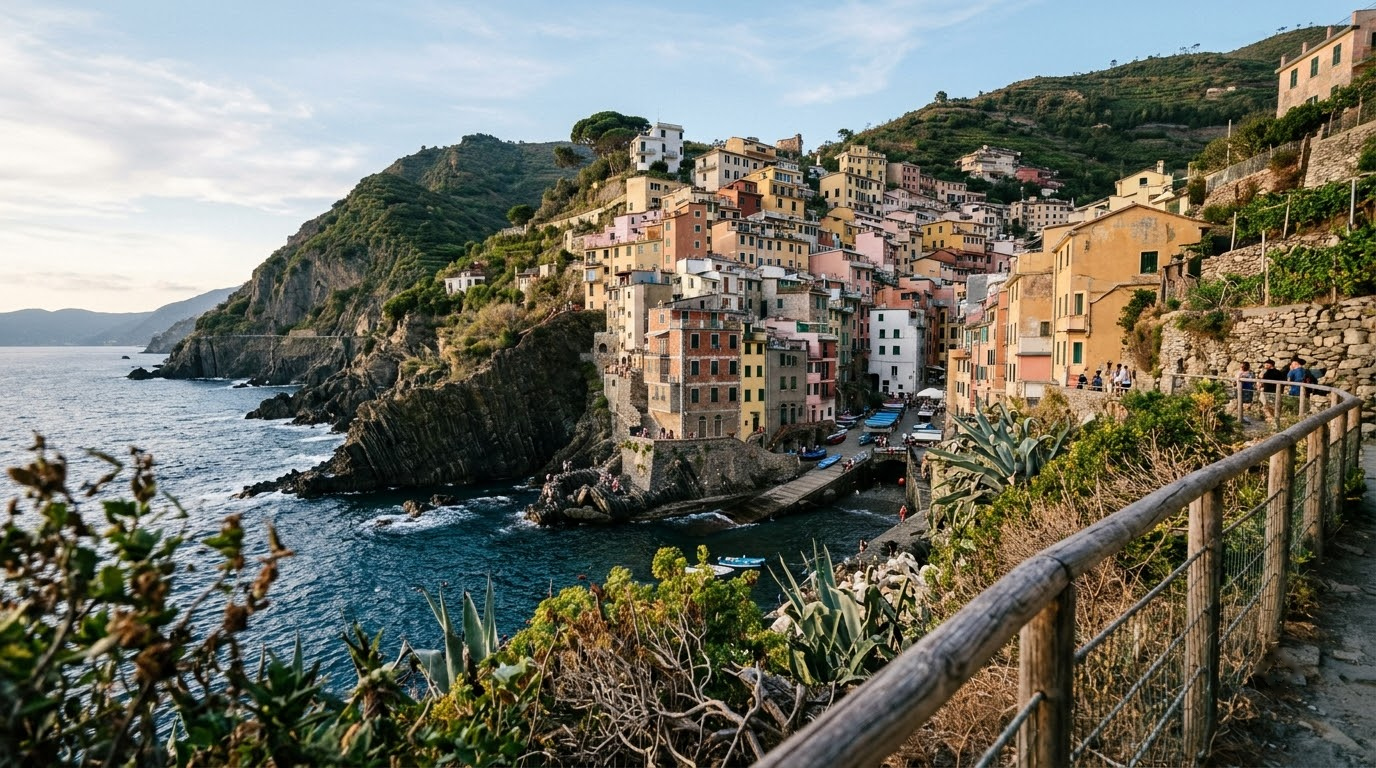
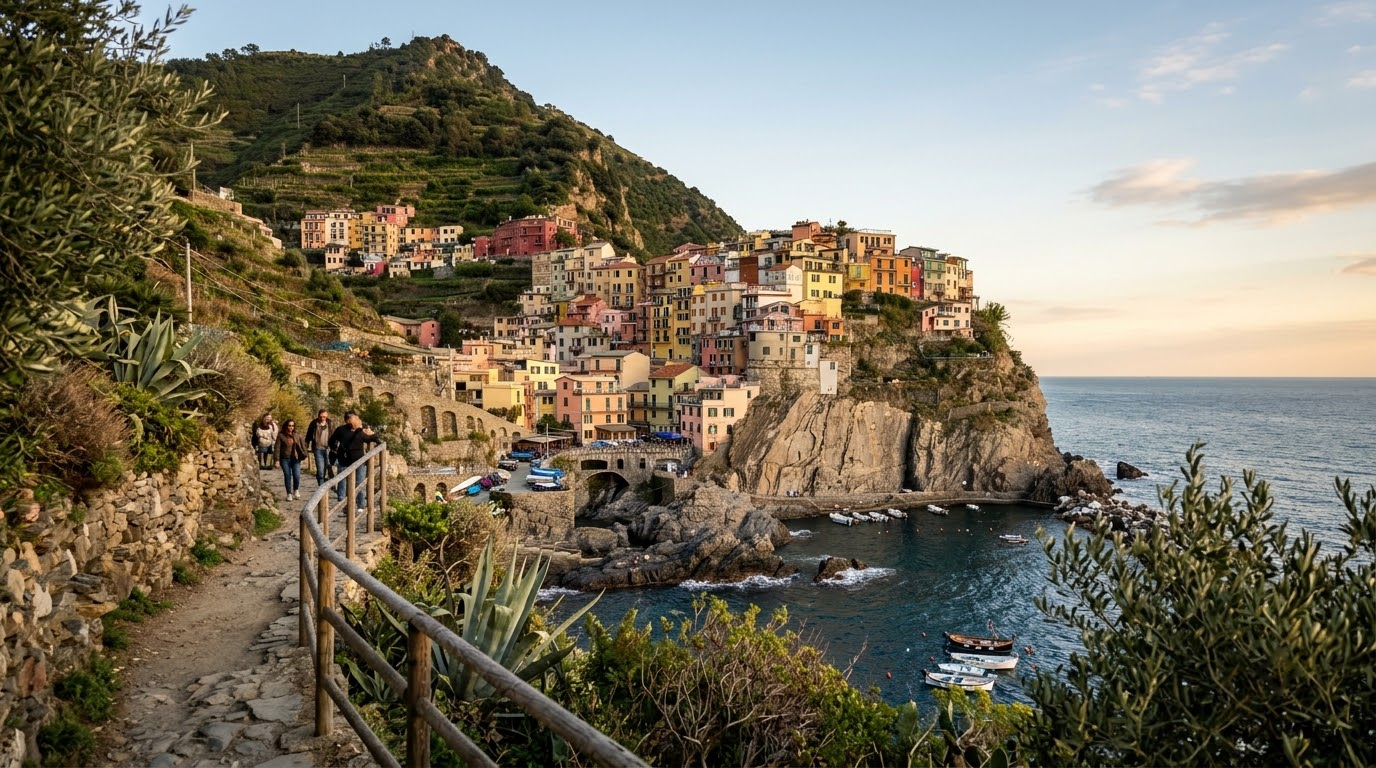
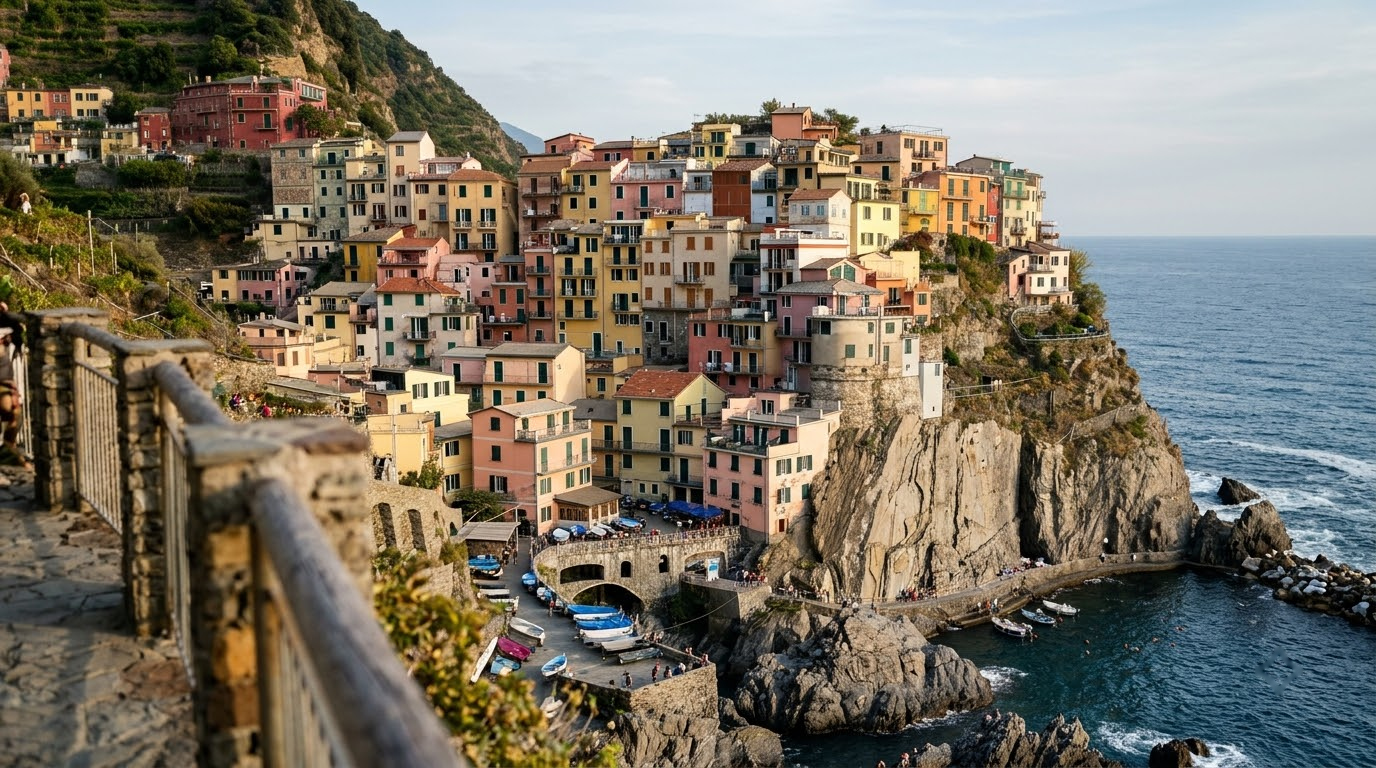
Cinque Terre is a string of five cliffside villages on the Ligurian coast, linked by a small train line, steep footpaths, and ferries. There are no big attractions to tick off. The appeal is the setting: pastel houses, terraced hillsides, small harbors, and the walk between them.
This guide is the overview. It covers when to go, how to reach the villages, how to use the train and trail cards, where to stay, what to eat, and a three-day plan. Each section links to a deeper guide. If you want a ready-made route, open the Cinque Terre itinerary.
Affiliate Disclosure: Some links in this guide are affiliate links. If you book through them, we earn a small commission at no extra cost to you. We only recommend services we genuinely trust. Learn more.
Is Cinque Terre Worth Visiting?
For most travelers who like coastal scenery and walking, yes. The five villages sit inside a national park and UNESCO site, and the park describes millions of visitors a year (Wikipedia, 2025). That popularity is the main downside: lanes are narrow, and midday trains and paths can feel crowded.
The best visits are planned around the crowd rather than against it. Start early, hike the quieter stretches, and leave the busiest villages for late afternoon when day-trippers head back to their bases. Anyone who dislikes stairs or heat should expect a physical trip, since the villages are built on steep terrain.
The official card pricing reveals the calendar. The Treno Card has green, yellow, and red price bands for 14 March to 1 November 2026, and a lower off-season price from 2 November 2026 to 12 March 2027 (Cinque Terre card page, 2026). Peak red dates cost roughly 60% more than green ones.
Spring and early autumn are the usual sweet spots for walking: mild days, longer light, and fewer people than midsummer. Summer brings heat on exposed paths and the heaviest crowds. Winter is quiet, but some trail sections close for weather, and landslides can interrupt walking routes at any time of year (Wikipedia, 2025).
Check the park’s trail status the day before you hike, whatever the season. More month-by-month advice is in best time to visit Cinque Terre.
How to Get to Cinque Terre
Trains run from La Spezia and Genoa to all five villages, and the stations lie on the Genoa-Pisa line (Wikipedia, 2025). Most long-distance trains do not stop at every village, so you may need to change to a regional train or the Cinque Terre Express.
La Spezia is the practical hub for most arrivals, with Levanto serving the northern end of the card’s coverage. Pisa and Genoa are common starting points for visitors flying in. Driving is rarely worth it, because village roads are narrow and parking is limited.
Check the Italian rail timetable for your date before you travel, and allow a buffer if you have a flight the same day.
Getting Around: Cards, Trains, and Trails
The Cinque Terre Treno Card covers unlimited second-class regional trains on the La Spezia-Cinque Terre-Levanto line, access to the paid trails, the Via dell’Amore, free local buses in the park, and free station toilets (Cinque Terre card page, 2026). Adult prices for ages 12 to 69 in 2026 follow.
Off-season (2 November 2026 to 12 March 2027) the Treno Card costs USD 19 (EUR 17.30) for one day and USD 32 (EUR 29.00) for two days. The Trekking Card covers trails only, without trains. It costs USD 11 (EUR 10.00) for one day and USD 19 (EUR 17.00) for two days at standard rates, and USD 17 (EUR 15.00) and USD 30 (EUR 26.70) in peak season (Cinque Terre card page, 2026).
If you plan to ride the train several times, the Treno Card is usually the simpler choice. If you only hike, the Trekking Card is cheaper. Ferries between villages run separately in good weather and are not part of these cards.
Top Things to Do in Cinque Terre
Hike the Sentiero Azzurro. The coastal trail runs about 12 km (7.5 miles) from Riomaggiore to Monterosso al Mare and takes over five hours, with total elevation change near 600 m. It is the only trail in the park that requires a fee (Wikipedia, 2025). Sections:
Riomaggiore to Manarola: about 1 km, under half an hour (the Via dell’Amore).
Manarola to Corniglia: 2.8 km (1.7 miles), about 1 hour, easy.
Corniglia to Vernazza: 3.5 km (2.2 miles), 1.5 to 2 hours, moderate to difficult.
Vernazza to Monterosso: 3.8 km (2.4 miles), at least 2 hours, moderate to difficult.
Walk the Via dell’Amore. The short, easy stretch between Riomaggiore and Manarola reopened in February 2025 after a long closure that began in late 2019 (Wikipedia, 2025), and it is included on both cards.
Visit each village. Monterosso is the largest beach town, Vernazza has a small harbor, Corniglia sits above the sea, and Manarola and Riomaggiore hold the classic stacked-house views.
Take a boat. Seeing the villages from the water gives a different view. Schedules depend on sea conditions, so check on the day.
Where to Stay in Cinque Terre
Your base changes your trip.
In a village: best for early or late walks without crowds. Rooms are limited and often have stairs.
La Spezia: more choice, usually better value, and easy trains into the villages.
Levanto or nearby towns: relaxed bases with beaches and good rail links.
Liguria’s seafood and focaccia define the region. Look for anchovies, fried seafood cones, pesto, and focaccia from bakeries, plus local white wine from the terraced vineyards. Harbor-side restaurants charge for the view, while side streets and bakeries offer cheaper bites.
Eating early or late avoids the busiest lunch hours. Picnics on a hike are easy, since bakeries sell focaccia by the slice. Reserve dinner in advance in peak season, when small village kitchens fill quickly.
Trail Safety and Closures
Trails here are cut into steep, unstable coastal slopes. Landslides cause frequent closures, and the park recommends checking trail status before hiking (Wikipedia, 2025). Treat a closure as a reason to switch plans, not a rule to bend. The train works as a reliable backup on any day.
Wear shoes with real grip, since stone steps get slick after rain. Carry water and a snack, start early in summer, and add time for photo stops. Paths between Corniglia and Vernazza and between Vernazza and Monterosso are rated moderate to difficult, so treat them as half-day walks, not strolls.
Planning Your Budget
Most costs come from lodging and cards. The villages are small, so rooms are limited and rates climb in peak weeks. Staying in a larger town nearby and riding the train in is the standard way to lower the bill, and the Treno Card covers that train ride for the day.
Decide your card before you arrive. A Treno Card suits days with repeated train rides, while a Trekking Card is enough for a hiking-only day. Because prices follow low, medium, and peak dates, flexible travelers can save by choosing green-band days (Cinque Terre card page, 2026).
Food costs are manageable if you rely on bakeries, focaccia slices, and picnic lunches on the trail, then save one sit-down dinner for the evening.
Practical Tips Before You Go
Pack light, because stairs and narrow lanes are hard on big suitcases. Leave heavy luggage at your base if you stay in La Spezia or Levanto. Wear sun protection in summer, and bring a light layer for evenings by the sea.
Station platforms fill at midday in busy months, so build a little slack into train plans. If a village looks packed, walk to a quieter viewpoint and return later. The park offers marked paths above each village that see fewer visitors than the main waterfronts.
How Many Days to Spend
Two nights lets you hike one or two sections and visit all five villages without rushing. A third day gives you a buffer for weather or trail closures. A single day trip is possible, but it means a lot of train time for limited exploring. See how many days in Cinque Terre for a decision guide.
Sample 3-Day Plan
Day 1: Easy villages. Take the train to Riomaggiore, walk the Via dell’Amore to Manarola, and watch sunset from Manarola.
Day 2: Longer hike. Walk Corniglia to Vernazza or Vernazza to Monterosso, then take the train back. Check trail status that morning.
Day 3: Beach and boat. Spend a slow day at Monterosso, with a boat ride between villages if the sea is calm.
Two to three days suits most travelers. That allows a long hike, a beach afternoon, and a buffer for weather.
Is the Cinque Terre Card worth it?
If you ride the train more than a few times or hike the paid trails, yes. A one-day Treno Card costs USD 24 to USD 39 (EUR 22 to EUR 35) depending on season (Cinque Terre card page, 2026).
Is the Via dell’Amore open?
It reopened in February 2025 after closing in late 2019 (Wikipedia, 2025). Check the park’s trail status before you go, since landslides can close sections.
Cinque Terre suits walkers and train travelers; the Amalfi Coast suits those who prefer a southern, ferry-based trip. See Amalfi Coast vs Cinque Terre.